Introduction to the La Caille Family
Most constellation families reach back into deep antiquity, their figures drawn from myth, legend, and the animals of the ancient world. The La Caille family is different. It is a product of the Age of Enlightenment — a set of constellations invented in the mid-18th century to honour not heroes and monsters but the tools of human reason and craft.
These 13 constellations occupy the far southern sky, in regions the classical astronomers of Greece and Babylon never saw. Their stars are faint and their patterns hard to trace, but their names form a unique monument to science: Telescopium the telescope, Microscopium the microscope, Fornax the furnace, Antlia the air pump, Sculptor the sculptor's studio, and more.
Though visually modest, the family is scientifically significant, home to galaxy clusters, satellites of the Milky Way, and one of the most famous deep-field images ever taken. To learn the La Caille constellations is to read a portrait of what the Enlightenment valued most — observation, invention, and the patient measurement of the natural world.
Lacaille at the Cape of Good Hope
The story of the family begins with a single dedicated observer. Nicolas Louis de Lacaille, a French abbé and astronomer, travelled to the Cape of Good Hope in South Africa in 1751, seeking the clear, dark skies of the southern hemisphere. Over about two years he undertook one of the most productive observing campaigns in history.
Working with a small refracting telescope, Lacaille catalogued the positions of nearly 10,000 southern stars — a staggering total for one person in that era. He also measured the arc of the meridian and made pioneering geodetic observations. But his most visible legacy is the map of the southern sky he brought back.
Lacaille's Southern Legacy
- ~10,000 stars catalogued from the Cape in just two years
- 14 new constellations devised to organize the southern sky (one, Argo Navis's Mensa aside, later refined)
- He also divided the giant Argo Navis into Carina, Puppis, and Vela
- His star catalogue, Coelum Australe Stelliferum, was published after his death in 1763
To fill the star-poor gaps between the brighter southern figures, Lacaille sketched in his new constellations, deliberately choosing themes that broke with tradition. Where the ancients saw centaurs and sea monsters, he placed the apparatus of the laboratory and the artist's workshop — a conscious celebration of the scientific age.
The Instrument Constellations
The heart of the family is its roll-call of scientific and artistic instruments, each occupying a patch of the southern sky.
The 13 La Caille Constellations
- Telescopium (the Telescope): Honouring the instrument that transformed astronomy
- Microscopium (the Microscope): The telescope's counterpart for the very small
- Antlia (the Air Pump): Named for the vacuum pump used in physics experiments
- Fornax (the Furnace): A chemist's furnace, near the river Eridanus
- Sculptor (the Sculptor's Studio): The artist's workshop and tools
- Caelum (the Chisel): An engraver's chisel, one of the smallest constellations
- Horologium (the Pendulum Clock): Celebrating precise timekeeping
- Norma (the Level/Square): A carpenter's or surveyor's set square
- Circinus (the Compasses): The dividers used for drafting
- Pictor (the Painter's Easel): An artist's easel near bright Canopus
- Reticulum (the Reticle): The measuring grid in a telescope eyepiece
- Mensa (Table Mountain): Uniquely named for a real place — the mountain overlooking the Cape
- Octans (the Octant): A navigational instrument, holding the south celestial pole
Mensa stands apart as the only constellation named after a geographic feature on Earth — Table Mountain, the flat-topped peak above Cape Town from whose slopes Lacaille observed. Fittingly, part of the Large Magellanic Cloud drifts across Mensa like the "tablecloth" of cloud that famously spills over the real mountain.
Octans and the South Celestial Pole
Among all the instrument constellations, Octans holds a special place: it contains the south celestial pole, the fixed point about which the entire southern sky appears to rotate. Lacaille named it for the octant, a navigational instrument used to measure the altitude of stars — an apt choice for the constellation marking the pole that navigators most needed to find.
Yet the southern pole is oddly barren. Where the north has Polaris shining conveniently close to its pole, the south has only Sigma Octantis, a star so faint (magnitude 5.4) that it is nearly invisible from any but the darkest sites and useless as a practical guide. This absence of a bright "south star" is why southern navigation developed around the Southern Cross instead.
Because Octans sits at the pole, it is circumpolar from the entire southern hemisphere — always above the horizon — yet it is so dim that most casual observers never notice it. It is a quiet reminder that the sky's most important points are not always marked by its brightest stars.
Deep-Sky Treasures
The faintness of the La Caille stars belies the richness of the distant universe seen through these constellations, which look out through relatively clear windows away from the Milky Way's dust.
Notable Objects
- Sculptor Galaxy (NGC 253): A large, bright, dust-laned starburst spiral, one of the finest galaxies in the sky
- Fornax Cluster: A nearby cluster of galaxies, second only to the Virgo Cluster among close-by groups
- Hubble Ultra Deep Field: The iconic image of thousands of distant galaxies was taken in Fornax
- Sculptor & Fornax Dwarfs: Faint dwarf galaxies orbiting the Milky Way
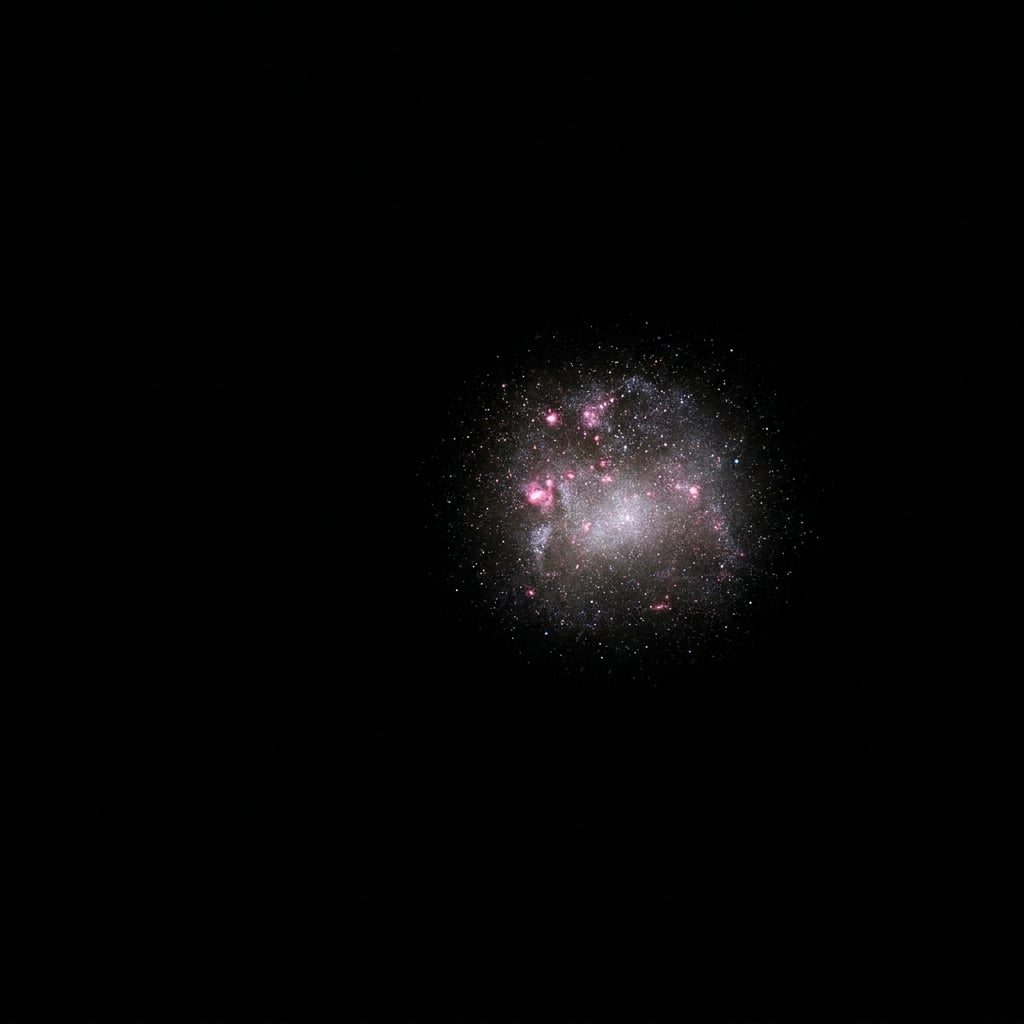
- Antlia Dwarf: A member of our Local Group of galaxies
- NGC 300: A lovely face-on spiral in Sculptor
Fornax in particular has become hallowed ground for astronomers: it was toward this unremarkable-looking constellation that the Hubble Space Telescope stared for the equivalent of eleven days to capture the Ultra Deep Field, revealing roughly 10,000 galaxies in a patch of sky no larger than a grain of sand held at arm's length — one of the most profound images ever made.
Observing the La Caille Family
This is a family that rewards patience, a dark sky, and — for most of its members — a southern-hemisphere vantage point.
How to Approach It
- Use bright anchors: Since the constellations themselves are faint, find them relative to bright neighbours — Sculptor sits below Fomalhaut, Pictor beside brilliant Canopus, Telescopium under Sagittarius.
- Go dark: Under light pollution most of these patterns simply vanish; a genuinely dark site is essential to trace them.
- Bring optical aid: The real rewards are the galaxies and clusters, so binoculars or a telescope turn a "blank" constellation into a field of distant wonders.
- Learn the pole: Locate Octans and Sigma Octantis to appreciate the southern sky's quiet pivot point.
Best Conditions
From the southern hemisphere the family is well placed across spring and summer evenings (roughly October through February for the Sculptor–Fornax region, and southern winter for Telescopium and Norma). From tropical northern latitudes, only Sculptor, Fornax, and Microscopium creep above the southern horizon, and only briefly.
Interesting Facts About the La Caille Family
- The Enlightenment in the sky: The La Caille constellations are the sky's tribute to science and art, the only family named systematically for human instruments rather than myth.
- A constellation named for a mountain: Mensa is the only constellation named after a terrestrial landmark — Table Mountain, from whose slopes Lacaille charted the southern stars.
- The deepest look into space: The Hubble Ultra Deep Field, humanity's deepest visible-light view of the universe, points into the faint constellation Fornax.
- One observer, 14 constellations: Lacaille single-handedly devised more constellations still in use than anyone else in history.
- A pole with no star: Octans holds the south celestial pole, yet its nearest naked-eye star, Sigma Octantis, is so dim it is nearly useless — the south has no true equivalent of Polaris.
- He mapped Argo too: Beyond his 14 new figures, Lacaille also broke up the giant ancient ship Argo Navis into Carina, Puppis, and Vela.
- Faint but not empty: Though poor in bright stars, the family's clear windows onto deep space make it a favourite of galaxy-hunters and professional astronomers alike.
External Resources
- NASA Hubble — The Ultra Deep Field and the galaxies of Fornax and Sculptor
- IAU Constellations — Official boundaries of the La Caille constellations
- Lacaille on Wikipedia — The astronomer's life and southern star catalogue
- SEDS Deep Sky — Data on the Sculptor Galaxy and other southern objects
Frequently Asked Questions
What is the La Caille family of constellations?
The La Caille family is a group of 13 southern constellations created by the French astronomer Nicolas Louis de Lacaille in the 1750s. Unlike the ancient constellations named for myths and animals, Lacaille named his after instruments of science, art, and industry — the telescope, microscope, sculptor’s studio, furnace, air pump, compasses, and so on. The family includes Norma, Circinus, Telescopium, Microscopium, Sculptor, Fornax, Caelum, Horologium, Octans, Mensa, Reticulum, Pictor, and Antlia.
Who was Nicolas Louis de Lacaille?
Nicolas Louis de Lacaille (1713–1762) was a French astronomer who spent two years at the Cape of Good Hope in South Africa from 1751 to 1753, cataloguing nearly 10,000 southern stars — far more than anyone before him. To organize the previously uncharted regions near the south celestial pole, he devised 14 new constellations, most named for the scientific and artistic instruments of the Enlightenment, celebrating the age of reason and discovery.
Why are these constellations so faint?
Lacaille created his constellations to fill in the dim, star-poor regions of the far southern sky that the ancient Mediterranean astronomers never saw and never named. The bright, striking southern patterns had mostly already been claimed, so Lacaille’s new figures occupy the leftover gaps and consist largely of faint stars. As a result, most La Caille constellations are difficult to trace by eye and contain no stars brighter than fourth magnitude.
Which constellation contains the south celestial pole?
Octans, the Octant, contains the south celestial pole — the southern equivalent of the point marked by Polaris in the north. However, unlike the north, there is no bright "south star." The nearest naked-eye star to the pole is Sigma Octantis, but at magnitude 5.4 it is barely visible, which is why southern navigators rely on the Southern Cross to find due south rather than any pole star.
Are there any notable deep-sky objects in the La Caille family?
Yes. Despite their faint stars, several La Caille constellations hold important objects. Fornax contains the Fornax galaxy cluster and the Fornax Dwarf, a satellite of the Milky Way, and part of the sky imaged in the famous Hubble Ultra Deep Field. Sculptor holds the bright Sculptor Galaxy (NGC 253) and the Sculptor Dwarf. Reticulum and Mensa lie near the Large Magellanic Cloud, and Antlia contains the Antlia Dwarf galaxy.
Can these constellations be seen from the northern hemisphere?
Most cannot. The La Caille constellations lie in the far southern sky, and many — such as Octans, Mensa, and Reticulum — never rise for observers in the northern hemisphere. A few of the more northerly members, like Sculptor, Fornax, and Microscopium, can be glimpsed low on the southern horizon from tropical and subtropical northern latitudes, but the family as a whole is a southern-hemisphere showcase best seen from places like Australia, South Africa, and Chile.