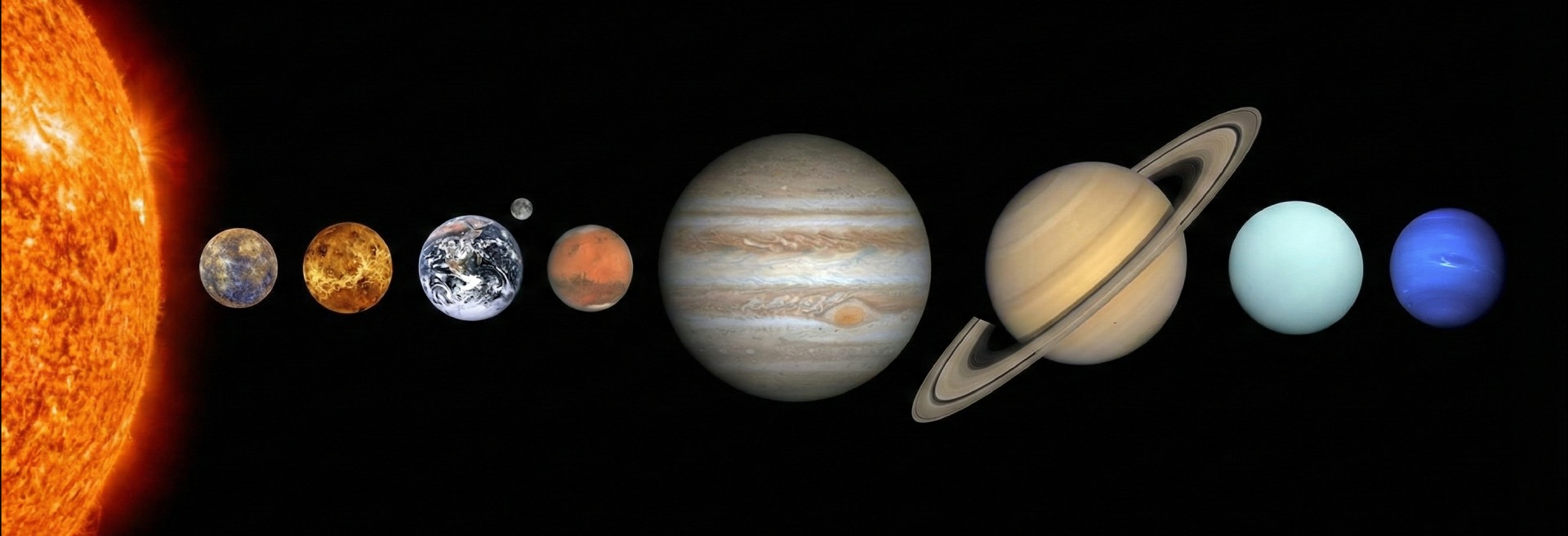
Explore Planet Types
Discover the incredible diversity of planets, from rocky terrestrial worlds to exotic exoplanets and wandering rogue planets
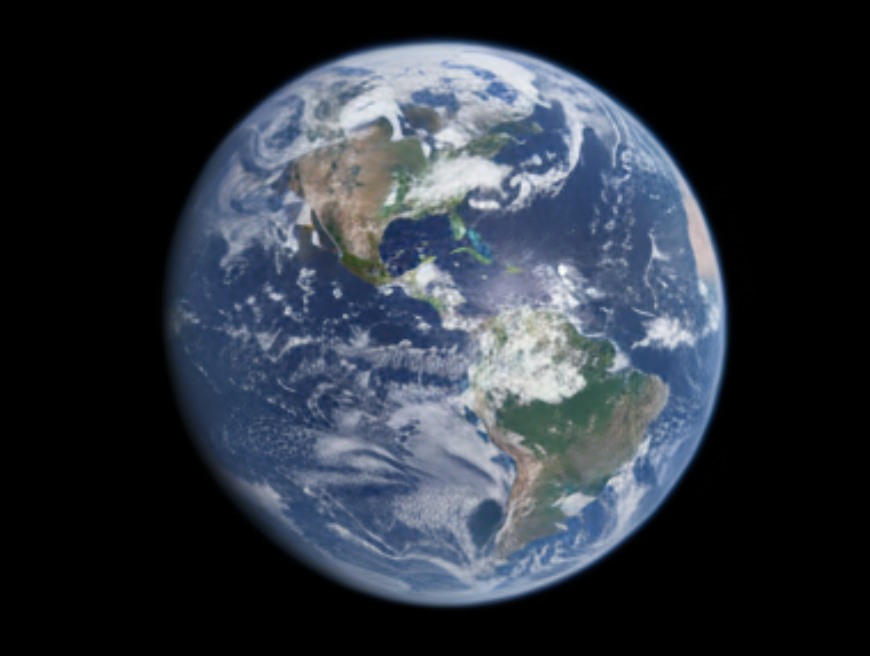
Terrestrial Planets
Rocky worlds with solid surfaces
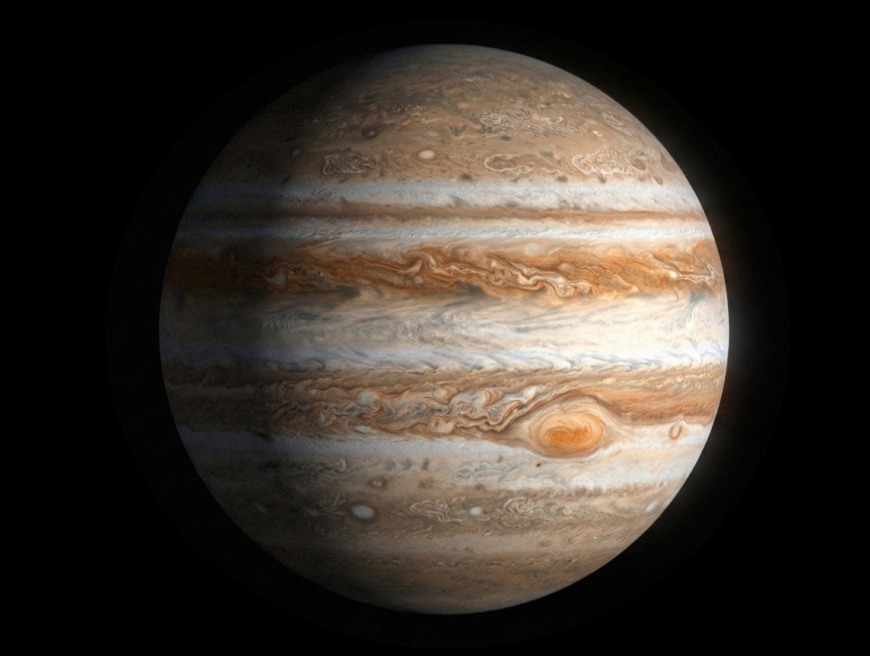
Gas Giants
Colossal worlds of hydrogen and helium
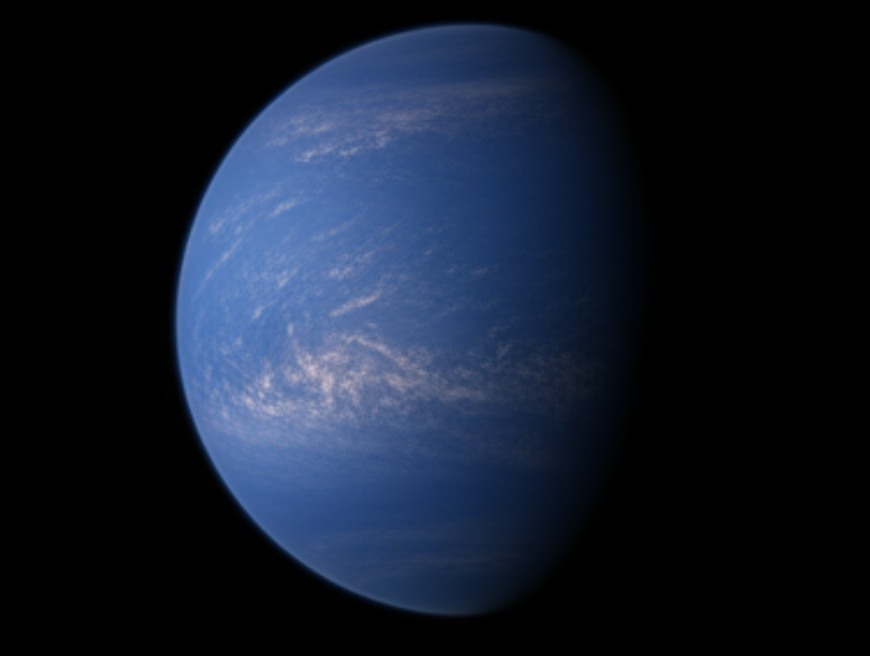
Ice Giants
Cold, dark, and methane-rich
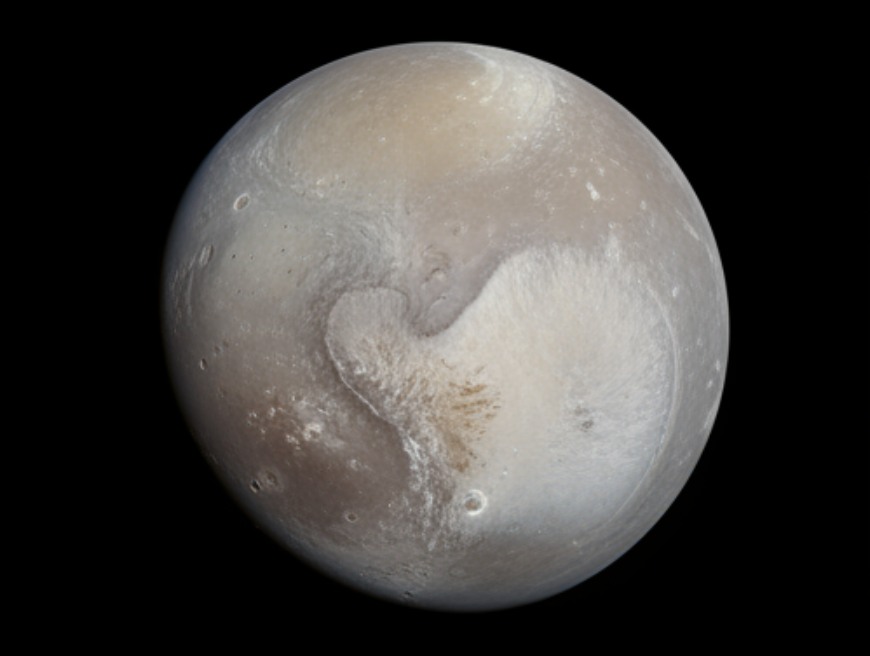
Dwarf Planets
Too small for full planetary status
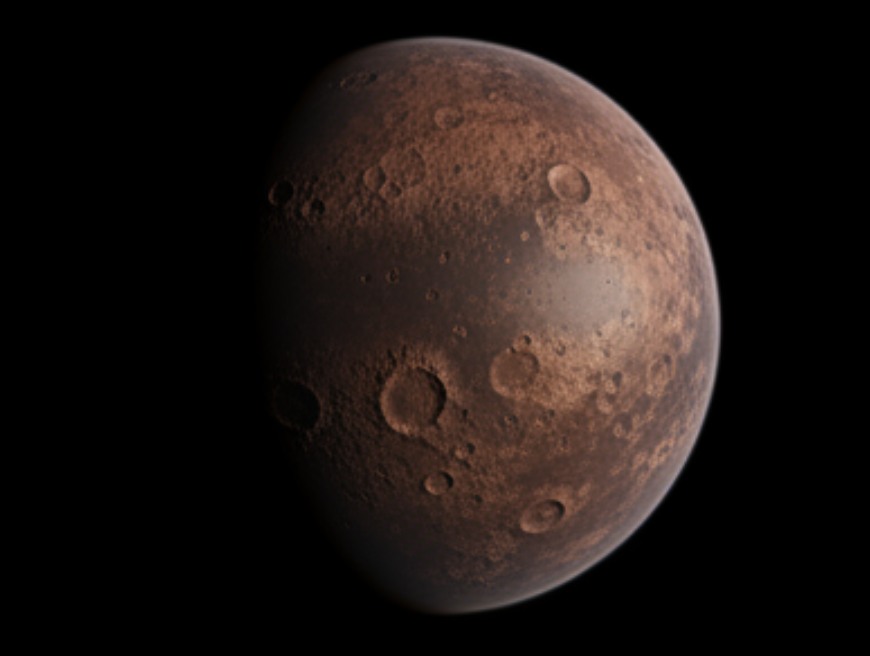
Exoplanets
Worlds orbiting other stars
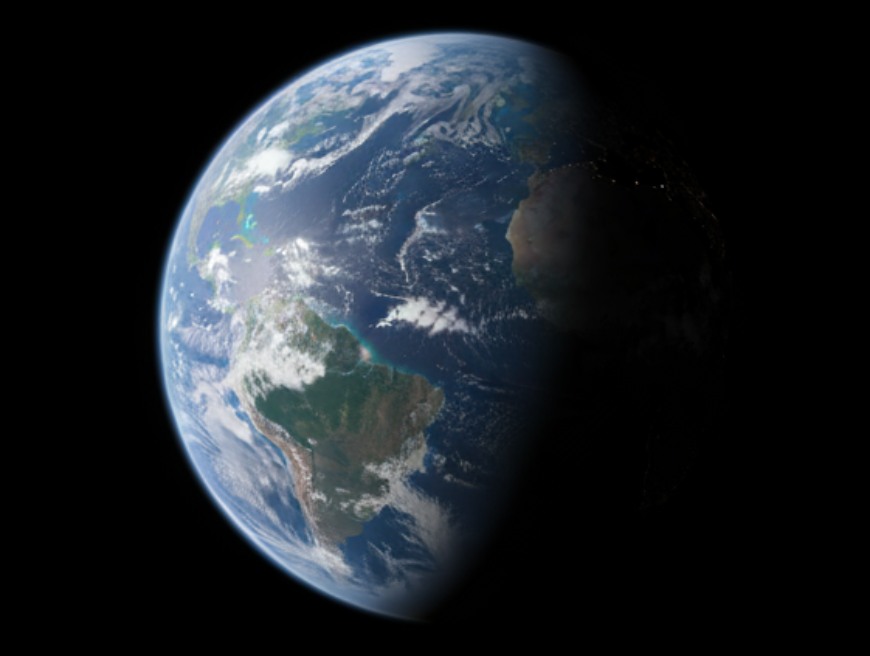
Super-Earths
Larger than Earth, smaller than Neptune
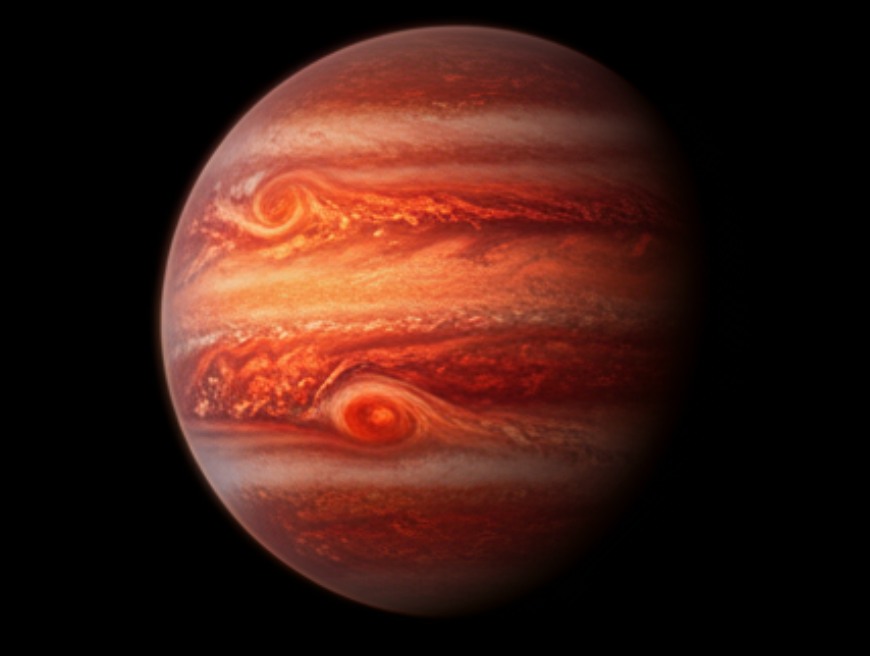
Hot Jupiters
Gas giants scorched by their stars
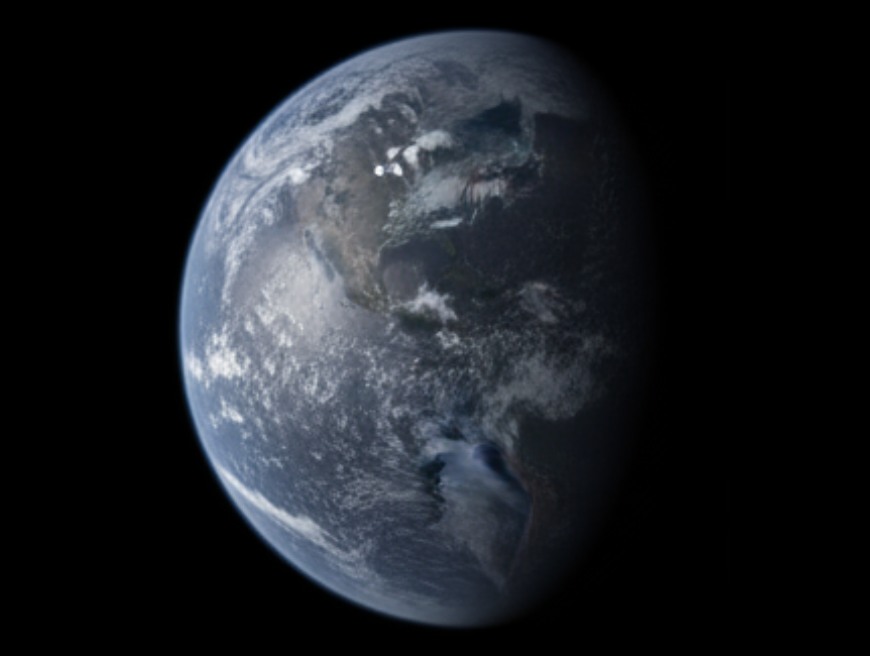
Rogue Planets
Wandering free through interstellar space
What is a Planet?
The word "planet" comes from the ancient Greek planetes, meaning "wanderer"—a reference to how planets appear to move independently against the fixed background of stars. For millennia, seven "planets" were recognized: the Sun, Moon, Mercury, Venus, Mars, Jupiter, and Saturn. The scientific definition has evolved dramatically since then.
Today, the International Astronomical Union (IAU) defines a planet as a celestial body that orbits the Sun, has achieved hydrostatic equilibrium (a roughly spherical shape due to its own gravity), and has cleared the neighborhood around its orbit of other debris. This 2006 definition demoted Pluto to dwarf planet status and currently recognizes exactly eight planets in our Solar System.
Beyond our Solar System, the definition broadens to include any body of planetary mass orbiting a star, brown dwarf, or even drifting free in space. The universe likely contains trillions of planets—a staggering diversity of worlds shaped by gravity, chemistry, and the particular history of their home system.
How Planets Are Classified
Astronomers classify planets in several overlapping ways depending on their composition, size, location, and formation history.
Classification by Composition
- Terrestrial (rocky) planets: Dense silicate/iron bodies with solid surfaces. Examples: Mercury, Venus, Earth, Mars
- Gas giants: Dominated by hydrogen and helium gas with no solid surface. Examples: Jupiter, Saturn
- Ice giants: Rich in "ices" (water, ammonia, methane) with thick hydrogen-helium envelopes. Examples: Uranus, Neptune
- Dwarf planets: Spherical, orbit the Sun, but haven't cleared their orbital neighborhood. Examples: Pluto, Eris, Ceres
Exoplanet Classifications
For planets beyond our Solar System, astronomers use additional categories based on radius and mass comparisons to Earth and Neptune:
- Super-Earths: 1–4 Earth radii, may be rocky or have thick gas envelopes
- Mini-Neptunes: Smaller gas-rich planets with hydrogen-helium envelopes
- Hot Jupiters: Gas giants orbiting extremely close to their host stars
- Rogue planets: Planetary-mass objects not gravitationally bound to any star
The boundary between planet types is often blurry. A "super-Earth" may be a scaled-up rocky world or a "mini-Neptune" with a thick atmosphere—ground-based and space telescopes are still working to distinguish these possibilities.
Terrestrial Planets
Terrestrial planets are the rocky, dense worlds of the inner Solar System. They share key characteristics: solid surfaces, iron-rich cores, and relatively thin atmospheres compared to gas giants. Our Solar System's four terrestrial planets—Mercury, Venus, Earth, and Mars—are wildly different despite their common origin.
Mercury is the smallest and fastest, roasting by day and freezing by night with virtually no atmosphere. Venus, nearly Earth's twin in size, is a hellish world of crushing pressure and sulfuric acid clouds where temperatures reach 465 °C. Earth alone supports liquid water and life. Mars, a cold desert world with the tallest volcano and longest canyon in the Solar System, once flowed with liquid water and remains a primary target in the search for past life.
Terrestrial planets formed in the warm inner region of the protoplanetary disk, where only rocky and metallic materials could survive the intense heat close to the young Sun. Beyond our Solar System, many "super-Earth" exoplanets appear to be scaled-up versions of our terrestrial planets.
Gas and Ice Giants
The outer Solar System is dominated by giant planets—worlds so massive they hold onto enormous hydrogen and helium envelopes. Gas giants (Jupiter and Saturn) are primarily composed of hydrogen and helium, while ice giants (Uranus and Neptune) contain higher proportions of water, ammonia, and methane "ices" beneath their gas envelopes.
Jupiter's iconic banded appearance and Great Red Spot—a storm larger than Earth that has raged for at least 350 years—make it one of the most studied planets. Saturn's magnificent ring system, composed of billions of ice and rock particles, spans 282,000 km yet is typically less than 1 km thick.
Uranus and Neptune are the solar system's forgotten giants—colder, bluer, and less dramatic than their inner cousins, yet full of surprises. Uranus rotates on its side (98° axial tilt) and radiates almost no internal heat. Neptune, despite being farther from the Sun, has the fastest winds in the Solar System at up to 2,100 km/h.
Dwarf Planets
When the IAU formally defined "planet" in 2006, it simultaneously created a new category: dwarf planets. These are bodies that orbit the Sun and are massive enough to be roughly spherical, but have not cleared their orbital neighborhood of other objects. Currently, five bodies are officially recognized as dwarf planets: Ceres (in the asteroid belt), and Pluto, Eris, Haumea, and Makemake (in the Kuiper Belt).
Pluto's reclassification remains controversial among some scientists and much of the public. It shares its orbital neighborhood with thousands of Kuiper Belt Objects, failing the third criterion for planetary status. Eris, which triggered the debate when it was discovered in 2005, is actually slightly more massive than Pluto despite being smaller in volume.
Dozens more objects in the outer Solar System may qualify as dwarf planets once better data is available. The dwarf planet category reflects the rich complexity of our Solar System beyond the classical eight planets.
Exoplanets and Exotic Types
The first confirmed exoplanet around a Sun-like star was discovered in 1995, and the field has exploded since then. As of 2026, more than 5,700 exoplanets have been confirmed, with thousands more candidates awaiting verification. Space missions like Kepler and TESS have been transformative, revealing that planets are extraordinarily common—most stars host at least one.
The diversity of exoplanets has surprised astronomers. Hot Jupiters—gas giants orbiting closer to their stars than Mercury orbits the Sun—were among the first discovered but appear to be rare overall. Super-Earths and mini-Neptunes are the most common planet types, yet our Solar System has none. Some planets orbit binary star systems; others are found around pulsars. The sheer variety challenges planetary formation models.
Rogue planets—those ejected from their birth systems—may be the most numerous type of planet in the galaxy. Gravitational microlensing surveys suggest there could be hundreds of billions to trillions of free-floating planetary-mass objects in the Milky Way alone.
Planet Formation
Planets form within protoplanetary disks—the rotating disks of gas and dust that surround newly forming stars. The process begins with microscopic dust grains colliding and sticking together, gradually building larger structures over millions of years.
The Accretion Process
- Dust grains: Micron-sized particles collide and stick through electrostatic forces
- Pebbles & boulders: Centimeter to meter-scale aggregates drift inward in the disk
- Planetesimals: Kilometer-scale bodies form where gravity takes over from sticking
- Planetary embryos: Runaway accretion creates Moon- to Mars-sized bodies
- Giant impacts: Embryos collide to form terrestrial planets; Earth's Moon formed this way
- Giant planet cores: Massive embryos beyond the snow line accrete gas envelopes rapidly
The "snow line"—the distance from a star where water ice can condense—plays a crucial role. Beyond it, icy materials add to the building blocks available, enabling larger cores to form. If a core grows massive enough quickly enough (roughly 10 Earth masses), it can capture a massive gas envelope and become a gas giant.
Giant planets can also migrate after formation, a process that may explain the surprising orbital configurations seen in exoplanetary systems and may have shaped our own Solar System's architecture through the "Grand Tack" and "Nice model" migration scenarios.
Observing Planets
Planets are among the most rewarding objects for amateur astronomers. Unlike stars, planets show visible disks through even small telescopes, and their appearances change dramatically with the seasons and orbital geometry.
Naked-Eye Planets
Five planets are visible to the naked eye and have been known since antiquity: Mercury, Venus, Mars, Jupiter, and Saturn. They appear as bright, steady points of light (stars twinkle; planets generally don't). Venus is the brightest, often visible in daylight. Jupiter is the second brightest. Saturn's golden hue is distinctive.
Through a Telescope
- Venus: Shows phases like the Moon as it orbits interior to Earth
- Mars: Surface features, polar ice caps, and dust storms visible at opposition
- Jupiter: Cloud bands, Great Red Spot, and four Galilean moons easily seen
- Saturn: Spectacular ring system visible in almost any telescope
- Uranus & Neptune: Visible as small blue-green disks in moderate telescopes
Planetary Oppositions and Conjunctions
Planets are best observed at opposition (when they are opposite the Sun in our sky), when they are closest to Earth and fully illuminated. Plan observations around opposition dates, which repeat every 1–2 years for the outer planets.
External Resources
- NASA Solar System Exploration: Planets - NASA's comprehensive planetary science resource
- NASA Exoplanet Archive - Database of confirmed exoplanets
- Planet on Wikipedia - Encyclopedia article covering planetary science
- IAU: Pluto and the Dwarf Planets - Official IAU information on planetary classification
Frequently Asked Questions
What is a planet?
According to the International Astronomical Union (IAU), a planet is a celestial body that orbits the Sun, has sufficient mass for its self-gravity to give it a nearly spherical shape, and has cleared the neighborhood around its orbit. This definition, adopted in 2006, currently recognizes eight planets in our Solar System: Mercury, Venus, Earth, Mars, Jupiter, Saturn, Uranus, and Neptune.
How many planets are in our Solar System?
Our Solar System has eight official planets: four terrestrial (rocky) planets—Mercury, Venus, Earth, and Mars—and four giant planets—Jupiter, Saturn, Uranus, and Neptune. Pluto was reclassified as a dwarf planet in 2006. Beyond our Solar System, astronomers have confirmed more than 5,600 exoplanets orbiting other stars, with billions more estimated to exist in the Milky Way alone.
What is the largest planet in the Solar System?
Jupiter is the largest planet in our Solar System, with a diameter of about 142,984 km—more than 11 times Earth's diameter. Its mass is 318 times that of Earth and greater than all other planets combined. Jupiter is so large that more than 1,300 Earths could fit inside it. Despite its enormous size, Jupiter rotates faster than any other planet, completing one rotation in about 10 hours.
How do planets form?
Planets form from the protoplanetary disk of gas and dust that surrounds a newly forming star. Dust particles collide and stick together, growing into pebbles, then planetesimals, and eventually planetary embryos. Rocky terrestrial planets form in the inner warm region of the disk, while gas giants and ice giants form farther out where ices can condense. The process typically takes millions of years and is called accretion.
Can planets exist outside star systems?
Yes, rogue planets (also called free-floating planets or orphan planets) exist in interstellar space without orbiting any star. They are thought to form either in protoplanetary disks and then get ejected through gravitational interactions, or by direct collapse of gas clouds. Microlensing surveys suggest there may be trillions of rogue planets in the Milky Way—potentially more than stars. A few candidates have been directly imaged.
What makes a planet habitable?
Planetary habitability depends on several factors: location in the star's habitable zone (where liquid water can exist on the surface), a suitable atmosphere that moderates temperature and provides radiation protection, a stable climate, and the presence of key chemical elements like carbon, hydrogen, nitrogen, and oxygen. Earth is currently the only confirmed habitable planet, but astronomers are actively searching for Earth-like worlds around other stars using telescopes like Kepler, TESS, and the James Webb Space Telescope.