Introduction to Rogue Planets
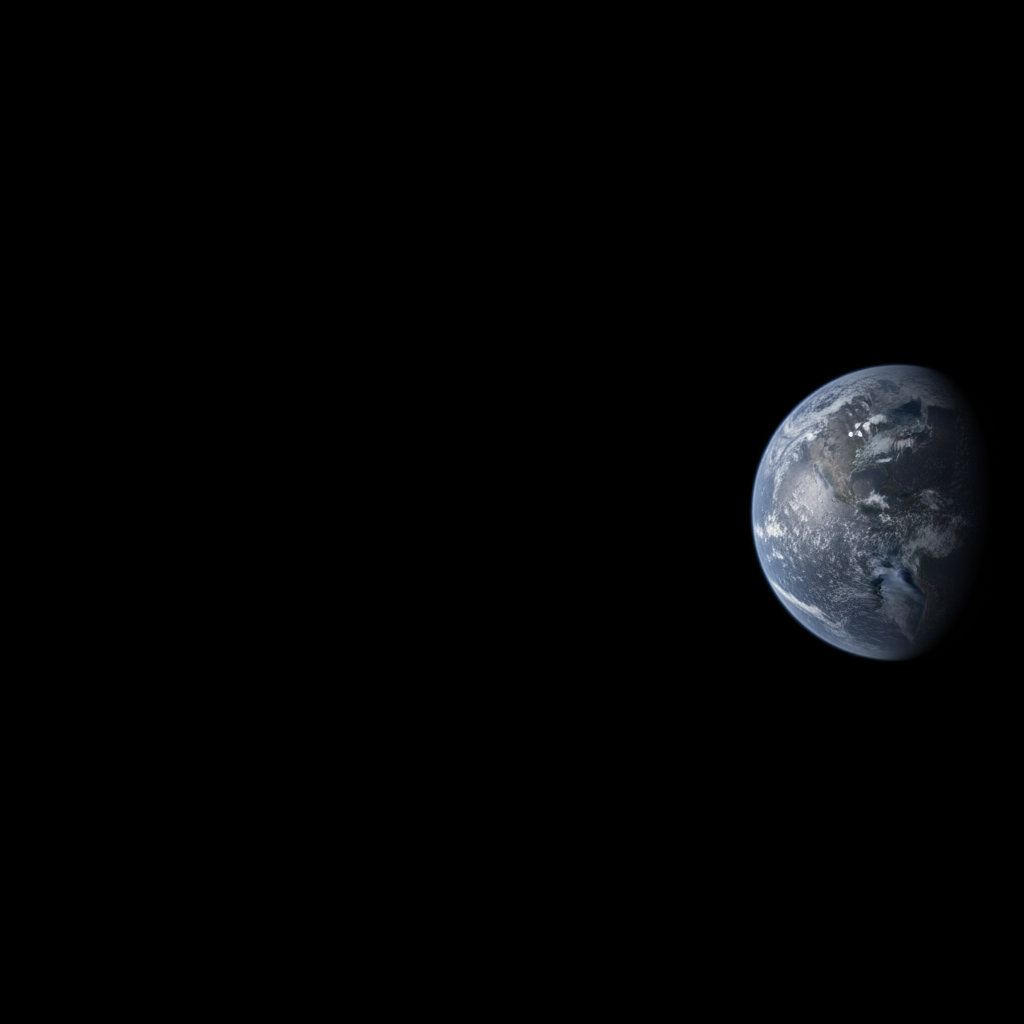
Rogue planets are among the most exotic objects in the cosmos — worlds that drift freely through the cold darkness of interstellar space, bound to no star, warmed by no sun. They are the galaxy's nomads: born in the turmoil of young planetary systems or collapsing gas clouds, then flung outward by gravitational chaos to wander indefinitely through the void between the stars.
The concept of free-floating planetary bodies has been discussed theoretically since the 1970s, but their observational detection became possible only in the 1990s with the development of gravitational microlensing surveys. The first confirmed free-floating planetary candidates came from microlensing studies of the galactic bulge, where the dense stellar background provides a rich source of potential lensing events.
Rogue planets may be extraordinarily common — possibly more numerous than stars themselves. A 2011 microlensing study suggested there are roughly two Jupiter-mass rogue planets for every star in the Milky Way galaxy. If accurate, this implies hundreds of billions of rogue worlds in our galaxy alone. Including smaller, Earth-mass rogues (which are harder to detect but theoretically even more common), the total could be in the trillions.
Beyond their sheer numbers, rogue planets captivate the scientific imagination for what they might harbor. A sufficiently large rocky rogue planet, perhaps one with a thick hydrogen atmosphere trapping geothermal heat, could theoretically maintain subsurface liquid water long after being ejected into interstellar space. In principle, life that began during a planet's time in a stellar system might survive for billions of years on a rogue world — making them a wildly speculative but scientifically serious target in the search for life in the universe.
Properties of Rogue Planets
Rogue planets are defined by what they lack — a host star — rather than by a specific set of physical properties. They span a wide range of masses, from sub-Earth to sub-brown dwarf, and can have any composition from rocky to icy to gas-dominated.
Rogue Planet Quick Facts
- Definition: Planetary-mass objects not bound to any star
- Detection Method: Gravitational microlensing (primary)
- Temperature: Typically well below -100°C at surface
- Estimated Count: Hundreds of billions to trillions in Milky Way
- Mass Range: Earth-mass to ~13 Jupiter masses
- Smallest Detected: ~Earth-mass (OGLE-2016-BLG-1928, 41.5 min event)
Data: NASA Exoplanet Exploration — Rogue Planets
Without a host star for reference, the surface conditions on a rogue planet depend almost entirely on its internal heat (from radioactive decay or gravitational contraction) and the presence or absence of an atmosphere. A gas giant rogue planet may still radiate infrared heat from its formation, glowing faintly for hundreds of millions of years. A rocky rogue quickly loses any surface heat and its exterior cools toward the cosmic background temperature of ~2.7 K, though internal radioactive heating continues for billions of years.
Atmospheres on rogue planets would behave very differently than on planets orbiting stars. Without UV radiation from a parent star driving photochemistry, atmospheric chemistry would be dominated by geologically outgassed molecules. Water and methane would freeze out unless internal heat is sufficient. A sufficiently massive rocky rogue (super-Earth scale) with a thick hydrogen atmosphere could retain enough internal heat through radioactive decay to maintain liquid water at depth for billions of years.
Formation Pathways
Rogue planets can arrive at their untethered state through two fundamentally different pathways: ejection from a planetary system, or direct formation in interstellar space.
Ejected Planets
The most intuitive origin is ejection: a planet forms in a normal planetary system and is then gravitationally kicked out. This can happen through close gravitational encounters with other planets in the same system, gradually escalating orbital instabilities, or interactions with stellar flyby events from passing stars (common in the dense environments of star-forming clusters where most stars are born). Computer simulations of planet formation routinely produce systems where one or more planets are ejected, suggesting this is a common outcome of the chaotic process of planetary assembly.
Direct Formation
Alternatively, some rogue planets may form directly from collapsing clouds of gas and dust in interstellar space — essentially the same process as star formation, but for clumps too low-mass to ignite nuclear fusion. This would make them more closely related to brown dwarfs (sub-stellar objects too small to fuse hydrogen) than to ejected planets. Distinguishing between these two origins for a given rogue planet is observationally very difficult.
Ejection Mechanisms
Gravitational scattering is the dominant ejection mechanism for rogue planets. In a young planetary system, multiple forming planets can interact gravitationally, exchanging orbital energy. In some encounters, one planet is flung into a very high-energy orbit that exceeds the stellar escape velocity, sending it into interstellar space while its sibling planets remain in stable orbits closer to the star.
Evidence from Our Solar System
The Nice model of solar system evolution proposes that the early solar system contained a fifth large planet (sometimes called "Planet V") that was ejected by Jupiter approximately 4 billion years ago during a period of orbital instability. Simulations matching the current orbital architecture of the outer solar system often require this ejection to have occurred. If so, our own solar system contributed at least one rogue planet to the galaxy.
Star Cluster Encounters
Most stars form in clusters containing hundreds to thousands of other young stars. In these dense environments, gravitational encounters between planetary systems are common. A passing star can perturb the outer planets of a system enough to destabilize their orbits, leading to a cascade of ejections. Stars that form in denser clusters may lose more planets than stars that form in relative isolation.
Microlensing Detection
Detecting an object that emits no light and orbits no star seems nearly impossible — yet gravitational microlensing provides a powerful tool. When a massive object (including a rogue planet) passes between Earth and a distant background star, the object's gravity bends and focuses the starlight, creating a brief, symmetric brightening event that can be observed and measured.
How Microlensing Works for Rogue Planets
The duration of a microlensing event scales with the square root of the lensing object's mass. A rogue Jupiter-mass planet produces an event lasting about a day; an Earth-mass rogue produces an event lasting only an hour or two. By measuring the event duration and analyzing the light curve shape, astronomers can infer the lensing object's mass and determine that no stellar companion is present (ruling out a star-bound planet or binary star system).
OGLE and Future Surveys
The Optical Gravitational Lensing Experiment (OGLE) monitoring the dense galactic bulge field has found many candidate rogue planet events. NASA's Nancy Grace Roman Space Telescope (launching ~2027) will conduct a dedicated microlensing survey, monitoring hundreds of millions of stars with much higher cadence and sensitivity than ground-based surveys. Roman is expected to detect hundreds of rogue planets, dramatically improving our understanding of the rogue planet population.
Direct Infrared Detection
Very young, gas-giant rogue planets (less than ~10 million years old) are still warm from formation and emit detectable infrared radiation. The Infrared Space Observatory and later Spitzer found several free-floating brown dwarf and giant planet candidates in young star-forming regions. JWST is extending these detections to lower masses with extraordinary sensitivity. A remarkable JWST discovery in the Orion Nebula Cluster revealed ~40 paired free-floating planetary-mass objects dubbed "JuMBOs" (Jupiter Mass Binary Objects), which defy easy classification as either ejected planets or sub-brown dwarfs.
Estimated Population
How many rogue planets exist in the Milky Way? The answer depends on what mass threshold you include and what formation model you adopt, but all estimates point to a staggeringly large number.
A landmark 2011 study based on OGLE microlensing data estimated there are approximately twice as many Jupiter-mass free-floating planets as main-sequence stars — implying roughly 400 billion Jupiter-mass rogues in the Milky Way. However, later reanalyses revised this estimate downward by roughly a factor of 6, suggesting tens of billions of Jupiter-mass rogues.
For lower-mass rogues (Earth-mass and below), theoretical simulations of planet formation predict even higher numbers — possibly trillions of rogue planets in our galaxy when all sizes are included. The mass distribution is highly uncertain: if planet formation routinely produces and ejects many Earth-mass planets per system (as some models suggest), the galaxy could be teeming with dark, cold, rocky worlds wandering through the void.
Could Rogue Planets Host Life?
The question of whether rogue planets could support life is speculative but scientifically serious. A planet ejected from a stellar system would initially retain whatever life had evolved there during its star-bound phase. If ejection were gradual (over millions of years), life might have time to adapt to the changing conditions — decreasing sunlight, falling temperatures, freezing oceans — before finally being cut off from stellar energy entirely.
The Geothermal Scenario
Radioactive decay of elements like uranium, thorium, and potassium provides internal heat to rocky planets for billions of years regardless of stellar proximity. A rocky super-Earth rogue with a thick hydrogen atmosphere (perhaps 100 bar or more) could trap this geothermal heat effectively, maintaining subglacial liquid water oceans similar to what we believe exists under Europa's ice. The thick hydrogen atmosphere would also shield any surface from cosmic radiation.
Giant Planet Moons
A gas giant rogue planet ejected while still retaining large icy moons could maintain those moons in habitable conditions through tidal heating — as Jupiter heats Io and potentially maintains Europa's ocean. The gas giant itself generates heat through slow gravitational contraction. Such a moon could theoretically remain habitable for billions of years without any stellar input.
These are highly speculative scenarios. The probability of life arising on a rogue planet, or surviving ejection if it already existed, is unknown. But the sheer number of rogue planets — potentially trillions — means that even a tiny probability of habitability translates to enormous potential numbers of habitable rogue worlds across the galaxy.
Notable Rogue Planet Candidates
OGLE-2016-BLG-1928
This microlensing event lasted just 41.5 minutes — one of the shortest ever detected. The extremely short duration implies a lensing object with a mass of roughly Earth or less, making it a candidate for the smallest rogue planet ever detected. Published in 2021, it illustrates the extraordinary sensitivity achievable with modern microlensing surveys for Earth-mass free-floating worlds.
CFBDSIR J214947.2-040308.9
Discovered in 2012 in a deep infrared survey, this object (nicknamed "CFBDS1649") is a young, warm, free-floating planetary-mass object about 100 light-years from Earth with an estimated mass of 4–7 Jupiter masses. It is too cool to be a brown dwarf and too isolated to be an exoplanet, making it a prototypical free-floating planetary candidate detectable in infrared before it cools.
JuMBOs in the Orion Nebula
In 2023, JWST observations of the Orion Nebula Cluster discovered approximately 40 pairs of planetary-mass objects orbiting each other — dubbed Jupiter Mass Binary Objects (JuMBOs). These paired free-floating worlds, with masses of 0.6 to 13 Jupiter masses, defy current formation theories for both planets and brown dwarfs. Their origin remains an active area of research that may require entirely new models of sub-stellar object formation.
Interesting Facts About Rogue Planets
- Outnumber Stars: Statistical estimates suggest rogue planets outnumber stars in the Milky Way by at least 2:1 for Jupiter-mass objects alone, and potentially by orders of magnitude when smaller bodies are included. The galaxy may contain more dark, wandering worlds than luminous suns.
- Our Solar System May Have Ejected One: The Nice model of solar system evolution suggests the early solar system contained a fifth large planet that Jupiter ejected around 4 billion years ago. This planet, sometimes called "Planet V," is still wandering through the galaxy, billions of light-years from its original home.
- Could Pass Through Our Solar System: Given the vast number of rogue planets, one will statistically pass through our solar system roughly once every 10,000 to 100,000 years. Such a flyby would be entirely harmless for Earth but could detectable perturb distant Oort Cloud comets, potentially sending a shower of comets inward toward the inner solar system over millions of years.
- JWST Found Planet-Pairs: The 2023 JWST discovery of ~40 JuMBOs (Jupiter Mass Binary Objects) in Orion — pairs of planetary-mass objects orbiting each other freely — completely surprised astronomers. Nothing in current planet formation or star formation theory predicts such paired free-floating planets, making them one of JWST's most puzzling discoveries.
- Dark and Cold, Not Dead: A rogue planet the size of Earth would have a surface temperature well below -100°C — far below the freezing point of water. Yet its interior, warmed by radioactive decay, would remain geothermally active for billions of years. Liquid water at depth is physically possible even without sunlight.
- Some Might Glow: Very young rogue planets ejected within the last few million years of their formation are still warm from their birth. Gas giant rogues may radiate at temperatures of 500–1,000 K for tens of millions of years, faintly detectable in infrared. JWST is now sensitive enough to find these "warm rogues" in nearby star-forming regions.
- Name Varieties: Rogue planets go by many names in scientific literature: free-floating planets (FFPs), nomad planets, interstellar planets, starless planets, sub-brown dwarfs, planetary-mass objects (PMOs), and isolated planetary-mass objects (iPMOs). The proliferation of names reflects how recently this class of objects has come into scientific focus.
- Roman Telescope Will Find Hundreds: NASA's Nancy Grace Roman Space Telescope (scheduled to launch ~2027) will conduct a deep microlensing survey of the galactic bulge. Scientists estimate it will detect hundreds to thousands of rogue planets down to Earth-mass scales, transforming our knowledge of the rogue planet mass function and population statistics.
External Resources
- NASA — Rogue Planet Overview - Introduction to free-floating planetary-mass objects
- NASA Roman Microlensing Survey - Upcoming survey expected to find hundreds of rogue planets
- NASA James Webb Space Telescope - JWST discoveries of free-floating JuMBOs and young rogues
- Rogue Planet on Wikipedia - Comprehensive overview of theory, observations, and candidates
Frequently Asked Questions
What is a rogue planet?
A rogue planet (also called a free-floating planet, nomad planet, or interstellar planet) is a planetary-mass object that is not gravitationally bound to any star. Instead of orbiting a sun, it drifts freely through interstellar space. Rogue planets can form either by being ejected from their original planetary systems through gravitational interactions, or by forming directly in interstellar space from collapsing gas clouds too small to ignite stellar fusion — essentially failed sub-stellar objects.
How are rogue planets detected?
Rogue planets are almost impossible to detect by direct observation because they emit no starlight and are too cold to glow brightly in infrared. The primary detection method is gravitational microlensing: when a rogue planet passes in front of a distant background star, its gravity briefly bends and amplifies the star's light, causing a characteristic brightening event lasting hours to days. Shorter events indicate lower-mass lensing objects. The Nancy Grace Roman Space Telescope (launching ~2027) is expected to dramatically increase the number of detected rogue planets through its microlensing survey.
How many rogue planets are there?
Estimates suggest rogue planets are extraordinarily common — possibly outnumbering stars. Early microlensing surveys suggested roughly 2 Earth-mass rogue planets per main-sequence star in the Milky Way, implying hundreds of billions of rogue planets in our galaxy. More recent analyses suggest the number could be in the trillions when smaller bodies are included. However, direct counts remain very uncertain because rogue planets are so difficult to detect, and the mass distribution of the rogue planet population is poorly constrained.
Could rogue planets support life?
A rogue planet could theoretically maintain conditions for life in specific scenarios. A rocky rogue planet with a thick hydrogen atmosphere could retain geothermal heat from radioactive decay, potentially keeping a subsurface liquid water ocean for billions of years. Jupiter-sized rogue planets generate their own internal heat through gravitational contraction. A rogue planet ejected with a large moon could maintain tidal heating in that moon through the gravitational interaction. While speculative, these scenarios suggest life could potentially exist on rogue worlds far from any star.
How do planets get ejected from their systems?
Planets can be ejected from their systems through several gravitational mechanisms: close encounters with other planets that transfer orbital energy and fling one object outward (gravitational scattering); interactions with passing stars that destabilize outer planetary orbits; orbital resonances that gradually amplify eccentricity until a planet is flung out; and, for very young systems, encounters with other stars in their birth cluster. Computer simulations of our own solar system show Jupiter could have ejected a fifth large planet early in solar system history — the Nice model suggests this happened around 4 billion years ago.
What is the smallest known rogue planet?
The smallest confirmed rogue planet candidates come from microlensing surveys. OGLE-2016-BLG-1928 is a remarkable case — a microlensing event so short (41.5 minutes) that the lensing object is estimated to be roughly Earth-mass or smaller, making it potentially the smallest free-floating planetary-mass object ever detected. However, distinguishing rogue planets from brown dwarfs and sub-stellar objects at the boundary remains challenging, and mass estimates from microlensing have significant uncertainties.