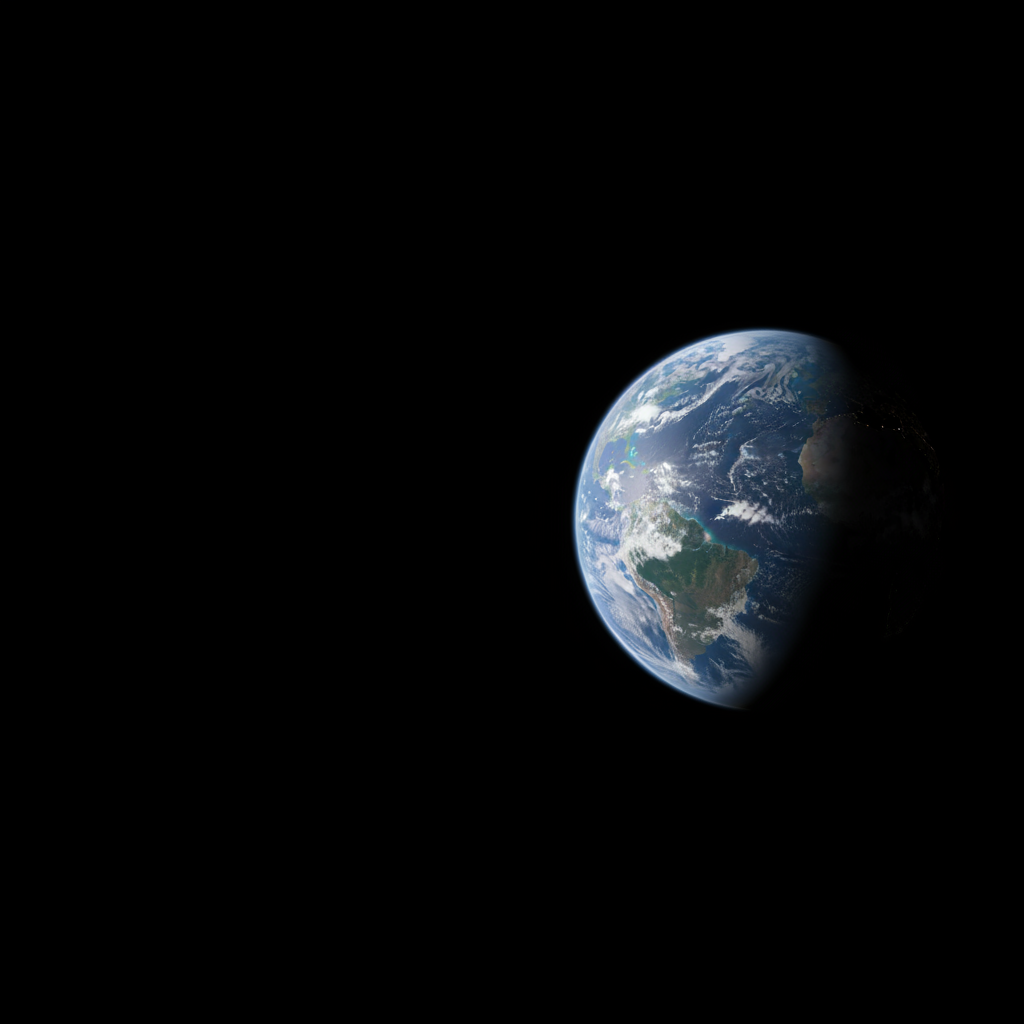
Introduction to Super-Earths
Super-Earths are the most common type of planet in the galaxy — and the most alien to us, because our solar system contains none. Filling the size gap between Earth (1 Earth radius) and Neptune (3.9 Earth radii), super-Earths are found orbiting virtually every type of star, at every orbital distance. Their abundance was one of the most surprising discoveries from the Kepler Space Telescope.
The term "super-Earth" is purely a size classification, not a description of habitability or composition. It encompasses an extraordinarily diverse collection of worlds: scorching lava planets with surfaces of molten rock; hypothetical "ocean planets" with global oceans thousands of kilometers deep; silica-rich desert worlds; and mini-Neptunes with hydrogen atmospheres making them inhospitable to life as we know it. The name is somewhat misleading — many super-Earths have far less in common with Earth than their name suggests.
Understanding super-Earths is one of the central challenges of exoplanet science. Because they are so common, they likely represent the dominant planetary outcome of planet formation around most stars. Their interiors are poorly constrained — we cannot yet determine from size alone whether a given super-Earth is rocky, icy, or covered by a deep ocean or thick atmosphere. Mass measurements via radial velocity combined with radius measurements via transits give bulk density, but even density is ambiguous: a dense super-Earth could be rocky iron-rich, or a lower-density one could be a water-rich world or a mini-Neptune.
The absence of super-Earths in our solar system may not be an accident. Some planetary scientists believe Jupiter's early migration may have swept the inner solar system clean of the material that would have built a super-Earth, leaving only the smaller terrestrial planets we have today. If so, our solar system's architecture may be unusual — and Earth's existence may owe something to Jupiter's peculiar history.
Properties of Super-Earths
Super-Earths span a wide range of physical properties depending on their mass, composition, and orbital environment.
Super-Earth Quick Facts
- Size Range: 1.2–2.5 Earth radii (rocky), up to 4 R⊕ (mini-Neptune)
- Mass Range: 1–10 Earth masses
- Most Common Type: Most frequent planet in Kepler survey
- Radius Gap: Scarcity at ~1.5–2.0 Earth radii (Fulton gap)
- Surface Gravity: Higher than Earth (1.5–3× for rocky types)
- No Solar System Analog: None between Venus (0.95 R⊕) and Neptune (3.9 R⊕)
Data: NASA Exoplanet Exploration — Super-Earths
Rocky super-Earths have higher surface gravity than Earth — a 2 Earth-radius rocky planet has roughly 2.5 times Earth's surface gravity if density is similar. This has implications for atmospheric retention (high gravity holds onto atmospheres more effectively) and for life (evolution under higher gravity imposes different constraints on organisms). The interior pressure is also much greater, potentially affecting mantle convection and the style of plate tectonics.
Orbital periods of detected super-Earths tend to be short — most in the Kepler sample orbit within 0.5 AU of their stars, with periods of days to months. This is partly a detection bias (shorter-period planets transit more frequently and cause larger Doppler shifts), but super-Earths genuinely appear to be most common at close orbital distances, especially around red dwarf stars.
The Radius Gap
One of the most important discoveries from the Kepler mission is the "radius gap" or "Fulton gap" — a striking deficit of exoplanets with radii between approximately 1.5 and 2.0 Earth radii. When astronomers Benjamin Fulton and Erik Petigura plotted the size distribution of Kepler planets in 2017, they found two distinct populations: rocky super-Earths below 1.5 Earth radii, and mini-Neptunes above 2.0 Earth radii, with a clear valley between them.
Why the Gap Exists
The most widely accepted explanation is photoevaporation. Planets with radii just above 1.5 Earth radii that form with thin hydrogen-helium envelopes cannot hold onto them when bombarded by intense ultraviolet radiation from their young host stars. The atmosphere is photoevaporated away over a few hundred million years, leaving behind a bare rocky core slightly above Earth's size. Planets with larger, more massive hydrogen envelopes (above ~2 Earth radii) retain them and become mini-Neptunes.
An alternative mechanism — core-powered mass loss — proposes that the planet's own cooling interior provides the energy to drive off the envelope, rather than stellar irradiation. Both mechanisms may operate, with photoevaporation dominating close to the star and core-powered mass loss operating at larger distances.
Rocky Super-Earths vs. Mini-Neptunes
Distinguishing rocky super-Earths from mini-Neptunes in the overlapping size range (1.5–2.5 Earth radii) requires measuring both size and mass to get bulk density. A rocky super-Earth should have a density similar to Earth (~5.5 g/cm³), while a mini-Neptune with a hydrogen envelope will be significantly less dense (1–3 g/cm³).
JWST is beginning to characterize atmospheres of super-Earths in this ambiguous size range. Detection of a substantial hydrogen-helium atmosphere confirms a mini-Neptune nature. Detection of a secondary atmosphere (volcanic gases like CO₂, SO₂) or no detectable atmosphere would suggest a rocky world. This atmospheric characterization is currently one of the hottest frontiers in exoplanet science.
Kepler-22b — An Early Habitable Zone Super-Earth
Kepler-22b was one of the first exoplanets confirmed in the habitable zone of a Sun-like star, announced by NASA in December 2011. It orbits a G-type star (slightly smaller and cooler than the Sun) every 290 days at a distance of 0.85 AU — similar to Earth's orbital distance. Its radius is 2.4 times Earth's.
Despite being in the habitable zone, Kepler-22b's nature is highly uncertain. Its radius of 2.4 Earth radii places it above the radius gap in mini-Neptune territory, suggesting it may have a substantial gas envelope rather than a rocky surface. Its mass is poorly constrained — radial velocity upper limits suggest it is less than 36 Earth masses. Kepler-22b was a landmark discovery in the search for habitable worlds, even if it remains uncertain whether it is rocky, oceanic, or gas-shrouded.
55 Cancri e — The Lava World
55 Cancri e is one of the most extreme and well-studied super-Earths. It orbits so close to its star 55 Cancri A (a nearby star 41 light-years away) that its year lasts just 17.7 hours. At 1.9 Earth radii and 8.1 Earth masses, it is a dense rocky super-Earth with a mean density suggesting an iron-rich composition similar to Mercury.
The dayside of 55 Cancri e reaches approximately 2,500 K (2,227°C) — hot enough to melt silicate rock into oceans of lava. James Webb Space Telescope observations in 2023 detected thermal emission from 55 Cancri e and found evidence for a thin, variable atmosphere — possibly of volcanic origin, with gases like carbon monoxide and carbon dioxide released from lava seas. 55 Cancri e is the archetypal lava world, demonstrating the extreme environments super-Earths can occupy.
GJ 1214b — The Water World Candidate
GJ 1214b, discovered in 2009 around the nearby red dwarf GJ 1214 (40 light-years away), is one of the most important super-Earths studied. With a radius of 2.7 Earth radii and mass of 6.3 Earth masses, its relatively low density (1.87 g/cm³) rules out a purely rocky composition — it must contain large amounts of water or hydrogen gas.
Observations of GJ 1214b's atmosphere showed a featureless spectrum — no molecular absorption features — which could indicate either high-altitude water clouds or a thick hydrogen atmosphere with aerosol haze. JWST thermal emission measurements in 2023 found a relatively uniform temperature distribution (unlike a bare rock), strongly suggesting a thick atmosphere. GJ 1214b may be a "water world" — a planet with a dense, steam-dominated atmosphere overlying a high-pressure water mantle — or a mini-Neptune with a hydrogen-helium envelope. It represents the type of world that may be common yet has no solar system analog.
Habitability of Super-Earths
Rocky super-Earths in habitable zones are among the most intriguing targets in the search for extraterrestrial life. Their larger size could provide several advantages for habitability: longer geological lifetimes due to more radioactive material driving plate tectonics; stronger magnetic fields from larger iron cores; denser atmospheres that better retain heat and water.
However, super-Earths face habitability challenges too. Higher surface gravity increases atmospheric pressure, potentially creating runaway greenhouse conditions. Some models suggest that rocky super-Earths above a certain mass develop "stagnant lid" tectonics — the crust does not recycle like Earth's, preventing the carbon-silicate cycle that regulates Earth's long-term climate. Without this geological thermostat, a super-Earth might swing between snowball and hothouse states.
The most promising habitable super-Earth candidates include Proxima Centauri b (4.24 light-years away, in the habitable zone of the nearest star), Teegarden's Star b (a rocky super-Earth at 12.5 light-years), and TRAPPIST-1d, e, and f. Atmospheric characterization of these worlds with next-generation telescopes will be transformative.
Interesting Facts About Super-Earths
- Most Common Planet Type: Statistical analysis of Kepler data shows that super-Earths and sub-Neptunes are the most common type of planet in the galaxy — occurring around roughly 30–50% of all stars. Yet our solar system has none between Venus and Neptune.
- 55 Cancri e Has Oceans of Lava: 55 Cancri e's dayside surface temperature of ~2,500 K causes silicate rock to melt. The surface may be covered by a global ocean of magma. JWST detected evidence of a dynamic, possibly volcanic secondary atmosphere around this extreme world.
- Super-Earths Can Have Moons: Rocky super-Earths large enough and in the right orbital conditions could host large moons. A moon around a habitable-zone super-Earth might actually improve habitability by stabilizing the planet's axial tilt, similar to how Earth's Moon stabilizes our seasons.
- The Radius Gap Was Hidden: The radius gap was not apparent in early Kepler data because planetary radii depended on stellar radii, which were poorly measured. When improved stellar characterization from Gaia satellite data was applied, the gap became crystal-clear — a sharp demonstration of how data quality affects astronomical discovery.
- GJ 1214b Is Probably Not Habitable: Despite being famous as a "water world candidate," GJ 1214b orbits extremely close to its red dwarf star and receives intense stellar irradiation. Any water would be in supercritical or steam form, not liquid oceans. True ocean planets in habitable zones remain hypothetical.
- Super-Earths May Have Plate Tectonics: Computer simulations suggest that rocky super-Earths with masses of 2–5 times Earth could have more vigorous plate tectonics than Earth, driven by higher heat flow from their larger radioactive interiors. More plate tectonics could mean faster recycling of atmospheric gases and more stable long-term climates.
- Jupiter May Have Prevented Our Super-Earth: The Grand Tack hypothesis proposes that Jupiter migrated inward early in the solar system's history, sweeping material out of the inner solar system and preventing a super-Earth from forming. If Jupiter had stayed put, Earth might have a massive inner sibling.
- Kepler Found Thousands: Of the ~5,700 confirmed exoplanets, roughly 1,600 are classified as super-Earths or sub-Neptunes — the single largest category. Kepler's statistical survey showed they are present around stars of all types and at a wide range of orbital distances.
External Resources
- NASA — Super-Earth Planet Type - Overview of super-Earths with examples
- NASA Exoplanet Archive - Search and filter all confirmed super-Earth exoplanets
- JWST Exoplanet Results - Latest atmosphere characterization including 55 Cancri e and GJ 1214b
- Habitable Exoplanets Catalog - University of Puerto Rico catalog of potentially habitable worlds
Frequently Asked Questions
What is a super-Earth?
A super-Earth is an exoplanet with a mass between 1 and 10 times Earth's mass, or a radius between about 1.2 and 2 times Earth's radius. The term refers only to size and mass — not to habitability or rocky composition. Some super-Earths are rocky worlds similar to a scaled-up Earth. Others, called mini-Neptunes or sub-Neptunes, have thick hydrogen-helium atmospheres and may not have solid surfaces at all. Our solar system has no super-Earth, making them difficult to study up close.
Are super-Earths habitable?
Whether super-Earths are habitable depends enormously on their individual properties. Rocky super-Earths in a star's habitable zone could theoretically support liquid water and life. Their larger size might mean more geological activity, stronger magnetic fields, and denser atmospheres — potentially beneficial. However, larger rocky planets may have higher surface gravity that limits large life forms, thicker atmospheres that create extreme greenhouse effects, or plate tectonics may shut down due to the planet being too massive for crustal recycling. Habitability is case-by-case.
What is the radius gap in super-Earth populations?
The radius gap (or Fulton gap) is a striking absence of exoplanets with radii between about 1.5 and 2.0 Earth radii, discovered in Kepler data by astronomers Fulton and Petigura in 2017. Below the gap are rocky super-Earths; above it are mini-Neptunes with thick gas envelopes. The gap is thought to result from photoevaporation: intense stellar UV radiation strips the hydrogen atmospheres from planets just above the rocky-world threshold, turning them into bare rocky super-Earths, while more massive planets retain their atmospheres.
How do super-Earths differ from mini-Neptunes?
Super-Earths and mini-Neptunes overlap in size (roughly 1.5–2.5 Earth radii) but differ fundamentally in composition. Super-Earths are primarily rocky with thin or no atmospheres — like a scaled-up Earth or Venus. Mini-Neptunes have substantial hydrogen-helium atmospheres constituting several percent of their total mass, and may not have solid surfaces accessible beneath their thick atmospheres. The dividing line is hard to determine from size alone, requiring mass measurements or atmospheric characterization to distinguish the two types.
What is 55 Cancri e like?
55 Cancri e is one of the most studied super-Earths, orbiting the nearby star 55 Cancri A in just 17.7 hours at a distance of 2.3 million km. Its year is shorter than an Earth day. With a radius 1.9 times Earth and mass 8.1 times Earth, it is likely a rocky world with an extremely hot dayside (about 2,500 K — hot enough to melt rock). JWST observations suggest it may have a thin secondary atmosphere of volcanic gases, making it perhaps the best-studied example of a lava world.
Is there a super-Earth in our solar system?
No — our solar system has no super-Earths. The gap between Earth/Venus (rocky, up to 1× Earth radius) and Uranus/Neptune (ice giants, 4× Earth radius) is puzzling given how common super-Earths appear to be in the galaxy. Some planetary scientists propose that Jupiter's early inward migration (the Grand Tack hypothesis) may have prevented super-Earths from forming in our inner solar system by disrupting the material that would have assembled them.