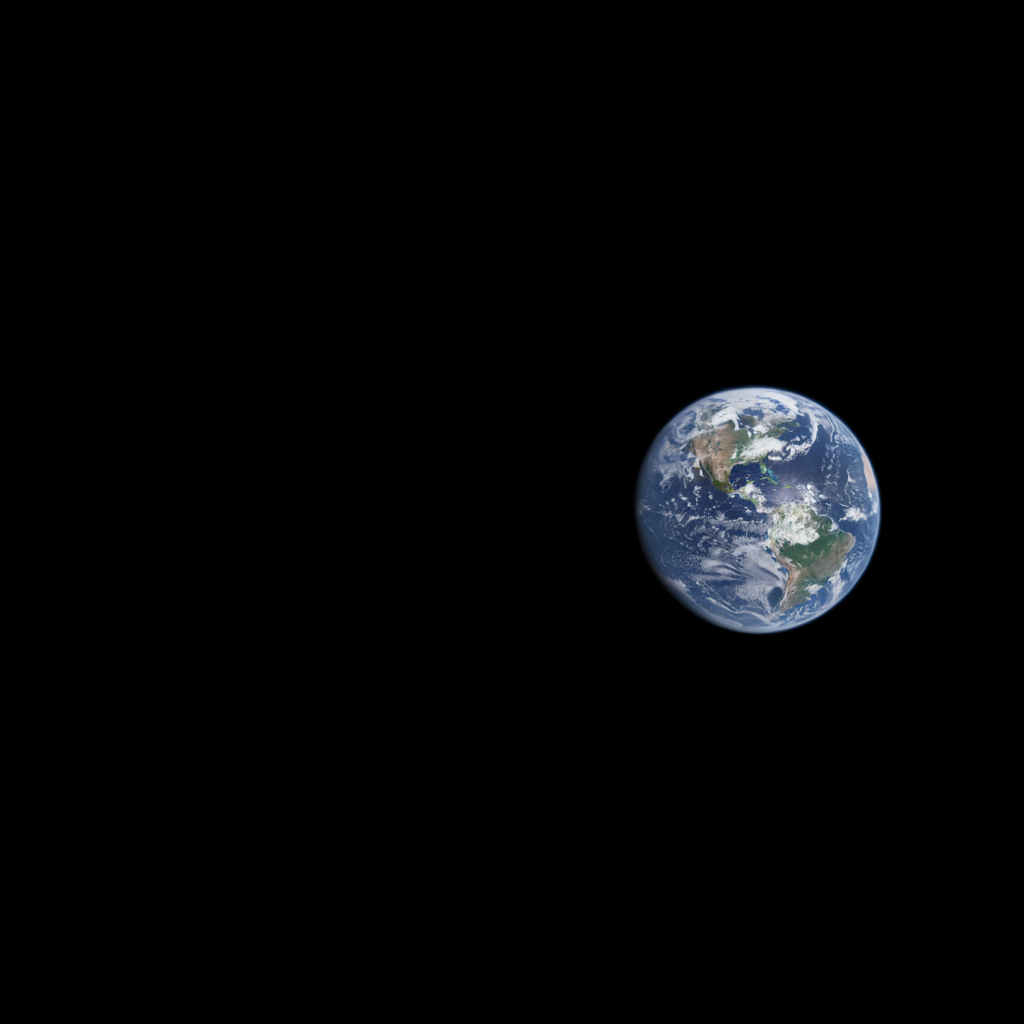
Introduction to Terrestrial Planets
Terrestrial planets are the most familiar type of planet to us — solid, rocky worlds with defined surfaces you could theoretically stand on. The word "terrestrial" derives from the Latin terra, meaning Earth, and these planets share our own world's basic building blocks: silicate rock, iron, and nickel, assembled over billions of years through gravitational accretion.
Our solar system has four terrestrial planets: Mercury, Venus, Earth, and Mars. They all orbit within roughly 1.5 AU of the Sun, inside the frost line where temperatures prevented volatile ices from condensing during the solar system's formation. This inner region, though compositionally limited, produced the most geologically diverse worlds we know — from Mercury's battered, crater-scarred surface to Earth's active tectonics and abundant liquid water.
Compared to the giant planets, terrestrial worlds are small and dense. Earth, the largest, has a diameter of just 12,756 km — about one-tenth that of Jupiter. But what terrestrial planets lack in size they more than compensate for in complexity. They possess layered interiors with iron cores, silicate mantles, and thin crusts. Several have atmospheres, and one — Earth — hosts an extraordinary variety of life.
Beyond our solar system, astronomers have confirmed thousands of rocky exoplanets that likely qualify as terrestrial worlds. Understanding the four planets next door gives us a foundation for interpreting those distant worlds, including the search for habitable conditions elsewhere in the galaxy.
Physical Characteristics
All four terrestrial planets share a set of defining physical traits that distinguish them from the giant planets, despite significant individual differences in size, temperature, and atmosphere.
Terrestrial Planet Quick Facts
- Composition: Silicate rock mantles, iron-nickel cores
- Diameter Range: 4,879 km (Mercury) to 12,756 km (Earth)
- Density Range: 3.93 g/cm³ (Mars) to 5.51 g/cm³ (Earth)
- Surface: Solid — craters, volcanoes, valleys, plains
- Moons: 0 (Mercury, Venus), 1 (Earth), 2 (Mars)
- Orbital Distance: 0.39 AU (Mercury) to 1.52 AU (Mars)
Data: NASA Solar System Exploration
Each terrestrial planet has a differentiated interior — during formation, denser iron and nickel sank toward the center while lighter silicates rose to form the mantle and crust. Earth and Mercury have confirmed liquid outer cores. Earth's liquid outer core drives a powerful magnetic dynamo, shielding the surface from solar wind. Mars likely had a similar dynamo billions of years ago, but its smaller core cooled and solidified, ending the magnetic field.
Atmospheres vary dramatically. Venus has a crushing 90-bar CO₂ atmosphere. Earth's nitrogen-oxygen atmosphere is uniquely life-sustaining. Mars has a thin 0.006-bar CO₂ atmosphere. Mercury is essentially airless, with only a tenuous exosphere of atoms sputtered off its surface by solar wind.
Mercury — The Swift Messenger
Mercury is the smallest planet in the solar system and the closest to the Sun, orbiting at an average distance of just 0.39 AU. With a diameter of 4,879 km — slightly larger than Earth's Moon — Mercury completes one orbit every 88 Earth days, making it the fastest planet by orbital speed at 47.9 km/s.
Surface and Interior
Mercury's surface is heavily cratered, resembling the Moon, with vast ancient plains called intercrater plains and smooth younger plains called Caloris Planitia — the result of volcanic flooding following the Caloris Basin impact. The surface ranges from 430°C at noon to -180°C at night due to the absence of any meaningful atmosphere to retain heat.
Surprisingly for such a small planet, Mercury has a large iron core comprising about 85% of its radius, giving it an unusually high density of 5.43 g/cm³. NASA's MESSENGER spacecraft (2011–2015) confirmed that this core is at least partially liquid and that Mercury maintains a weak magnetic field — the only rocky planet besides Earth to have one.
MESSENGER and BepiColombo
MESSENGER mapped Mercury's entire surface and discovered water ice in permanently shadowed polar craters. The joint ESA/JAXA BepiColombo mission, launched in 2018 and arriving in 2025, will study Mercury's magnetic field, exosphere, and surface in unprecedented detail.
Venus — Earth's Hellish Twin
Venus is often called Earth's twin because of its nearly identical size (12,104 km diameter, 95% of Earth's) and similar mass. But any resemblance ends there. Venus is the hottest planet in the solar system with a mean surface temperature of 465°C, hotter than a kitchen oven's maximum setting — hot enough to melt lead.
The Runaway Greenhouse Effect
Venus's thick atmosphere is 96.5% carbon dioxide with sulfuric acid clouds, creating the most extreme greenhouse effect in the solar system. Sunlight penetrates the clouds and heats the surface, but the CO₂ traps almost all infrared radiation trying to escape. The result is a surface pressure 92 times that of Earth's — equivalent to being 900 meters underwater.
Retrograde Rotation and Volcanism
Venus rotates backward compared to most planets (retrograde), completing one rotation every 243 Earth days — longer than its 225-day year. Its surface, mapped by NASA's Magellan radar mission in the 1990s, shows vast volcanic plains, highland regions (tesserae), and more than 1,600 major volcanoes. Recent analysis of Magellan data suggests some volcanic features may be active today. ESA's EnVision mission and NASA's VERITAS mission will investigate Venus's volcanic activity in the 2030s.
Earth — The Living Planet
Earth is the largest and densest terrestrial planet, and the only known world in the universe to harbor life. Its diameter of 12,756 km, mass of 5.97 × 10²⁴ kg, and location at 1 AU from the Sun place it firmly in the Sun's habitable zone — the range of distances where liquid water can exist on a surface.
Plate Tectonics
Earth is the only planet known to have active plate tectonics, a process where the rigid outer crust is divided into plates that move over the partially molten asthenosphere below. This drives mountain building, ocean spreading, volcanic activity, and the carbon-silicate cycle — a thermostat mechanism that has kept Earth's climate habitable for billions of years by regulating atmospheric CO₂.
The Moon's Role
Earth's large Moon — formed by a giant impact approximately 4.5 billion years ago — stabilizes Earth's axial tilt to within a narrow range (22.1° to 24.5°), preventing extreme climate swings that might otherwise make the surface inhospitable. The Moon also raises tides that may have played a role in the origin of life by creating rhythmic wet-dry cycles in tidal pools.
A Unique Atmosphere
Earth's nitrogen-oxygen atmosphere, with its 21% oxygen content generated by billions of years of photosynthesis, is unique in the solar system. The ozone layer absorbs most harmful UV radiation. Earth's magnetic field, generated by convection in the liquid outer iron core, deflects the solar wind and protects the atmosphere from being stripped away — a fate that befell Mars.
Mars — The Red Planet
Mars is the outermost terrestrial planet, orbiting at 1.52 AU, with a diameter of 6,779 km — about half of Earth's. Its distinctive red color comes from iron oxide (rust) on its surface. Despite being small and cold today, Mars shows abundant evidence of a warmer, wetter past that makes it a prime candidate for ancient microbial life.
Record-Breaking Geology
Mars hosts the solar system's largest volcano — Olympus Mons, 21.9 km tall and 600 km wide — and the largest canyon system — Valles Marineris, stretching 4,000 km across and 7 km deep. Without plate tectonics to move the crust, hot-spot volcanoes built enormous structures over billions of years in the same location.
Ancient Water and Habitability
NASA's Mars rovers have found river deltas, lake bed sediments, and minerals like clays and sulfates that form only in liquid water. The Perseverance rover, exploring Jezero Crater (an ancient lake), is collecting rock samples for eventual return to Earth. Mars likely lost its magnetic field and thick atmosphere around 3.7 billion years ago, after which solar wind gradually stripped away water and atmosphere.
Mars Today
Today Mars has a thin CO₂ atmosphere (0.6% of Earth's pressure), average surface temperature of -60°C, and seasonal polar ice caps of CO₂ and water ice. Subsurface liquid water may exist near the south pole, according to radar data from the Mars Express orbiter. Multiple active missions — Perseverance, Ingenuity helicopter, Curiosity, and orbiters — continue revealing Mars's complex history.
How Terrestrial Planets Formed
The terrestrial planets formed through a process called accretion over the first roughly 100 million years of the solar system's existence, beginning from microscopic dust grains in the solar nebula.
From Dust to Planetesimals
Within the protoplanetary disk surrounding the young Sun, solid particles collided and stuck together through electrostatic forces, gradually building from millimeter-sized grains to kilometer-scale planetesimals. Inside the frost line, only silicate rock and metals could condense, limiting the building material available for inner planets.
Runaway and Oligarchic Growth
Once planetesimals reached sufficient size, gravity dominated, leading to runaway growth — larger objects grew faster by sweeping up smaller ones. This produced several dozen Moon-to-Mars-sized protoplanets (embryos) within the inner solar system over the first few million years.
Giant Impacts
The final assembly of terrestrial planets occurred through giant collisions between planetary embryos over tens of millions of years. Earth's Moon formed from such a collision — a Mars-sized body called Theia struck the young Earth, blasting material into orbit that coalesced into the Moon. These violent impacts melted entire planetary surfaces and drove differentiation.
Observing Terrestrial Planets
Three of the four terrestrial planets — Venus, Mars, and Mercury — are visible to the naked eye. Each offers unique observing challenges and rewards.
Venus
Venus is the third-brightest natural object in the sky after the Sun and Moon, reaching magnitude -4.9 at its brightest. It is always seen near the Sun, appearing as the "Morning Star" or "Evening Star." Even small telescopes reveal its phases as it orbits the Sun interior to Earth. It shows no surface detail through telescopes due to its complete cloud cover.
Mars
Mars varies dramatically in brightness over its 26-month synodic period. At opposition, it can reach magnitude -2.9 and show polar ice caps and dark surface markings in a 6-inch or larger telescope. The 2003 opposition brought Mars to its closest approach in nearly 60,000 years (55.7 million km). Mars oppositions recur roughly every 2 years.
Mercury
Mercury is the most difficult of the bright planets to observe, never straying more than 28° from the Sun. It is best seen during favorable elongations near twilight. Binoculars or a telescope can show phases, but surface detail is essentially impossible from Earth due to its small angular size and proximity to the Sun.
Interesting Facts About Terrestrial Planets
- Venus Day Longer Than Year: Venus rotates so slowly that its day (243 Earth days) is longer than its year (225 Earth days). You could watch the Sun rise in the west and set in the east on Venus — if you could survive the 465°C heat.
- Mercury's Enormous Core: Mercury's iron core makes up about 85% of the planet's radius — far larger proportionally than any other terrestrial planet. One leading theory: a giant impact stripped away most of Mercury's original mantle early in solar system history.
- Mars Has the Tallest Mountain: Olympus Mons on Mars is the tallest volcano in the solar system at 21.9 km above the surrounding plains — nearly three times the height of Mount Everest above sea level. Its base would cover the state of Arizona.
- Earth's Magnetic Shield: Without Earth's magnetic field, the solar wind would gradually strip away the atmosphere and oceans over millions of years — exactly what happened to Mars 3.7 billion years ago. Life on Earth owes its existence in part to the liquid iron dynamo in our planet's core.
- Venus Spins Backward: Venus rotates retrograde — opposite to most planets and opposite to its own orbital direction. A leading explanation is a massive impact billions of years ago that flipped its rotation axis, though the true cause remains debated.
- Mars Has Two Tiny Moons: Phobos and Deimos are thought to be captured asteroids. Phobos orbits only 6,000 km above Mars's surface — closer than any other moon to its planet — and completes three orbits per Martian day. Tidal forces are gradually drawing it closer; in about 50 million years it will break apart and form a ring.
- Earth Is Not Round: Earth bulges at the equator due to its rotation, making the equatorial radius (6,378 km) about 21 km larger than the polar radius (6,357 km). The highest point from Earth's center is actually the summit of Mount Chimborazo in Ecuador, not Mount Everest.
- Ancient Craters of Mercury: Mercury's surface preserves craters dating back 4 billion years — among the oldest geological records in the solar system. The Caloris Basin, 1,550 km across, was formed by an impactor so powerful that antipodal seismic waves created chaotic terrain on the opposite side of the planet.
External Resources
- NASA Solar System Exploration — Planets - Overview of all solar system planets with data
- NASA Mars Exploration - Latest missions, science, and images from Mars
- NASA Mercury Overview - MESSENGER findings and Mercury science
- NASA Venus Overview - Venus atmosphere, surface, and upcoming missions
Frequently Asked Questions
What is a terrestrial planet?
A terrestrial planet is a rocky, Earth-like world composed primarily of silicate rock and metal. Unlike gas giants, terrestrial planets have solid surfaces, relatively high densities, and small sizes. The four terrestrial planets in our solar system — Mercury, Venus, Earth, and Mars — all formed in the inner solar system where temperatures were too high for volatile ices to condense, forcing only rocky and metallic materials to remain.
Why are terrestrial planets only in the inner solar system?
Terrestrial planets formed inside the frost line (snow line), a boundary roughly 2.7 AU from the Sun where temperatures were cold enough for water ice to exist. Inside this boundary, only rocky and metallic materials could condense and clump together. Beyond the frost line, ices added large amounts of solid material, helping form the cores of gas and ice giants. The inner solar system simply lacked enough material to build giant planets.
Which is the largest terrestrial planet?
Earth is the largest terrestrial planet, with a diameter of 12,756 km, followed by Venus (12,104 km), Mars (6,779 km), and Mercury (4,879 km). Earth is also the densest planet in the solar system at 5.51 g/cm³, largely due to its large iron-nickel core. Venus is nearly Earth's twin in size but has a radically different atmosphere and surface environment.
Do all terrestrial planets have magnetic fields?
No. Only Earth has a strong, global magnetic field generated by convection in its liquid iron outer core — the dynamo effect. Mercury has a weak magnetic field, about 1% of Earth's strength. Venus and Mars have no global magnetic fields; Mars had one billions of years ago but its core solidified and the dynamo shut down. Earth's magnetic field protects life by deflecting harmful solar wind particles.
Which terrestrial planet is hottest?
Venus, despite being farther from the Sun than Mercury, is the hottest planet with surface temperatures averaging 465°C (869°F). Its thick CO₂ atmosphere traps heat through the most extreme greenhouse effect in the solar system. Mercury, though closer to the Sun, has no significant atmosphere to retain heat, so its surface swings from 430°C during the day to -180°C at night.
Could Mars once have supported life?
Evidence strongly suggests Mars had liquid water on its surface billions of years ago. NASA missions have found ancient river valleys, lake beds, and mineral deposits that form only in the presence of liquid water. Mars likely had a warmer, wetter climate 3.5 billion years ago with a thicker atmosphere. Whether life ever arose during that habitable window remains one of the biggest unanswered questions in planetary science.