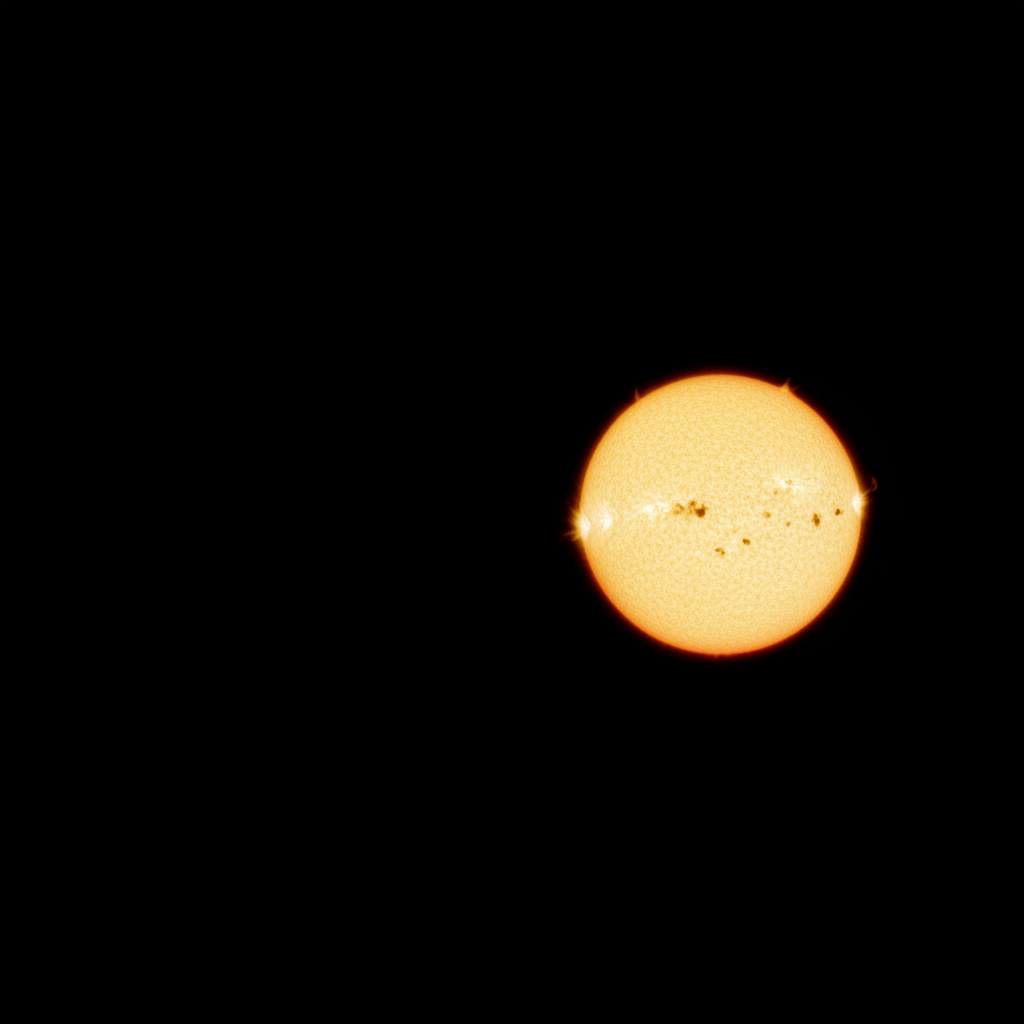
Introduction to Main Sequence Stars
When astronomers talk about the "typical" star, they are almost certainly describing a main sequence star. These are the workhorses of the universe—stars in the prime of their lives, steadily converting hydrogen into helium through nuclear fusion in their cores. Roughly 90% of all stars in existence belong to this category, making them by far the most common stellar type.
The term "main sequence" comes from the Hertzsprung-Russell diagram, a fundamental tool in stellar astronomy that plots stars by their temperature and luminosity. When you plot thousands of stars on this diagram, the vast majority fall along a diagonal band called the main sequence, stretching from hot, bright blue stars at the top left to cool, dim red stars at the bottom right.
Main sequence stars come in an astonishing variety. At one extreme are the massive O-type blue giants, dozens of times more massive than the Sun and shining with the power of hundreds of thousands of Suns. At the other extreme are the tiny M-type red dwarfs, barely large enough to sustain hydrogen fusion, glowing so faintly they are invisible to the naked eye even when only a few light-years away. Our Sun sits comfortably in the middle of this range as a perfectly ordinary G-type yellow dwarf.
Understanding main sequence stars means understanding stellar life itself. Their properties—mass, temperature, luminosity, and lifespan—are all governed by a single fundamental parameter: how much mass they contain. This mass-luminosity relationship makes main sequence stars among the best understood objects in the universe.
Physical Characteristics
The physical properties of main sequence stars span an enormous range, all determined primarily by their initial mass. From the minimum mass needed to sustain hydrogen fusion to the maximum mass before a star becomes unstable, the main sequence encompasses objects wildly different in size, temperature, and power output.
Main Sequence Quick Facts
- Mass Range: 0.08 to 150 solar masses
- Temperature Range: ~2,400 K to ~50,000 K
- Luminosity Range: 0.0001 to 1,000,000 solar luminosities
- Lifetime Range: Millions to trillions of years
- Percentage of Stars: ~90% of all stars
- Nearest Example: Proxima Centauri (4.24 ly)
Data: NASA Stars & Stellar Evolution
The mass-luminosity relationship is one of the most powerful laws in stellar physics. More massive stars have stronger gravity, which compresses their cores more, raises the temperature and pressure, and accelerates the rate of nuclear fusion. This is why a star ten times more massive than the Sun can be thousands of times more luminous.
Surface temperature determines a star's color. The hottest main sequence stars appear blue-white, while cooler ones appear yellow, orange, or red. This color reflects the peak wavelength of the star's radiation, following Wien's displacement law: the cooler the surface, the redder the light.
The Hertzsprung-Russell Diagram
The Hertzsprung-Russell (HR) diagram is one of the most important tools in stellar astronomy. Independently developed by Ejnar Hertzsprung and Henry Norris Russell in the early 20th century, it plots a star's luminosity against its surface temperature. When you plot a large sample of stars, a striking pattern emerges: most stars cluster along a diagonal band—the main sequence.
The Main Sequence Band
The main sequence runs diagonally across the HR diagram from the upper left (hot, luminous blue stars) to the lower right (cool, dim red stars). Stars spend the majority of their lives on this band because hydrogen fusion in the core is the most stable and long-lasting energy source available. A star's position on the main sequence is determined almost entirely by its mass.
Mass-Luminosity Relationship
Along the main sequence, luminosity scales roughly as the fourth power of mass: L ∝ M^4. This means doubling a star's mass makes it about 16 times more luminous. This steep relationship explains why massive stars are so spectacularly bright and why they exhaust their fuel so quickly.
Luminosity Classes
The HR diagram also shows that stars of the same temperature can have very different luminosities—indicating different sizes. This led to the luminosity classification system: Class I (supergiants), Class II (bright giants), Class III (giants), Class IV (subgiants), and Class V (main sequence dwarfs). The Sun's full classification, G2V, tells us it is a main sequence star.
Stellar Classification
The modern system for classifying stars was developed at Harvard Observatory in the late 19th and early 20th century, largely through the work of Annie Jump Cannon. Stars are classified by their spectral type, which reflects their surface temperature, followed by a luminosity class.
The OBAFGKM Sequence
The spectral sequence for main sequence stars, from hottest to coolest, is O, B, A, F, G, K, M. Each letter corresponds to a temperature range and characteristic absorption lines:
- O-type (blue): Surface temperature above 30,000 K. Ionized helium lines visible. Extremely rare and luminous.
- B-type (blue-white): 10,000–30,000 K. Neutral helium lines. Examples: Spica, Achernar.
- A-type (white): 7,500–10,000 K. Strong hydrogen lines. Examples: Sirius A, Vega.
- F-type (yellow-white): 6,000–7,500 K. Ionized calcium lines. Examples: Procyon A.
- G-type (yellow): 5,200–6,000 K. Many metal lines. Examples: Sun, Alpha Centauri A.
- K-type (orange): 3,700–5,200 K. Molecular bands begin. Examples: Epsilon Eridani, 61 Cygni.
- M-type (red): Below 3,700 K. Strong molecular bands (TiO). Examples: Proxima Centauri, Barnard's Star.
Subclasses and Luminosity Classes
Each spectral class is further divided into subclasses 0 through 9 (0 being hottest). Combined with luminosity class V for main sequence stars, we get full designations like G2V (the Sun) or M5.5Ve (Proxima Centauri, where 'e' denotes emission lines).
Nuclear Fusion
The energy that powers main sequence stars comes from nuclear fusion—the process of combining lighter atomic nuclei into heavier ones, releasing energy in the process. For main sequence stars, the fuel is hydrogen and the product is helium.
The Proton-Proton Chain
In lower-mass stars like the Sun (and all stars cooler than about 1.5 solar masses), the dominant fusion process is the proton-proton (PP) chain. Four hydrogen nuclei (protons) are gradually combined to form one helium-4 nucleus, releasing energy in the form of gamma rays. The Sun converts about 600 million tons of hydrogen into helium every second.
The CNO Cycle
In more massive stars with core temperatures above about 17 million K, the carbon-nitrogen-oxygen (CNO) cycle becomes the dominant fusion pathway. Carbon acts as a catalyst, facilitating the fusion of four hydrogen nuclei into helium. The CNO cycle is extremely temperature-sensitive—a small increase in temperature dramatically increases energy production.
Hydrostatic Equilibrium
Main sequence stability arises from hydrostatic equilibrium: the outward pressure from nuclear fusion exactly counteracts the inward pull of gravity. This self-regulating mechanism makes main sequence stars remarkably stable over billions of years.
Stellar Lifetimes
One of the most counterintuitive facts about stars is that the most massive ones die youngest. Because massive stars burn their fuel at such a prodigious rate, they exhaust it far faster than their smaller cousins.
The Mass-Lifetime Relationship
A star's main sequence lifetime scales roughly as 1/mass^3. A star ten times the Sun's mass has only about 1/1000th the Sun's lifetime. Our Sun will live about 10 billion years total on the main sequence; a 10-solar-mass star would live only about 10 million years.
The Extremes
At the massive end, the most luminous O-type stars may live only 1-3 million years. At the low-mass end, red dwarf stars could potentially shine for 10 trillion years or more. No red dwarf has ever died of old age because the universe is not yet old enough.
The Sun's Timeline
Our Sun formed about 4.6 billion years ago and has roughly 5 billion years remaining on the main sequence. In about 5 billion years, the Sun will exhaust its core hydrogen and begin the transition to a red giant.
Notable Main Sequence Stars
The night sky is populated almost entirely by main sequence stars. Here are some of the most notable examples spanning the full range of stellar types.
The Sun (G2V)
Our nearest stellar neighbor is the definitive example of a G-type main sequence star. With a surface temperature of 5,778 K and a luminosity that has powered life on Earth for billions of years, the Sun is the most studied star in the universe.
Sirius A (A1V)
The brightest star in the night sky, Sirius A is a white A-type main sequence star about 25 times more luminous than the Sun, located just 8.6 light-years away. Sirius has a white dwarf companion, Sirius B.
Vega (A0V)
One of the brightest stars in the northern hemisphere, Vega is an A-type main sequence star about 40 light-years away. It will become a future "pole star" in about 12,000 years due to precession.
Proxima Centauri (M5.5Ve)
The closest star to the Sun at just 4.24 light-years, Proxima Centauri is a red dwarf main sequence star so faint that it requires a telescope to see. It hosts at least one planet, Proxima Centauri b, in or near the habitable zone.
Alpha Centauri A (G2V)
Part of the closest stellar system to the Sun, Alpha Centauri A is remarkably similar to our Sun—slightly larger, brighter, and older. It forms a binary pair with Alpha Centauri B (a K-type star).
Epsilon Eridani (K2V)
One of the nearest solar-type stars at 10.5 light-years, Epsilon Eridani is a young K-type orange dwarf with a debris disk and a confirmed planet, making it a popular SETI target.
Observing Main Sequence Stars
Because virtually every star you can see is a main sequence star, observing them is as simple as looking up on a clear night. Understanding what you are seeing adds a new dimension to stargazing.
Color Recognition
With the naked eye, you can distinguish stellar colors. Blue-white stars like Sirius contrast with yellow stars like Alpha Centauri, and orange stars like Epsilon Eridani. The color directly tells you about temperature—blue means hot (20,000+ K), white means warm (8,000-10,000 K), yellow means moderate (5,000-6,000 K), and orange-red means cool (3,000-4,500 K).
Binoculars and Telescopes
With binoculars, you can see many more stars. Star clusters like the Pleiades (mostly hot B-type stars) and the Hyades (mostly K-type orange dwarfs) showcase different parts of the main sequence.
Spectroscopy
Amateur spectroscopy with inexpensive diffraction grating eyepieces allows you to classify stars by their absorption lines—the key diagnostic tool that enables OBAFGKM classification.
Interesting Facts About Main Sequence Stars
- Red Dwarf Dominance: 70-75% of all stars in the Milky Way are M-type red dwarfs, yet none are visible to the naked eye from Earth. Their faintness means they contribute very little to the galaxy's total light despite being the most numerous type.
- Mass-Luminosity: A star twice as massive as the Sun burns about 16 times brighter, following the roughly L ∝ M^4 relationship. This steep power law is why stellar lifetimes vary so dramatically across the main sequence.
- Cosmic Middle Age: Our Sun is currently about halfway through its main sequence life at 4.6 billion years old. In another 5 billion years it will exhaust its core hydrogen.
- Smallest Stars: The minimum mass to sustain hydrogen fusion is about 0.08 solar masses (80 Jupiter masses). Below this threshold, objects are brown dwarfs—failed stars that glow only from gravitational contraction.
- Longest Lived: Red dwarf stars could potentially live for 10 trillion years or more. No red dwarf has ever reached the end of its life since the universe is only 13.8 billion years old.
- Blue Giant Brevity: The most massive O-type stars live only 1-3 million years before dying in supernova explosions. For comparison, the dinosaurs lived for over 100 million years.
- Temperature Colors: A star's color directly reflects its surface temperature per blackbody radiation physics. Red is cooler, blue is hotter—astronomers can estimate temperature just by looking at color.
- Spectroscopy Power: Everything we know about stellar compositions comes from analyzing the light that reaches us—no star has ever been physically sampled. By splitting starlight into its spectrum, astronomers determine temperature, composition, and velocity.
External Resources
- NASA Stars Overview - NASA's guide to stellar types, life cycles, and current research
- Main Sequence on Wikipedia - Comprehensive encyclopedia article on main sequence stars
- ESA Stars - European Space Agency's stellar science pages
- Hertzsprung-Russell Diagram - Detailed explanation of the fundamental stellar classification diagram
Frequently Asked Questions
What is a main sequence star?
A main sequence star is any star that is actively fusing hydrogen into helium in its core through nuclear fusion. This hydrogen-burning phase represents the longest and most stable period in a star's life. Main sequence stars follow a relationship between luminosity and temperature called the main sequence on the Hertzsprung-Russell diagram. About 90% of all stars in the universe, including our Sun, are currently main sequence stars.
How long do main sequence stars live?
The lifespan of a main sequence star depends heavily on its mass. Massive blue stars (10+ times the Sun's mass) burn through their fuel in just a few million years. Our Sun will spend about 10 billion years on the main sequence total, with about 5 billion years remaining. Low-mass red dwarf stars are incredibly frugal with their fuel and can shine for trillions of years—far longer than the current age of the universe.
What are the spectral classes of main sequence stars?
Main sequence stars are classified by their surface temperature into spectral classes: O (blue, >30,000 K), B (blue-white, 10,000-30,000 K), A (white, 7,500-10,000 K), F (yellow-white, 6,000-7,500 K), G (yellow, 5,200-6,000 K), K (orange, 3,700-5,200 K), and M (red, <3,700 K). The mnemonic 'Oh Be A Fine Girl/Guy, Kiss Me' helps remember this sequence. Our Sun is a G-type star.
Is the Sun a main sequence star?
Yes, the Sun is a main sequence star classified as a G2V yellow dwarf. It has been fusing hydrogen in its core for about 4.6 billion years and has roughly another 5 billion years of main sequence life remaining. When the Sun exhausts its hydrogen fuel, it will expand into a red giant and eventually shed its outer layers, leaving behind a white dwarf. The 'V' in its classification indicates it is a main sequence (dwarf) star.
What are the most common main sequence stars?
Red dwarf stars (spectral class M) are by far the most common type of star in the universe, making up about 70-75% of all stars. They are small, cool, and extremely long-lived. Despite their abundance, they are too faint to see with the naked eye from Earth. The nearest star to our solar system, Proxima Centauri, is a red dwarf main sequence star just 4.24 light-years away.
What happens when a main sequence star runs out of hydrogen?
When a main sequence star exhausts the hydrogen in its core, it can no longer maintain the pressure to balance gravity. The core contracts and heats up, which causes the outer layers to expand dramatically, transforming the star into a red giant or supergiant depending on its mass. Low and medium-mass stars (like the Sun) become red giants, then planetary nebulae with white dwarf cores. Massive stars become red supergiants and end their lives in spectacular supernova explosions.