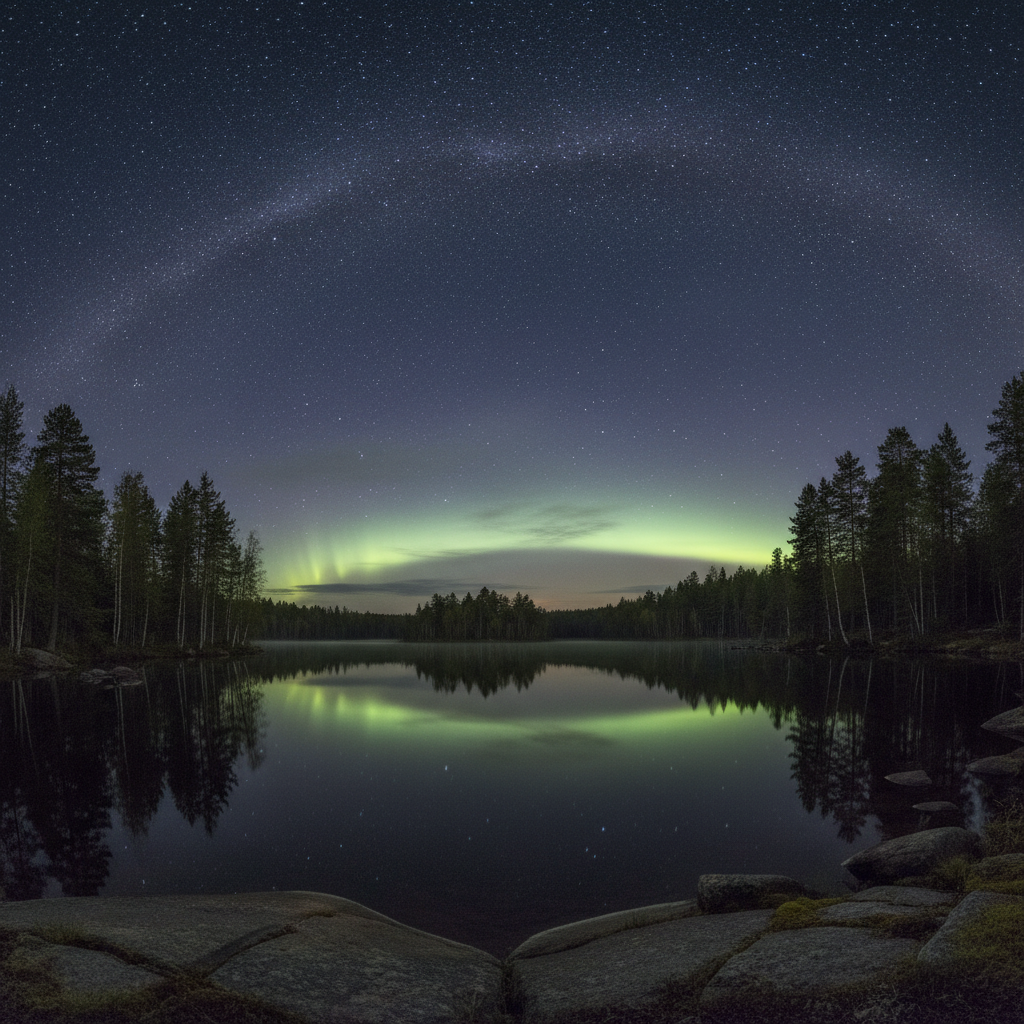
Introduction: Why Sweden is Extraordinary for Stargazing
Sweden's combination of extreme northern latitude, vast wilderness, and minimal light pollution creates one of Europe's most dramatic stargazing environments. The country stretches 1500km from north to south — from the Arctic birch forests and fells of Lapland above 68°N to the agricultural lowlands and Baltic coastline of Skåne at 55°N. This geographic range means Sweden offers radically different stargazing experiences: Arctic aurora hunting in the north, wild forest observing in the centre, and accessible dark countryside in the south.
Sweden's population of 10 million is concentrated in three main cities — Stockholm, Gothenburg, and Malmö. The vast northern two-thirds of the country is almost entirely wilderness, with a population density below 3 people per km². This translates directly into natural darkness: Sweden's interior forests and fells record some of the lowest artificial sky brightness values in Europe, comparable to remote areas of the Scottish Highlands or the Norwegian mountains.
The aurora borealis is Sweden's most famous astronomical attraction. At Abisko (68.4°N), the geomagnetic latitude and the site's unique microclimate combine to create one of the most reliable aurora viewing destinations on Earth. But Sweden's stargazing credentials extend well beyond the northern lights — the Milky Way arches dramatically over Lapland's lake-studded wilderness, thousands of stars crowd the winter sky in a way impossible from urban Europe, and the absolute silence of the Swedish forest at midnight creates a sense of astronomical immersion that few other places can match.
Sweden's Stargazing Regions at a Glance
- Abisko National Park (68.4°N, 18.8°E) — World-renowned aurora site; unique clear-sky microclimate; Aurora Sky Station cable car
- Jokkmokk, Norrbotten (66.6°N, 19.8°E) — Above Arctic Circle; Sami cultural centre; vast forest lake landscape; minimal light pollution
- Gällivare / Dundret (67.1°N, 20.7°E) — "Midnight Sun Mountain"; excellent winter aurora access; well-developed tourism
- Östersund & Storsjön (63.2°N, 14.6°E) — Central Sweden; clear lake district nights; accessible from Stockholm by train
- Gotland (57.5°N, 18.5°E) — Baltic island with dry microclimate; southern constellation access; ferry from Stockholm
- Kullaberg, Skåne (56.3°N, 12.4°E) — Nature reserve on the Swedish southwest tip; dark western horizon over the Kattegat
Sweden is also practical and accessible for international visitors. The inlandsbanan railway traverses the interior from Kristinehamn to Gällivare; direct trains connect Stockholm to Narvik via the Arctic line, stopping at Abisko Turiststation. Sweden's allemansrätten (right of public access) allows free movement and camping across virtually all private and public land — a remarkable freedom that means astronomers can set up anywhere in the vast wilderness with complete legality.
Abisko National Park — The World's Best Aurora Stage
Abisko National Park (68.4°N, 18.8°E) in Swedish Lapland is internationally recognised as one of the finest aurora borealis viewing destinations on Earth. Located 200km north of the Arctic Circle on the southern shore of Lake Torneträsk — a vast fjord-like lake 70km long — the park benefits from a remarkable microclimate. The surrounding mountains create a rain shadow effect that keeps local skies clear even when clouds cover the surrounding region, giving Abisko a statistically higher proportion of clear nights than anywhere else in northern Scandinavia.
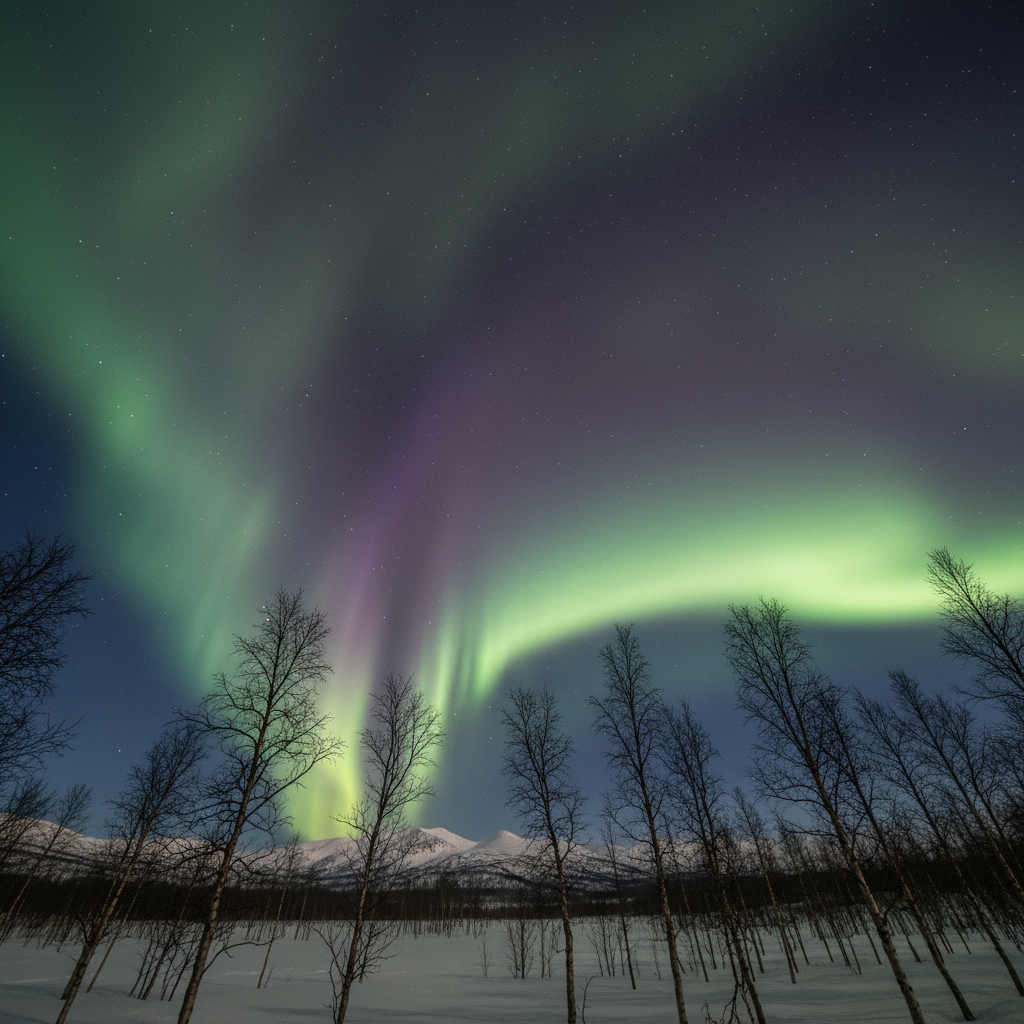
Abisko National Park — one of the world's most reliable aurora borealis viewing locations, with a unique microclimate that clears skies when surrounding Lapland is cloudy
Aurora Sky Station
The Aurora Sky Station (Aurorasky.se) operates from Abisko Turiststation via a chairlift that ascends to Mount Nuolja (900m) above the park. The station provides a panoramic viewing platform, heated shelter, restaurant, and guided aurora observation. Guides explain the science of the aurora and help visitors photograph the display using station-provided equipment. The elevated position clears any low-level mist and provides a 270-degree view of the northern and overhead sky — the best possible position for watching a full aurora display develop.
The chairlift and station operate nightly from late September through March, weather and aurora forecasts permitting. Booking is required — the station has limited capacity and popular nights sell out weeks in advance. The Abisko Turiststation resort at the base provides accommodation, meals, and equipment hire; overnight guests have priority access to the station. Independent access to Mount Nuolja is possible on foot via marked summer trails (snowshoe or ski required in deep winter).
Independent Aurora Viewing
The shores of Lake Torneträsk at Abisko provide outstanding free aurora viewing without booking the Sky Station. The lake's northern exposure gives clear views of the most active part of the aurora oval. The E10 road running along the lake shore has several pull-offs. The Abisko canyon (Abiskojåkka gorge) provides a dramatic foreground for aurora photography. The railway station platform itself faces north over the lake — many travellers on the Narvik–Stockholm overnight train have seen their first aurora from the train window as it passes Abisko.
Practical Information
Abisko is accessible by direct train from Stockholm on the Arctic (Malmbanan) railway line — approximately 18 hours; overnight train is available. Alternatively, fly to Kiruna (50km east) and take a taxi or local bus. The Abisko Turiststation resort offers various accommodation from hostel to hotel. Winter temperatures range from -10°C to -30°C; proper Arctic clothing is essential. The resort provides equipment hire including thermal suits, boots, and snowshoes. Dogs and snowmobiles are available for guided excursions into the surrounding wilderness.
Swedish Lapland & Jokkmokk
Swedish Lapland covers the northernmost quarter of Sweden — a vast wilderness of birch and pine forest, bare mountain fells, frozen lakes, and the winding river valleys of the Lule, Torne, and Kalix rivers. Above the Arctic Circle (66.5°N), night arrives with dramatic authority from late August onwards, and by October, 18-20 hours of darkness each day create extraordinary opportunities for extended observation. The region's near-zero light pollution creates the darkest naturally accessible skies in Sweden.
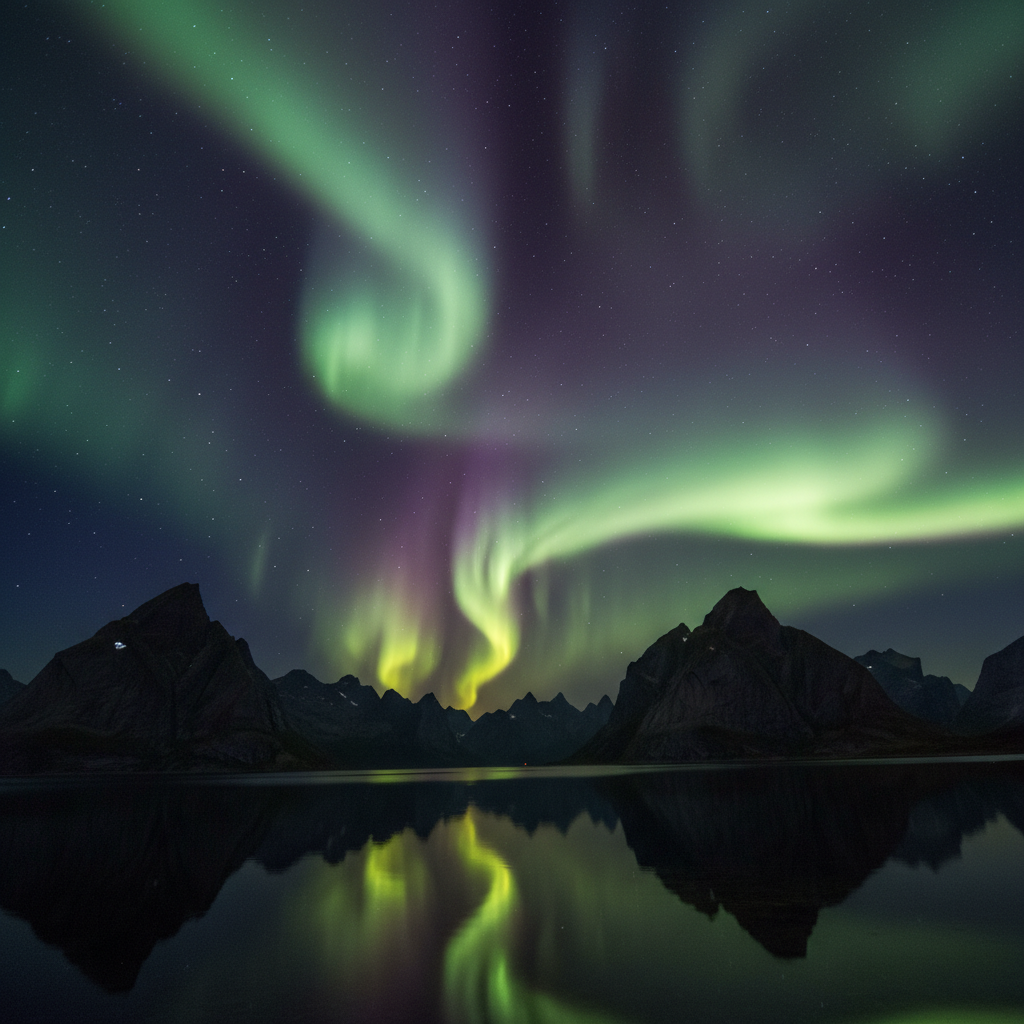
Swedish Lapland's frozen lakes reflect the aurora — vast wilderness darkness and 18+ hour winter nights create extraordinary observing conditions
Jokkmokk — The Arctic Circle Town
Jokkmokk (66.6°N, 19.8°E) sits precisely on the Arctic Circle and serves as a cultural and logistical hub for Swedish Lapland. The town is the centre of Sami culture in Sweden — the Ájtte museum explores indigenous Arctic heritage — and hosts the famous Jokkmokk Winter Market in early February, a centuries-old gathering. The surrounding landscape of lake-dotted forest provides excellent aurora viewing access with the convenience of town infrastructure.
The Muddus National Park (67.0°N, 20.3°E) — 50km west of Jokkmokk — is a UNESCO World Heritage wilderness of primeval boreal forest, canyons, and waterfalls. Night access is unrestricted under allemansrätten; the park's complete absence of light sources makes it one of Sweden's darkest sky environments. The Lule River lakes surrounding Jokkmokk provide dramatic frozen-lake foregrounds for winter astrophotography.
Kiruna and the Gällivare Fells
Kiruna (67.8°N, 20.2°E) — Sweden's northernmost large town — provides good accommodation and airport access for aurora seekers. The area around the Kebnekaise mountain (Sweden's highest, 2097m) provides elevated viewing positions. The surrounding Kungsleden (Royal Trail) long-distance hiking path passes through exceptional wilderness. In winter, guided snowmobile and reindeer sled tours to remote dark sky locations are available from Kiruna and neighbouring Gällivare.
The Dundret nature reserve above Gällivare (67.1°N, 20.7°E) rises to 821m — during the midnight sun period (June–July) it is a celebrated viewing point, and in winter it becomes an excellent aurora observation platform. The Dundret resort operates winter aurora programmes including guided snow scooter trips and overnight aurora watching sessions in heated glass cabins (a Swedish innovation that allows aurora viewing while staying warm).
Glass Igloo and Cabin Experiences
Northern Sweden's tourism industry has developed a range of specialised aurora accommodation. Heated glass igloos (pioneered in Finland but now widely available in Swedish Lapland) allow guests to lie in bed watching the sky overhead. Converted Sami lavvus (traditional tent structures) with transparent roofs, treehouse cabins with panoramic windows, and floating glass-roof cabins on frozen lakes are all available in the Kiruna–Abisko–Jokkmokk region. These experiences combine exceptional aurora viewing with memorable accommodation in a way impossible anywhere else in Europe.
Southern Sweden & Gotland
Southern Sweden — Skåne, Blekinge, Småland, and the Baltic islands of Gotland and Öland — offers accessible dark sky experiences very different from the Arctic north. These regions experience proper astronomical darkness from late July through April and benefit from Baltic Sea influence that moderates cloud cover. The island of Gotland in particular has developed a reputation for exceptionally clear nights thanks to its dry Baltic microclimate.
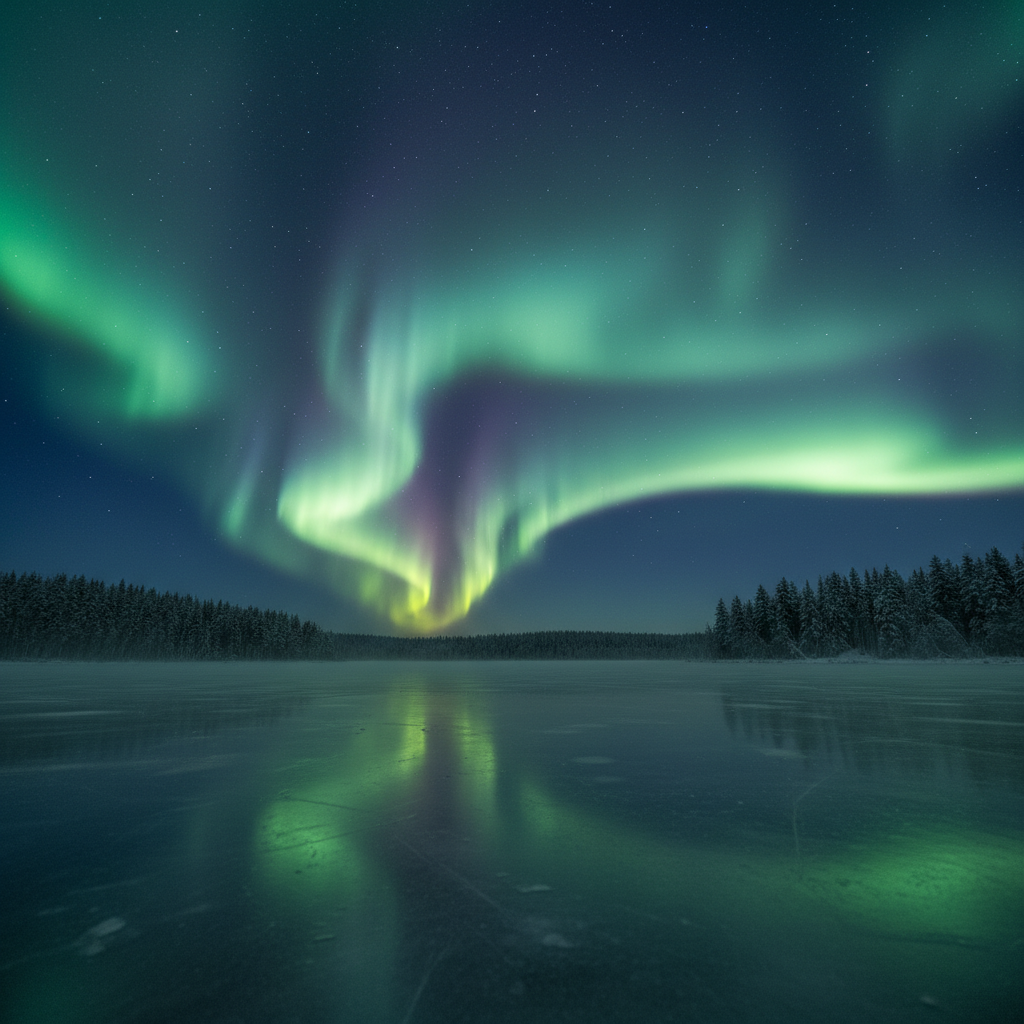
Southern Sweden's lake landscape — dark countryside, accessible infrastructure, and occasional strong auroras make this region a year-round stargazing destination
Gotland — Baltic Dark Sky Island
Gotland (57.5°N, 18.5°E) is Sweden's largest island, sitting in the middle of the Baltic Sea 90km from the mainland. Its dry, relatively sunny microclimate — more like Denmark or the Netherlands than mainland Sweden — gives it significantly more clear nights than comparable mainland latitudes. The island's gently rolling limestone landscape (alvar) is almost entirely free of urban development outside the medieval walled city of Visby. The northern part of the island (Fårö peninsula, Gotska Sandön National Park to the north) provides the darkest conditions.
During strong geomagnetic events, the aurora borealis reaches this far south — Gotland at 57.5°N can see aurora during Kp-4 or higher events, several times per year. The island's clear horizon to the north over the Baltic makes these moments spectacular. The island is accessible by ferry from Nynäshamn or Oskarshamn (3–3.5 hours) or by direct flight from Stockholm.
Kullaberg, Skåne
The Kullaberg nature reserve (56.3°N, 12.4°E) occupies a rocky peninsula on the Swedish southwest coast, jutting into the Kattegat strait. The reserve's western and northern faces look out over dark water with no city lights on the horizon. The Kullen lighthouse at the tip of the peninsula is surrounded by some of the darkest coastline in southern Scandinavia. Malmö and Helsingborg are only 50–70km away, making Kullaberg the most accessible dark sky location from southern Sweden's major cities.
Tiveden and the Central Lakes
The Tiveden National Park (58.8°N, 14.6°E) in the border between Västra Götaland and Örebro counties is an ancient forested wilderness of bare rock, deep forest, and cold lakes. At 100km from Gothenburg and 200km from Stockholm, it offers genuine dark sky access from Sweden's two largest cities. The park's lack of roads or settlements ensures completely dark skies. The Unden lake to the south provides a reflective foreground. Tiveden is accessible May through October; winter access requires snowshoes or skis on the forest paths.
Östersund and the Storsjön
Östersund (63.2°N, 14.6°E) on the banks of the Storsjön lake provides a comfortable urban base for central Swedish stargazing. The city itself is small (50,000 people) and surrounded by dark countryside. Drive 30 minutes in any direction onto the surrounding hills and forests for Bortle 3–4 skies. The Storsjön lake area regularly sees the Milky Way and, during elevated geomagnetic activity, the aurora. Östersund is 6 hours by train from Stockholm and served by direct flights.
Other Notable Stargazing Locations
Sarek National Park
Sarek (67.1°N, 17.7°E) is one of Europe's last true wildernesses — 1970km² of uninhabited mountains, glaciers, and river valleys with no roads, no huts, and no services. Access requires multi-day hiking. For experienced wilderness travellers, Sarek delivers the most extreme dark sky conditions available in Europe — no human light source within 50km in any direction. The aurora sweeps overhead without competition from any artificial light. The Sarektjåhkkå glacier summit provides 360-degree horizon views. Sarek is only for experienced, self-sufficient mountaineers; the terrain is genuinely demanding and conditions can be severe even in summer.
High Coast (Höga Kusten), Ångermanland
The High Coast UNESCO World Heritage Site (63°N, 18°E) features dramatic coastal scenery — dramatic cliffs, Baltic inlets, and forested islands. The combination of dark water horizon and low local population creates excellent stargazing conditions from accessible coastal viewpoints. The Skuleskogen National Park within the High Coast area provides wilderness forest dark sky access. Reachable by road from Sundsvall (50km) or by the overnight train Stockholm–Sundsvall.
Falsterbo Peninsula, Skåne
The Falsterbo peninsula (55.4°N, 12.9°E) at the very tip of Sweden, where the Baltic meets the Öresund strait, provides a flat, wide-horizon dark site accessible from Malmö (30km). The Falsterbo lighthouse and surrounding nature reserve face open water in three directions — ideal for aurora observation during strong events and for the wide-horizon viewing favoured by experienced astronomers. Strong auroras at this latitude (55°N) require Kp-5 or higher events, but these occur several times per year during solar maximum.
Best Times and Seasons for Stargazing in Sweden
Sweden's extreme latitude range means seasonal timing is more critical here than almost anywhere else in Europe. The midnight sun completely eliminates summer stargazing in the north; in the south, white nights significantly shorten the observing window.
Seasonal Guide — Northern Sweden (Abisko / Jokkmokk)
- Late August–September: Astronomical darkness returns after midnight sun. First aurora of the season. Nights 10–12 hours dark. September equinox brings elevated geomagnetic activity. Temperatures -5 to 5°C. Autumn colours in birch forest (beautiful astrophotography context).
- October–November: Nights lengthen to 18+ hours. Aurora season in full swing. Milky Way visible until midnight. Lake surfaces begin freezing (late October). Temperatures -10 to -20°C. Snow arrives. Peak aurora viewing probability.
- December–February: Maximum darkness — polar night brings 24-hour darkness at extreme north. Deep cold (-20 to -35°C). Spectacular aurora with long observation windows. Glass igloo experiences available. Most demanding conditions; specialist Arctic clothing essential.
- March–April: March equinox brings another aurora peak. Temperatures rise (-5 to 5°C in March). Snow still on ground but daylight returning. April conditions improve rapidly; late April too light for astronomy above 66°N.
Seasonal Guide — Southern Sweden (Gothenburg / Malmö / Gotland)
- August–September: Astronomical darkness restored from late July in the south. Milky Way galactic core still visible in early August. Nights 8–10 hours. Pleasant temperatures (8–15°C). September equinox can bring aurora to southern latitudes.
- October–November: Nights lengthen to 10–12 hours. Good galaxy season (Andromeda, Perseus double cluster). Temperatures 0–10°C. October meteor showers. Strong aurora events occasionally reach Skåne and Gotland.
- December–February: Longest nights (15–16 hours in Skåne). Orion, Taurus, Gemini dominate. Clear, cold anticyclonic nights give exceptional transparency. Temperatures -5 to 5°C; snow possible. Aurora visible from Gotland during Kp-5+ events.
- March–May: Galaxy season returns. March aurora activity. Nights shorten but remain excellent into April at southern latitudes. Spring transparency often outstanding as dry continental air replaces Atlantic moisture.
Aurora Forecasting
The aurora borealis activity depends on the sun's solar wind — measured as the Kp index (0–9). For Abisko and northern Lapland, Kp-2 or higher produces visible aurora on clear nights. For Östersund and central Sweden, Kp-4 is needed. For Skåne and Gotland, Kp-5 or higher. Monitor the NOAA Space Weather Prediction Center (spaceweather.noaa.gov) and the Space Weather Live app for 30-minute aurora alerts. The Swedish Meteorological Institute (SMHI) provides cloud cover forecasts specific to aurora viewing.
Essential Equipment for Stargazing in Sweden
Sweden's climate extremes — from -35°C Arctic winter to warm Baltic summer nights — require very different equipment approaches depending on location and season.
Equipment Checklist — Swedish Stargazing
Essential — Arctic Winter (Abisko / Lapland, Oct–March):
- Arctic thermal suit or equivalent layers — Multiple base layers (merino wool), mid-layers (fleece, down), outer layer (wind/waterproof shell). Minimum -20°C rated
- Insulated boots, rated to -40°C — Standing still in Arctic cold demands extreme footwear; standard hiking boots are inadequate
- Balaclava, thermal hat, neoprene face mask — Exposed skin freezes rapidly in wind; cover all skin below -15°C
- Insulated gloves with liner gloves — Two glove system allows brief equipment adjustment without full frost exposure
- Hand and foot warmers — Chemical warmers provide emergency heat; place inside gloves and boots
- Head torch with extra batteries (keep warm) — Cold kills batteries rapidly; keep spares in an inner pocket
Essential — Southern Sweden and Milder Seasons:
- Warm waterproof jacket and trousers — Swedish autumn and spring are damp; waterproofing essential
- Red LED headlamp — Navigation and night vision preservation
- Insect repellent — Mosquitoes and midges are ferocious in Swedish summer forest and lake environments
Recommended (All Locations):
- Binoculars (10×50) — Excellent for aurora structure observation and Sweden's brilliant winter Milky Way
- Camera with wide-angle lens (14–24mm) — Aurora photography rewards quick setup; mirrorless cameras handle cold better than DSLRs
- Aurora alert app (Space Weather Live) — Real-time Kp index monitoring with push notifications
- Offline maps — Northern Swedish wilderness areas have minimal mobile coverage; download offline maps
- Thermos with hot drink — Maintaining core warmth during extended winter observation is critical
Planning Your Stargazing Trip to Sweden
Getting to Northern Sweden
The SJ Arctic Railway (Narvik line) connects Stockholm to Abisko in approximately 18 hours — an overnight journey through increasingly wild landscape. Direct trains from Stockholm stop at Kiruna and continue to Abisko Turiststation station (directly at the national park accommodation). Flying to Kiruna Airport from Stockholm takes 1.5 hours; car hire is available but roads in deep winter require four-wheel drive or winter tyres. From Kiruna, public buses serve Abisko (1 hour). Gällivare and Jokkmokk are served by the Inlandsbanan railway and regional bus connections.
Allemansrätten — Right of Public Access
Sweden's allemansrätten grants everyone the right to walk, camp, and observe across virtually all land — public and private — as long as you don't disturb or damage. This means astronomers can legally set up a telescope in any forest clearing, on any hilltop, on any lake shore, without seeking permission. The only restrictions are: stay 70m from occupied dwellings, don't enter cultivated fields, don't disturb wildlife. This extraordinary freedom makes Sweden uniquely accessible for spontaneous dark sky observation — if you find a perfect site while driving, you can simply stop and observe.
Accommodation Strategy
For northern Sweden, booking accommodation 2–4 months ahead for winter is essential — glass igloo experiences and Abisko Sky Station slots sell out far in advance. For flexibility, the STF (Svenska Turistföreningen) operates mountain huts and hostels across Lapland that can be booked with shorter lead times. In southern Sweden, accommodation is flexible — a rural B&B or self-catering cottage provides garden access for impromptu observation. Wild camping under allemansrätten is legal year-round; a quality winter bivouac setup extends your options enormously in the north.
Aurora Trip Length
The aurora is unpredictable — plan for at least 4–5 nights in northern Sweden to have a good statistical chance of seeing a display. A single night is possible but risky. The Abisko microclimate improves your odds significantly compared to other Lapland locations, but no location can guarantee aurora. Many visitors plan a week-long trip, using cloudy nights for daytime activities (ice fishing, snowmobile tours, reindeer experiences) and observing on clear nights. This approach almost always results in at least 2–3 aurora events per week during peak season.
Weather and Sky Conditions in Sweden
Abisko's Unique Microclimate
Abisko's exceptional aurora viewing record is inseparable from its microclimate. The Scandinavian mountain range to the west blocks moisture-laden Atlantic air, creating a dramatic rain shadow over the Torneträsk valley. When clouds sweep across most of Lapland, Abisko frequently has a local clear patch directly above the lake. The Abisko Scientific Research Station monitors this phenomenon; the Aurora Sky Station webcam shows real-time conditions. On nights when Kiruna (50km east) is completely overcast, Abisko can have a 20–50km clear window overhead — a phenomenon local guides call "the hole in the clouds."
General Swedish Weather Patterns
Continental Sweden's weather is dominated by Atlantic systems from the west and cold Arctic air from the north. The Atlantic influence brings cloud and precipitation primarily to the western coastal areas (Gothenburg, Bohuslän) and is much weaker in the interior. Northern Sweden's continental climate brings clear, cold anticyclonic high-pressure systems in winter that can persist for 5–10 days — creating extended clear observation windows. Southern Sweden is cloudier than the north in winter due to Baltic Sea moisture, but spring and autumn can be very clear.
Forecasting Tools for Sweden
- SMHI (smhi.se) — Sweden's official meteorological service; excellent detailed forecasts for all regions including Arctic
- Clear Outside (clearoutside.com) — Astronomy-specific forecasts for Swedish locations; transparency and seeing predictions
- Space Weather Live (spaceweatherlive.com) — Real-time aurora forecast with Kp index and push notification alerts
- Windy.com — Cloud and wind layer visualisation; shows Arctic air mass boundaries relevant to Lapland forecasting
- Aurora Sky Station webcam (aurorasky.se) — Live sky conditions above Abisko from the observatory platform
Cold Weather Observatory Setup
Below -20°C, optical equipment requires special consideration. Lubricants in telescope focusers solidify; electronic mounts run slowly or fail; laptop batteries drain in minutes; camera batteries last a fraction of normal time. For Aurora observation, a simple wide-angle camera on a tripod with an intervalometer is far more reliable than a complex mount. Keep spare batteries warm in an inner clothing pocket. Modern mirrorless cameras (Sony A7, Nikon Z-series) handle cold considerably better than older DSLRs. Allow equipment to warm gradually when bringing back indoors to prevent condensation on internal optics.
Practical Tips for Stargazing in Sweden
Reading the Aurora
The aurora borealis appears in many forms — from a faint greenish arc low on the northern horizon (the most common form) to dramatic curtains, spirals, and pulsating patches filling the entire sky. A faint arc can persist for hours before suddenly erupting into an active display; be patient and don't leave a promising arc just because it seems weak. The best displays often follow a quiet period. The colour visible to the naked eye is usually green (oxygen at 100–150km altitude); cameras capture the full colour range including red and purple that the eye struggles to see in low-activity aurora.
Winter Safety in Arctic Sweden
The Swedish wilderness in deep winter is genuinely demanding. Always inform accommodation staff or someone reliable of your intended location and expected return time. Carry an emergency bivouac bag and a fully charged phone (keep it warm). Know the signs of hypothermia and frostbite — numb or white skin on exposed areas, intense shivering followed by warm feeling (a warning sign). Never venture into wilderness areas alone in extreme cold without relevant experience. Guided tours from Abisko, Kiruna, or Jokkmokk operators provide safety coverage while still delivering excellent dark sky access.
Midnight Sun Photography
While the midnight sun eliminates stargazing above the Arctic Circle in summer, it creates a unique astrophotography opportunity. At Abisko in June, the sun grazes the northern horizon at midnight, casting extraordinary golden light across the birch forests and lake surface. This "midnight gold" is technically a landscape photography opportunity rather than astronomy, but many photography enthusiasts plan Abisko visits in both summer (midnight sun) and winter (aurora) to experience both extremes of the light cycle.
Allemansrätten in Practice
For astronomers, allemansrätten is a remarkable gift. If you find a perfect dark clearing while driving northern Sweden's forest roads, you can park, set up, and observe without concern. Leave no trace: take all rubbish, fill any tent pegs holes, and leave the land as you found it. Fires require landowner permission except in designated spots. Don't leave vehicles blocking farm tracks. With these simple courtesies, you can access any dark sky location in Sweden's vast wilderness entirely legally.
Combining Stargazing with Swedish Culture
Swedish Lapland's Sami culture adds profound depth to an astronomy trip. The Sami have their own astronomical traditions and star names, and the Ájtte museum in Jokkmokk explores indigenous relationships with the Arctic sky. Reindeer sled excursions into the wilderness provide a completely dark, silent platform for aurora observation that no motorised transport can match. The Jokkmokk Winter Market (first Thursday–Saturday of February) combines centuries of Arctic tradition with exceptional winter sky conditions — a uniquely memorable event.
Resources and Useful Links
Aurora and Dark Sky Sites
- Aurora Sky Station, Abisko — Chairlift, guided aurora viewing, webcam, booking
- Abisko National Park — National park information, trails, and visitor guidance
- Svenska Turistföreningen (STF) — Mountain huts, hostels, and Lapland travel resources
Aurora Forecasting
- Space Weather Live — Real-time Kp index, aurora alerts, and forecast
- NOAA Space Weather Prediction Center — Official 3-day aurora forecast
Weather Forecasting
- SMHI — Sweden's official meteorological service
- Clear Outside — Astronomy-specific cloud, transparency, and seeing forecasts
- Windy — Arctic air mass and cloud layer visualisation
Planning and Navigation
- Light Pollution Map — Interactive Bortle scale map for Swedish locations
- Stellarium — Free planetarium; download offline sky data before Arctic trips
- SJ Rail — Stockholm to Abisko overnight train booking
Frequently Asked Questions
When is the best time to see the northern lights in Sweden?
The aurora borealis is visible in northern Sweden (above the Arctic Circle) from late August through early April — when the nights are dark enough. The peak season is September–March. The equinoxes (late September and late March) bring elevated geomagnetic activity, making them particularly productive aurora periods. Clear, cold nights with minimal moon are ideal. Abisko in Lapland is one of the world's best aurora viewing locations due to its unique microclimate that keeps local skies clear even when surrounding areas are cloudy.
What is the midnight sun and how does it affect stargazing in Sweden?
Above the Arctic Circle, the sun does not set for several weeks around the summer solstice — Abisko experiences continuous daylight from late May to mid-July. This makes astronomical stargazing impossible during this period. Stockholm experiences "white nights" (very short, twilight-only nights) in June and early July. The best stargazing season begins in late July or August in northern Sweden, and earlier in the south. By September, full astronomical darkness returns to Lapland and the season for both stargazing and aurora observation opens fully.
Do I need special equipment to see the aurora borealis in Sweden?
The aurora is visible with the naked eye when active — no optical equipment is needed. A camera with manual controls and a wide-angle lens (14–24mm, f/2.8) is valuable for photography; use ISO 1600–3200 and exposures of 5–20 seconds to capture colour and detail. Binoculars enhance observation of faint, structured aurora displays. The most important equipment is warm clothing: Arctic Sweden in winter reaches -20°C or below, requiring multiple thermal layers, insulated boots, and windproof outer garments. A smartphone aurora alert app (such as Space Weather Live) sends notifications when geomagnetic activity spikes.
Where is the best place for aurora viewing in Sweden?
Abisko National Park (68.4°N, 18.8°E) is widely regarded as one of the world's top aurora viewing destinations. It benefits from a unique rain shadow effect that keeps local skies clearer than surrounding Lapland — the Abisko Scientific Research Station operates an "Aurora Sky Station" reachable by cable car (chairlift). The Kiruna area to the east and the Jokkmokk region further south both offer excellent aurora access. Gällivare and the surrounding fells provide good aurora viewing with easier accommodation logistics. Further south, Östersund and the Storsjön lake area occasionally see aurora during strong geomagnetic events.
Can I stargaze in southern Sweden as well?
Yes — southern Sweden (Skåne, Blekinge, Gotland) offers excellent stargazing conditions despite being considerably further from the Arctic Circle. The island of Gotland in the Baltic Sea has a dry microclimate with more clear nights than the mainland. Southern Sweden experiences proper astronomical darkness from August through April — nights reach 16+ hours of darkness in winter. The Falsterbo peninsula in Skåne and the Kullaberg nature reserve offer dark sky access within driving distance of Malmö. The southern coast faces minimal light pollution towards the dark Baltic Sea horizon.
Is it safe to stargaze in the Swedish wilderness at night?
Sweden's wilderness is generally safe for night activities. Wild animals — wolves, bears, lynx, moose — are present in Lapland and forested areas but rarely approach humans. A torch and noise (talking, music) deter most wildlife encounters. The main hazard is cold: hypothermia is a genuine risk in Arctic winter. Always inform someone of your location and expected return. Dress in proper Arctic layers, carry an emergency bivouac bag, and know the route back to warmth. In summer (when it's dark enough to observe — September–April in Lapland), polar bear is not a concern on the Swedish mainland, unlike Svalbard.