Understanding Binocular Specifications
Walking into any optical store or browsing online binocular listings confronts you with bewildering arrays of numbers, technical terms, and marketing claims. "10x50 with BAK-4 prisms and fully multi-coated optics" might sound impressive, but what does it actually mean for your stargazing experience? The difference between marketing jargon and genuinely important specifications determines whether you invest wisely in equipment that will serve you for decades or waste money on frustrating optical mediocrity.
This guide cuts through the confusion by focusing exclusively on specifications and features that genuinely matter for astronomical observation. We'll explain what each specification means, how it affects your viewing experience, why certain features cost more, and which trade-offs make sense for different observing styles and budgets. Unlike general binocular buying guides that lump birding, hunting, marine, and astronomy uses together, this guide addresses specifically what astronomical observation demands from optical instruments.
The good news: you don't need to become an optical engineer to make informed decisions. A handful of key specifications—magnification, aperture, exit pupil, field of view, prism type, and coating quality—account for perhaps 90% of the practical differences between binoculars. Understanding these fundamentals allows you to evaluate any binocular model intelligently, recognize genuine value versus marketing manipulation, and select equipment perfectly matched to your observing goals, physical capabilities, and budget constraints.
Before diving into specifications, establish realistic expectations. No single binocular model excels at everything. Wide-field views come at the cost of magnification; higher power demands more stability; larger apertures increase weight; premium optics cost substantially more. Every design represents compromises optimized for specific priorities. Your task involves identifying which compromises align with your priorities—casual backyard observing versus serious deep-sky hunting, handheld convenience versus tripod-mounted power, budget constraints versus optical perfection.
Also recognize that while specifications provide useful comparison frameworks, they don't tell the complete story. Two binoculars with identical specifications on paper can deliver noticeably different viewing experiences due to manufacturing quality, design execution, and quality control. This explains why brand reputation matters and why testing before purchasing (when possible) provides valuable confirmation that specifications translate into satisfying real-world performance. Specifications guide you toward appropriate candidates; hands-on evaluation confirms your final choice.
Magnification: Power Versus Stability
Magnification represents the single most misunderstood binocular specification, largely because manufacturers exploit the bigger-is-better fallacy. Casual buyers instinctively gravitate toward maximum magnification—why buy 10x when 25x seems more powerful? But astronomical observation reveals that magnification alone means nothing without considering stability, field of view, exit pupil, and atmospheric limitations. More magnification creates as many problems as it solves, making moderate power optimal for most handheld astronomy.
Common Astronomy Magnifications Compared
7x (Low Power): Exceptionally wide fields (8-10°), rock-steady handheld viewing, bright images. Ideal for: Milky Way sweeps, large clusters (Pleiades, Hyades), comet hunting, quick observing sessions. Limitation: Less detail on Moon/planets. Best for: Casual observers, wide-field enthusiasts
10x (Moderate Power): Balance of detail and usability. Manageable handheld with bracing, 5-7° fields, sufficient planetary detail. Ideal for: General observing, most deep-sky objects, lunar details, double stars. Limitation: Requires some stability technique. Best for: Most beginners and experienced observers
12-15x (High Power): Increased detail but challenging handheld. Benefits from tripod mounting. 4-5° fields. Ideal for: Lunar craters, planetary details, globular clusters, small galaxies. Limitation: Shaky without tripod, narrower fields. Best for: Tripod users, detail-focused observers
20x+ (Very High Power): Requires sturdy tripod mounting. Narrow fields (2-3°), atmospheric turbulence visible. Ideal for: Specific planetary work, detailed lunar studies, splitting tight doubles. Limitation: Rarely usable handheld, often defeats binocular advantages. Best for: Specialized applications only
Higher magnification magnifies everything equally—including hand shake, atmospheric turbulence, and optical imperfections. A 20x binocular amplifies the natural tremor in your hands twenty times, transforming stars into dancing circles unless mounted on a rock-solid tripod. The same magnification amplifies atmospheric seeing conditions, making sharp planetary details dissolve into wobbling blurs on nights when 10x binoculars produce crisp images. And higher magnification demands more optical precision; minor misalignment or aberrations invisible at 7x become obvious and distracting at 20x.
Field of view narrows dramatically with increasing magnification. A 7x binocular might show a glorious 8-10° field capturing the entire Pleiades cluster with room to spare, while a 20x binocular compresses that to 2-3°, revealing only a small portion of the same cluster. For deep-sky observing where orientation and context matter enormously, wide fields often prove more valuable than high power. Finding objects becomes progressively harder as fields narrow—it's like trying to navigate a city by looking through a drinking straw rather than a window.
The magnification sweet spot for handheld astronomy sits between 7x and 12x, with 10x representing the most popular and versatile choice. At this range, properly braced viewing produces acceptably steady images, fields remain wide enough for comfortable navigation and context, and magnification suffices to resolve considerable detail on the Moon, show Jupiter's major cloud bands, split moderately wide double stars, and reveal structure in brighter nebulae and galaxies. You gain substantial power over naked-eye views without fighting stability problems that plague higher magnifications.
If you plan tripod mounting from the beginning, 15x or even 20x becomes viable. Tripod stability completely eliminates hand shake, allowing you to exploit higher magnifications' detail advantages without fighting instability. However, even with tripods, atmospheric turbulence limits effective magnification on most nights—the air itself blurs images beyond certain power regardless of optical quality or stability. Many experienced observers who own both 10x and 20x binoculars report using the 10x far more frequently because atmospheric conditions rarely support the higher power.
Avoid binoculars advertising 25x, 30x, or higher magnifications at budget prices. These represent either cheap, unusable optics sold to naive buyers or specialized models designed exclusively for mounted astronomical use, never handheld. Reputable manufacturers rarely offer magnifications above 20x in binocular format because the design fundamentally favors lower powers. If you want 30x or 50x for astronomy, you've outgrown binoculars—buy a telescope instead, which handles high magnifications far better through superior mounting and optical design.
Consider your physical capabilities honestly. Younger observers with steadier hands tolerate higher magnifications better than older users experiencing normal age-related tremor. Your fitness level matters too; holding 2-3 pounds of binoculars steady at eye level for extended periods requires more arm strength and endurance than casual users expect. Be realistic about whether you'll consistently use bracing techniques, carry a tripod, and invest time in stability methods, or whether you prefer grab-and-go convenience that favors lower magnifications.
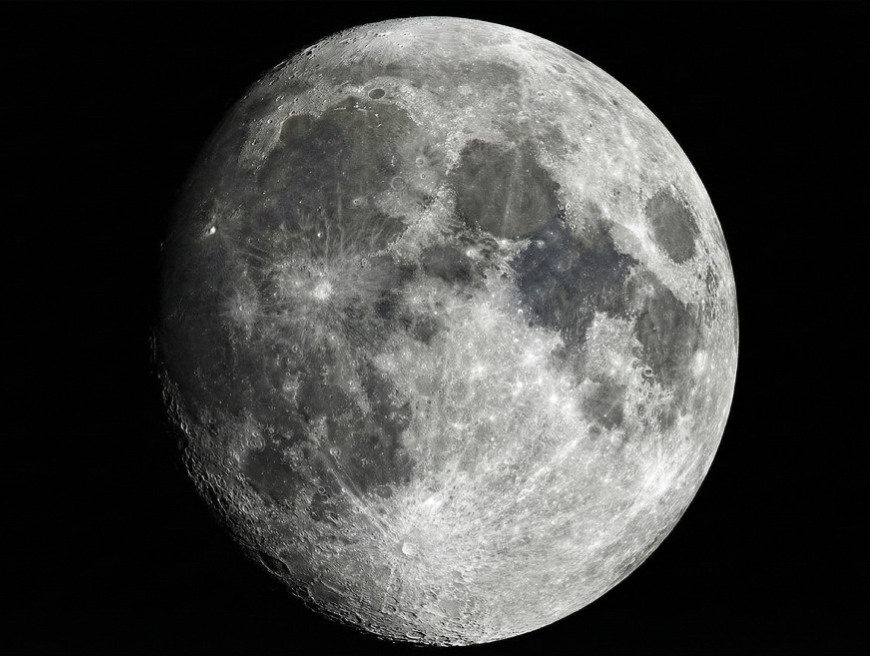
Perfect for handheld use. Steady and bright. Great for wide Milky Way sweeps.
Why Magnification Isn't Everything
Higher power shrinks your true field of view and amplifies every hand tremor. Use the simulator below to see how the sky narrows as magnification rises — and why 7× or 10× often shows you more than 25×.
 7.1°
7.1° Wide and stable. Ideal for scanning the Milky Way and large star clusters.
Aperture: Light-Gathering Power
If magnification represents the specification everyone obsesses over incorrectly, aperture represents the specification beginners often ignore that actually determines how much you'll see. Aperture—the diameter of the objective lenses measured in millimeters—controls light-gathering ability, which directly affects your capacity to observe faint objects. While magnification merely enlarges what light you've collected, aperture determines how much light you collect in the first place. For astronomical observation prioritizing faint deep-sky objects, aperture is king.
The relationship between aperture and light-gathering follows a square law: doubling aperture quadruples light collection. A 50mm binocular gathers four times more light than a 25mm model, and a 70mm gathers approximately twice the light of a 50mm. This explains why experienced astronomers speak of aperture in almost reverent terms—it's the fundamental factor limiting what you can see. No amount of magnification reveals objects whose light never reached your optics; aperture determines that ceiling.
For astronomy, larger aperture translates directly into deeper limiting magnitude—the faintest stars visible through your binoculars. A 30mm binocular under dark skies might reach magnitude 9.5, revealing perhaps thousands of stars. A 50mm pushes to magnitude 10.5, adding tens of thousands more. A 70mm approaches magnitude 11, where hundreds of thousands of stars become accessible. Each magnitude step down (higher numbers = fainter) roughly doubles the number of visible stars. This geometric progression explains why serious deep-sky observers prioritize aperture above nearly everything else.
Aperture Sizes for Different Observing Goals
25-35mm (Compact): Lightweight, portable, insufficient for serious astronomy. Limiting magnitude ~9-9.5. Good for: Bright star patterns, Moon, bright planets. Weight: 0.5-1 lb. Verdict: Better as daytime/travel binoculars than astronomy tools
40-50mm (Standard): Sweet spot for handheld astronomy. Limiting magnitude ~10.5-11. Reveals most Messier objects, detailed lunar views, planetary moons. Weight: 1.5-2.5 lbs. Verdict: Ideal for beginners and general observing
60-70mm (Large): Serious deep-sky capability. Limiting magnitude ~11-11.5. Shows faint galaxies, nebulae structure, globular cluster resolution. Weight: 2.5-4 lbs. Often requires tripod for comfort. Verdict: Best for dedicated astronomy with tripod support
80-100mm+ (Giant): Maximum binocular aperture. Limiting magnitude ~12-12.5. Approaches small telescope capability. Weight: 5-10+ lbs. Mandatory tripod mounting. Verdict: Specialized deep-sky instruments for experienced observers
Unfortunately, aperture doesn't come free. Larger objectives require larger, heavier optical systems. A 50mm binocular weighs perhaps 2 pounds and fits in a daypack; a 70mm pushes 3-4 pounds and demands serious bag space; 100mm binoculars approach 10 pounds and essentially become non-portable. This weight matters enormously for handheld observing. Holding 2 pounds at arm's length for 30 seconds is manageable; holding 4 pounds for the same duration causes arm fatigue and shaking that degrades images despite the superior light-gathering.
Cost scales aggressively with aperture. Manufacturing larger, high-quality optics requires more expensive glass, more precise grinding, larger housings, and more robust mechanical systems. A quality 50mm binocular might cost $150-200; an equivalent-quality 70mm could run $400-600; 100mm models from reputable manufacturers often exceed $1000-2000. Budget models exist at all apertures, but cheap large-aperture optics frequently deliver worse actual performance than quality small-aperture optics due to poor glass, inadequate coatings, and loose quality control.
The 50mm aperture emerged as the standard astronomy recommendation because it represents a genuine sweet spot: sufficient light-gathering for hundreds of deep-sky objects, manageable weight for handheld use (with bracing), reasonable cost from quality manufacturers, and physical size that doesn't dominate your storage or transport capacity. Combined with 10x magnification, 10x50 became the default beginner recommendation—not through marketing but through decades of observers discovering this specification delivers the best overall balance.
Consider upgrading to 60-70mm if you prioritize deep-sky observing, plan tripod mounting from the start, have the budget for quality large-aperture optics, and value maximum light above portability. The difference from 50mm to 70mm is genuinely significant for faint galaxies, nebulae, and globular clusters—objects barely perceptible in 50mm often show clear detail in 70mm. But recognize you're trading handheld convenience for observing capability; 70mm binoculars work best as semi-permanent tripod-mounted instruments rather than grab-and-go handheld tools.
Avoid 25-35mm apertures for dedicated astronomy unless portability absolutely dominates your priorities (backpacking, travel). These compact binoculars work fine for bright targets like the Moon and planets, but they severely limit deep-sky observing. Most beginners who buy compact binoculars for astronomy quickly feel frustrated by how little they see and end up buying larger aperture models anyway, making the compact purchase wasted money rather than a savings. If you must choose smaller aperture, ensure it's genuinely for portability needs, not merely to save $50.
Exit Pupil: Matching Your Eye
Exit pupil represents perhaps the most overlooked specification in binocular selection, yet it fundamentally affects how bright images appear and whether you're wasting aperture unnecessarily. Exit pupil is the diameter of the light beam exiting the eyepiece, measured in millimeters. Calculate it by dividing aperture by magnification: a 10x50 binocular produces a 5mm exit pupil (50÷10=5), while a 7x35 produces the same 5mm (35÷7=5). Understanding exit pupil helps you match binocular specifications to human eye capabilities.
Your eye's pupil dilates in darkness, but maximum dilation varies by age and individual physiology. Young adults typically achieve 7-8mm dilation in complete darkness; by age 50, dilation often drops to 5-6mm; by age 70, perhaps 4-5mm. This matters because if the binocular's exit pupil exceeds your eye's pupil dilation, you waste light—literally spilling it outside your eye rather than using it. A binocular with 7mm exit pupil delivers maximum brightness only if your pupils dilate to 7mm; if yours only reach 5mm, you're using just 51% of the light the binocular gathered (25/49 area ratio).
The classic 7x50 binocular produces a 7.1mm exit pupil, perfect for young observers whose pupils open fully to match. But for observers over 50, that same 7x50 wastes aperture unnecessarily—you'd see essentially identical brightness with a 7x35 (5mm exit pupil) at lower cost, weight, and size. Conversely, a 10x50 produces 5mm exit pupil suitable for all ages, while a 15x70 produces 4.7mm exit pupil that works even for older users. This explains why moderate magnifications paired with reasonable apertures make more sense than low magnification with huge aperture for most users.
Exit Pupil by Age and Implications
- Age 20-30 (7-8mm dilation): Can utilize up to 7mm exit pupil. 7x50, 8x56, 10x70 all work efficiently. Maximum flexibility in specifications.
- Age 30-45 (6-7mm dilation): Efficiently uses 6-7mm exit pupil. 7x50, 10x70, 12x84 appropriate. Slight waste in very large exit pupils.
- Age 45-60 (5-6mm dilation): Best matched to 5-6mm exit pupil. 10x50, 10x60, 12x60, 15x70 ideal. 7x50 wastes some light.
- Age 60+ (4-5mm dilation): Limited to ~5mm exit pupil utility. 10x50, 12x60, 15x70 appropriate. Avoid large exit pupils (7x50, 8x56) unless needed for eye relief.
Larger exit pupils do offer one advantage independent of brightness: easier eye placement and more comfortable viewing. A 7mm exit pupil beam is easier to center your eye within than a 2mm beam. Sloppy eye positioning with large exit pupils still captures most of the light beam; with small exit pupils, slight misalignment blacks out the image. For casual, relaxed observing, this forgiveness matters. For critical observation of faint objects where you maintain careful eye positioning anyway, it matters less.
Very small exit pupils (below 3mm) create their own problems. Image brightness suffers obviously, but more critically, these tiny beams make every speck of dust, floaters in your eye, and eyelash painfully obvious. You'll spend more time fighting optical artifacts than observing celestial objects. Additionally, small exit pupils provide minimal light for dark adaptation—your eyes struggle to adapt fully when receiving so little light. Generally avoid binoculars producing exit pupils below 3mm for astronomy, even if specifications otherwise seem appealing.
The ideal exit pupil for most astronomy falls between 4-7mm, with 5mm representing perhaps the most versatile compromise. This range works across age groups, provides sufficient brightness for effective dark adaptation, allows comfortable eye positioning, and efficiently uses gathered light without waste. Popular configurations like 10x50 (5mm), 10x60 (6mm), 12x60 (5mm), and 15x70 (4.7mm) all fall within this optimal range, explaining their enduring popularity among experienced observers.
Don't obsess over exit pupil to the exclusion of other factors—it's a useful specification for eliminating inappropriate combinations, not an absolute requirement. If you find binoculars perfect in every other way with a 4mm or 8mm exit pupil, that's fine. But when comparing otherwise similar models, exit pupil helps identify which specifications suit your age and observing style. It's particularly useful for avoiding overweight, oversized binoculars with giant exit pupils you can't physiologically utilize.
Field of View: Context and Navigation
Field of view (FOV) specifies how much sky your binoculars reveal, typically expressed either as degrees of angle or as width in feet at 1000 yards distance. A 6° field shows a circle 6 degrees in diameter (for reference, your fist at arm's length spans roughly 10°, the Moon is 0.5°). Field of view profoundly affects the observing experience in ways specifications alone don't convey. Wide fields provide context, ease navigation, capture extended objects completely, and deliver a more immersive, less constrained viewing experience than narrow fields.
Field of view correlates primarily with magnification and eyepiece design. Higher magnification narrows FOV—a fundamental optical relationship no design can escape. A 7x binocular might show 8-10° real field; increase to 10x and field drops to 5-7°; at 15x, expect 4-5°; at 20x, perhaps 3-4°. These aren't fixed ratios because eyepiece design matters enormously, but the general inverse relationship holds: more power means narrower field. This represents one of magnification's hidden costs rarely appreciated by beginners obsessed with maximum power.
Wide-angle or ultra-wide eyepieces deliver broader fields at given magnifications than standard eyepieces, often 10-20% wider. A standard 10x binocular might show 6° real field; a wide-angle 10x could show 7-8°. This difference seems small numerically but feels dramatic in use—the viewing experience shifts from looking through a porthole to enjoying a generous window. Wide-angle eyepieces cost more due to complex multi-element designs required to maintain image quality across the wider field, but many observers consider the premium worthwhile for the substantially more pleasant viewing experience.
Field of View Impact on Observing
Very Wide (8-10°+): Immersive panoramic views. Entire Pleiades cluster fills field with context. Milky Way sweeps spectacular. Easy object location. Feels like: A picture window into space. Effortless, relaxed viewing.
Wide (6-8°): Generous field showing most open clusters complete. Context preserved. Navigation comfortable. Most popular range for general observing. Feels like: A generous view with breathing room. Balanced and versatile.
Moderate (4-6°): Adequate for most purposes but starting to feel constrained. Large objects extend beyond field. Navigation requires more panning. Feels like: A focused view. Functional but less immersive.
Narrow (2-4°): Restricted view challenging for navigation. Many objects extend beyond field. Best for small, concentrated targets. Feels like: Looking through a tube. Requires patience and skill.
Apparent field of view—the angular width of the view as it appears to your eye—differs from real field and appears in premium binocular specifications. Apparent FOV around 50-60° feels comfortable and natural; 65°+ feels immersive and wide; 70°+ approaches the ultra-wide designation delivering wraparound views. Don't confuse apparent FOV with real FOV: a 10x binocular with 65° apparent FOV shows a 6.5° real field, the actual sky coverage (apparent ÷ magnification = real). Manufacturers sometimes advertise apparent FOV to make narrow real fields seem more impressive.
For deep-sky astronomy, prioritize wider fields within your magnification class. The difference between a 5° and 7° real field at 10x magnification substantially impacts user experience. Many Messier objects—the Pleiades, Beehive Cluster, Double Cluster, Andromeda Galaxy, many others—span 1-3° or more. A 7° field captures these completely with context; a 5° field shows only portions, requiring mental stitching to appreciate the full extent. Context matters enormously for understanding spatial relationships, seeing structure, and maintaining orientation.
Finding objects becomes progressively harder with narrower fields. Starting from naked-eye constellation patterns, you navigate to specific targets by sweeping and star-hopping. Wide fields allow coarser, faster movements because your probability of capturing the target in each sweep increases with field width. Narrow fields demand precise, systematic searching and offer fewer visual landmarks per view for orientation. Beginners particularly benefit from wider fields' forgiveness and ease; as skills develop, narrower fields become manageable, but even experts appreciate wide-field convenience.
Edge sharpness trades against field width in eyepiece design. Ultra-wide fields often suffer from edge distortion, astigmatism, or loss of focus in the outer 20-30% of the field. Standard fields maintain better edge-to-edge sharpness. For astronomy, where objects of interest often float anywhere within the field, edge quality matters more than in terrestrial use where subjects concentrate centrally. Evaluate whether extra field width justifies compromised edge performance based on your observing priorities—wide-field scanning emphasizes breadth over perfection; detailed study prioritizes sharp optics throughout the field.
Don't sacrifice magnification or aperture for field width without understanding implications. A 7x50 shows wider fields than a 10x50, but gives up 30% of the magnification for objects where power reveals rewarding detail. The trade might make sense if you primarily observe extended objects and value immersion, but not if you focus on planets, double stars, and distant galaxies where magnification matters. Similarly, compact 8x42 binoculars might show moderately wide fields but sacrifice aperture limiting faint-object visibility. Evaluate FOV as one important factor among many, not the sole specification driving decisions.
Prism Types: Porro Versus Roof
Binoculars use prisms to erect the image (telescopes show upside-down views without prisms) and to fold the optical path into a compact package. Two fundamentally different prism configurations dominate the market: Porro prisms and roof prisms. While both accomplish the same basic functions, they differ substantially in optical design, physical characteristics, manufacturing complexity, cost at equivalent quality levels, and suitability for astronomical versus terrestrial use. Understanding these differences helps you evaluate whether premium roof prism prices deliver value or whether traditional Porro designs better serve astronomy.
Porro prism binoculars feature the classic wide-body design with offset barrels—objective lenses sit wider than eyepieces, creating a distinctive zig-zag or "W" shape when viewed from above. The optical path enters the objective lens on one side, bounces through the Porro prism assembly, and exits the eyepiece offset from the entrance. This offset allows the objective lenses to space wider apart than your eyes, creating a stereo effect with exaggerated depth perception—pleasant for terrestrial viewing though irrelevant for astronomy where everything appears at infinite distance anyway.
Roof prism binoculars align the optical path in straight tubes—the objective and eyepiece sit along the same axis, producing sleek, streamlined barrels. The roof prism (so-called because internal prism surfaces meet in a ridge like a roof peak) folds light through a more complex path than Porro prisms to achieve this alignment. The result is more compact, usually lighter, more rugged, and better sealed against water and dust—all significant advantages for outdoor daytime use but offering minimal benefit for careful nighttime astronomical observing.
Porro vs. Roof Prism Comparison
Porro Prisms - Advantages for Astronomy:
- Simpler optical design → better image quality at equivalent price point
- Higher light transmission (less internal reflection loss)
- Better contrast and color fidelity with basic coatings
- Significantly cheaper for equivalent optical quality
- Wider field of view possible in many designs
- Easier to manufacture to high precision
Roof Prisms - Advantages for Daytime:
- Compact, streamlined design easier to pack and carry
- Better waterproofing and dust sealing
- More rugged, better survives drops and impacts
- Easier to hold and handle with one hand
- More modern aesthetic appearance
For Astronomy Verdict: Porro prisms offer better value. At $200, Porro delivers noticeably superior optics versus roof. Only at $400+ do roof prisms match Porro optical quality, paying premium for portability/ruggedness astronomy doesn't require.
The optical superiority of Porro prisms at equivalent price points stems from manufacturing complexity. Roof prisms require extremely precise alignment of the roof surfaces—tolerances measured in fractions of light wavelengths. Achieving this precision demands expensive manufacturing, sophisticated quality control, and often special coatings (phase correction) to overcome inherent roof prism light interference. Porro prisms, with simpler geometries and less critical tolerances, reach excellent performance more easily and cheaply. A $200 Porro prism binocular often delivers optical quality requiring $400-600 in roof prism design.
Phase-correction coatings address a fundamental roof prism limitation: the roof configuration splits light beams that recombine slightly out of phase, degrading contrast and resolution. High-quality roof prism binoculars include phase-correction coatings on the roof surfaces to minimize this interference. These coatings add cost—sometimes $100-200 to manufacturing—but they're essential for roof prisms to match Porro prism image quality. Budget roof prism binoculars often omit phase correction to save money, resulting in images noticeably inferior to equivalent-price Porro models.
For astronomy specifically, Porro prisms' bulk and weight disadvantages barely matter. You're not hiking miles with binoculars around your neck, stuffing them in jacket pockets, or using them in rain and dust. Most astronomy happens from relatively stationary observing positions (backyard, parking area, dark-sky site) where compactness provides zero advantage. The wider Porro body actually helps stability when bracing against surfaces and arguably looks better aesthetically—the classic binocular silhouette many find more visually pleasing than roof prism tubes.
Roof prisms make perfect sense for birding, hiking, travel, marine use, and any application prioritizing portability, durability, and weather resistance. For astronomy, these benefits rarely justify the optical quality sacrifice or cost premium. Unless you specifically plan to carry binoculars on long hikes to remote observing sites or need one pair splitting duty between daytime activities and astronomy, Porro prisms deliver better value for dedicated astronomical use. Your money buys better optics rather than ruggedness and packaging.
Within Porro prisms, BAK-4 glass quality significantly exceeds BAK-7 or similar budget glass. BAK-4 (barium crown glass) produces round, sharp exit pupils with even illumination; BAK-7 (borosilicate glass) creates squared-off exit pupils with edge darkening. The difference is visible: hold binoculars at arm's length and examine the exit pupils. Round, bright circles indicate BAK-4; square pupils with gray edges suggest BAK-7. Always choose BAK-4 when possible—it's standard in quality binoculars and costs only marginally more than BAK-7. Similarly, within roof prisms, ensure specifications mention both BAK-4 glass and phase-correction coatings; without both, you're not getting quality roof prism performance.
Optical Coatings: Light Transmission Quality
Optical coatings represent one of the most important yet least understood aspects of binocular quality. Every air-to-glass surface in binoculars (and there are 10-16 such surfaces in typical designs) reflects away roughly 4-5% of incident light unless treated with anti-reflection coatings. Without coatings, half the light entering the objective lens never reaches your eye—lost to cumulative reflections throughout the optical path. Coatings reduce these reflections dramatically, improving light transmission, contrast, and image quality. Understanding coating terminology helps you identify genuine quality versus marketing deception.
"Coated optics" (sometimes abbreviated just "coated") represents the minimum specification, indicating at least some surfaces received anti-reflection treatment. Manufacturers could apply coatings to just the two most critical surfaces (outer objective and outer eyepiece) while leaving all internal surfaces uncoated, technically qualifying for "coated" designation while delivering poor performance. This minimal specification appears on budget binoculars; avoid it for astronomy. Total light transmission through "coated" optics often struggles to reach 70-75%, wasting massive amounts of precious photons.
"Fully coated" indicates all air-to-glass surfaces received coatings, though typically single-layer coatings. This represents a significant improvement over basic "coated," boosting light transmission toward 80-85%. Single-layer coatings work optimally at specific wavelengths (usually mid-green where human eyes peak in sensitivity) but remain less effective at red and blue wavelengths. The result: reasonably good transmission but still substantial losses at spectrum extremes. Fully coated binoculars work adequately for bright-object astronomy but show limitations on faint deep-sky targets where every photon counts.
Coating Types and Light Transmission
Coated: Some surfaces treated (usually objectives and eyepieces). Light transmission: ~70-75%. Image: Dull, low contrast, color casts. Verdict: Avoid for astronomy. Budget binoculars only.
Fully Coated: All air-to-glass surfaces treated (single-layer coatings). Light transmission: ~80-85%. Image: Acceptable brightness, some color fringing. Verdict: Minimum acceptable for astronomy. Entry-level only.
Multi-Coated: At least some surfaces have multi-layer coatings (usually objectives/eyepieces). Light transmission: ~85-90%. Image: Good brightness and contrast. Verdict: Good for general astronomy. Mid-range binoculars.
Fully Multi-Coated: All air-to-glass surfaces have multi-layer coatings. Light transmission: ~90-95%+. Image: Excellent brightness, contrast, color neutrality. Verdict: Ideal for astronomy. Should be standard in quality binoculars $150+.
"Multi-coated" indicates at least some surfaces (typically the outer objective and eyepiece lenses) received multi-layer coatings, while internal surfaces might have single-layer treatment or remain uncoated. Multi-layer coatings stack several layers of different materials, each with precisely controlled thickness, to reduce reflections across broader wavelength ranges than single coatings. This improves light transmission to 85-90% and significantly enhances contrast and color fidelity. Multi-coated represents a genuine mid-tier specification appropriate for general astronomy, though not ideal.
"Fully multi-coated" (sometimes abbreviated FMC) represents the gold standard: every air-to-glass surface throughout the optical train received multi-layer anti-reflection treatment. Light transmission reaches 90-95% or higher in premium designs—preserving nearly all incoming light through to your eye. Color neutrality, contrast, and freedom from internal reflections (ghosts and flare) all improve dramatically. For astronomy, where faint object visibility depends directly on light transmission, fully multi-coated optics should be considered mandatory in any binocular costing above $100-150.
The practical difference fully multi-coated optics make is substantial. Comparing identical binocular designs—same magnification, aperture, prism type—with different coatings reveals genuinely fainter limiting magnitudes, better contrast distinguishing faint nebulae from background sky, and more natural color rendition with FMC models. The difference becomes especially apparent observing faint galaxies, nebulae, and deep Milky Way star fields where every percentage point of light transmission shows cumulative impact. Budget coatings waste perhaps 20-30% of collected light; premium coatings waste only 5-10%.
Unfortunately, manufacturers exploit coating terminology through deliberate ambiguity. "Multi-coated" sounds impressive but could mean just 4 surfaces out of 16 received multi-layer treatment while the rest remain single-coated or uncoated. Always look for "fully multi-coated" specification explicitly; avoid assuming "multi-coated" means comprehensive treatment. Reputable manufacturers clearly state FMC in specifications; ambiguous terminology suggests corners cut. When in doubt, examine user reviews and third-party optical tests rather than trusting marketing claims.
Beyond anti-reflection coatings, some premium binoculars add specialized coatings for specific purposes: dielectric coatings on prism surfaces to maximize reflectivity (approaching 99% reflection versus 95% for silver or aluminum mirror coatings), proprietary coatings claiming enhanced color transmission or contrast, protective coatings on external lenses repelling water and resisting scratching. These features provide incremental improvements justifying higher prices in premium models, but they're extras beyond the fundamental requirement of fully multi-coated optics. Get FMC first; consider additional coatings if budget permits.
One practical test for quality coatings: examine reflections in the objective lenses. Hold binoculars so light sources reflect off the objectives and observe the reflected color. Quality multi-layer coatings produce blue, purple, or green reflections (residual wavelengths the coatings don't suppress perfectly); cheap single-layer or no coatings produce bright white reflections. The colored reflection indicates sophisticated coating stacks working across the spectrum. This test isn't definitive—some FMC coatings appear neutral—but bright white reflections definitely signal inadequate coatings.
Build Quality and Mechanical Durability
While optical specifications rightfully dominate binocular selection for astronomy, mechanical build quality determines whether those optics remain properly aligned, focus smoothly after years of use, and survive normal handling without degradation. Build quality encompasses materials, construction techniques, quality control, collimation stability, focus mechanism precision, and overall durability. Poor build quality renders even theoretically excellent optics frustrating and unusable; solid construction ensures specifications translate into reliable long-term performance.
Collimation—the precise parallel alignment of the two optical paths—represents the single most critical build quality factor. Binoculars work by presenting two separate images to your brain, which fuses them into a single three-dimensional view. This fusion requires both images to align perfectly; even slight misalignment forces your eyes and brain to work unnaturally, causing eye strain, headaches, and inability to fuse images comfortably. New binoculars should arrive perfectly collimated from the factory. Cheap binoculars often don't, and budget construction allows collimation to shift easily with minor impacts or environmental changes.
Testing collimation requires careful observation. Focus on a distant object (star, streetlight, building feature) and observe whether the two images fuse easily without eye strain. If you notice your eyes "fighting" to merge images, suspect collimation problems. A more definitive test: view a distant object, then cover one objective lens. Note where the image sits in the eyepiece. Switch to covering the other objective. If both images sit in identical positions (centered or offset by the same amount), collimation is good. If positions differ between the two paths, collimation is off, and the binoculars need service or return.
Build Quality Indicators
Premium Build Quality Signs:
- Metal body construction (magnesium or aluminum, not plastic)
- Smooth, precise focus mechanism with no play or slop
- Solid feel with no creaking, flexing, or loose components
- Eyecups with multiple click-stop positions
- Rubber armoring properly molded (not slipping or peeling)
- Diopter adjustment that locks firmly
- Clear, detailed optical coatings visible
- Perfect collimation out of the box
Warning Signs of Poor Construction:
- All-plastic body (flex and warp, losing collimation)
- Loose, wobbly focus wheel requiring excessive rotation
- Cheaply molded plastic eyecups that collapse or stick
- Rubber armoring that slips or shows gaps
- Asymmetric images or difficulty fusing views (collimation issues)
- Internal dust or debris visible in optical path (poor sealing)
Focus mechanism quality separates enjoyable from frustrating binoculars. Premium focus mechanisms turn smoothly through their entire range with consistent resistance and no dead spots, backlash, or slop. Focusing from infinity to close range should require perhaps 1-2 full wheel rotations—enough for precise control but not so much that you spin endlessly reaching focus. Cheap mechanisms feel gritty, inconsistent, or loose, often requiring excessive rotation or exhibiting backlash (turning the wheel without image response until slack is taken up). Over time, cheap focus mechanisms wear, developing slop and losing precision. Quality mechanisms maintain smooth operation for decades.
Housing materials matter more than many specifications suggest. Metal housings (aluminum or magnesium) maintain dimensional stability through temperature changes, resist deformation from impacts, and provide solid mounting points for optical elements maintaining collimation. Plastic housings save weight and cost but flex and warp, especially with temperature cycling, potentially throwing collimation off. The trade-off: all-metal construction in large binoculars (70mm+) creates serious weight; plastic keeps things manageable but risks longevity. For 50mm and smaller binoculars, metal construction should be standard at quality levels; for 70mm+, plastic might be acceptable if construction proves robust.
Eyecup design affects comfort substantially. Twist-up or click-stop eyecups should adjust easily with distinct positions that hold firmly without slipping during observation. Cheap eyecups collapse under normal eyepiece pressure, forcing you to constantly readjust them. For eyeglass wearers, fully retracted eyecups must position your eyes close enough to achieve full field of view despite glasses. For non-glasses users, extended eyecups should provide comfortable eye relief preventing stray light from degrading contrast. Multi-position eyecups (3-4 click stops versus simple up/down) allow fine-tuning eye relief for individual face shapes.
Diopter adjustment—the mechanism compensating for vision differences between your eyes—should lock firmly once set. Cheap diopters slip during handling, requiring frequent re-adjustment and causing frustration. Quality designs lock positively, maintaining your setting session after session. The diopter mechanism typically appears as a ring on one eyepiece or as a separate adjustment on the focus bridge. Test it: set the diopter, use the binoculars for a few minutes, then check if the setting shifted. Slipping diopters identify poor mechanical design.
Waterproofing and nitrogen purging aren't strictly necessary for astronomy (you won't observe in rain, and internal fogging rarely occurs in normal use), but they indicate serious construction. Truly waterproof binoculars require precise sealing and O-rings throughout the body, demanding quality manufacturing. Nitrogen purging (removing internal air and replacing with dry nitrogen) prevents internal fogging from temperature changes and inhibits mold growth from moisture trapped during manufacture. These features add cost—perhaps $50-100—so prioritize them only if you value the added durability and protection or plan dual astronomy/daytime use.
Brand reputation correlates strongly with build quality because consistent quality control requires investment in manufacturing infrastructure, skilled labor, and testing protocols that cheap manufacturers skip. Established brands like Nikon, Celestron, Orion, Vortex, and others build reputations over decades; they can't afford widespread quality problems damaging that reputation. Unknown brands or rebranded Chinese models flooding Amazon lack this accountability. They might deliver acceptable products randomly, but quality varies wildly between units and production runs. For similar prices, choose established brands over unknowns.
Recommended Specifications for Astronomy
Synthesizing all the specification discussions into actionable recommendations requires balancing competing priorities: optical performance versus cost, power versus stability, portability versus aperture, versatility versus specialization. No single specification set suits everyone, but certain combinations emerge as proven sweet spots delivering exceptional value and satisfaction for distinct observing styles and experience levels. These recommendations reflect decades of accumulated observer experience, not marketing or theoretical calculations.
For absolute beginners prioritizing ease of use, low cost, and immediate satisfaction, 7x50 or 8x42 binoculars make excellent first choices. The moderate magnification produces rock-steady images even with casual hand-holding, wide fields make finding objects effortless and provide generous context for orientation, and the forgiving specifications disguise beginner mistakes. Budget models in this range often cost $70-150 from reputable manufacturers, minimizing financial risk if you discover astronomy isn't your passion. The main limitation: relatively low power disappoints for planetary detail and some lunar features, and 42mm aperture limits faint deep-sky capability.
The 10x50 specification represents the most universally recommended binocular for general astronomy—not because it excels at everything, but because it delivers solid performance across the widest range of targets and observing styles while maintaining handheld usability. The 10x magnification provides meaningful detail on the Moon and planets, resolves double stars down to moderate separations, and shows structure in brighter nebulae and galaxies. The 50mm aperture reaches limiting magnitude around 10.5 under dark skies, revealing thousands of stars and hundreds of deep-sky objects including most Messier catalog entries. The 5mm exit pupil suits all ages. Quality 10x50 binoculars from established manufacturers run $100-250 and serve faithfully for years.
Recommended Specifications by Use Case
Beginners, Casual Observing: 7x50 or 8x42. Wide fields, steady handheld, forgiving, affordable ($80-150). Best models: Celestron Cometron 7x50, Nikon Aculon A211 8x42, Orion Scenix 7x50
General All-Around Astronomy: 10x50. Versatile power, good aperture, manageable handheld, excellent value ($100-250). Best models: Celestron SkyMaster 10x50, Nikon Action EX 10x50, Orion UltraView 10x50
Serious Deep-Sky Observing: 15x70 or 12x60. More aperture and power, tripod recommended, faint object specialists ($150-400). Best models: Celestron SkyMaster 15x70, Orion GiantView BT-100, Fujinon 16x70
Wide-Field Enthusiasts: 7x50 or 8x56. Maximum field width, Milky Way sweeps, panoramic clusters ($100-300). Best models: Nikon Action EX 7x50, Fujinon 7x50 FMTRC-SX, Celestron SkyMaster 8x56
Portable/Travel Astronomy: 8x42 or 10x42. Compact, lightweight, dual-purpose, compromises some aperture ($120-400). Best models: Vortex Diamondback HD 10x42, Nikon Monarch 7 8x42, Celestron Nature DX 8x42
Maximum Aperture (Tripod): 20x80 or 25x100. Giant binoculars, serious investment, telescope-like capability ($400-2000+). Best models: Oberwerk 20x80, APM 100mm SD, Orion BT-100
For observers prioritizing deep-sky observing and willing to use tripod mounting, 15x70 or similar large-aperture, higher-power configurations offer substantial advantages over handheld-optimized models. The 70mm aperture pushes limiting magnitude past 11, revealing faint galaxies barely perceptible in 50mm binoculars and resolving globular clusters into sparkling stellar points. The 15x magnification shows more detail on the Moon and planets and better separates close double stars. The 4.7mm exit pupil suits all ages efficiently. Weight reaches 3-4 pounds, demanding tripod mounting for comfortable extended viewing, but eliminating hand-shake unlocks the higher magnification's full potential. Budget $200-400 for quality models.
Wide-field specialists pursuing Milky Way sweeps, large open clusters, and panoramic comet observations benefit from staying at lower magnifications (7x or 8x) while maximizing aperture (50mm+) for widest possible fields and brightest possible images. An 8x56 binocular delivers spectacular views of the summer Milky Way core, showing countless stars in the Sagittarius region, enormous sweeps of Cygnus and the northern Cross, and breathtaking wide-field views of major clusters like the Pleiades or Double Cluster. These configurations sacrifice planetary detail and high-power capabilities for unmatched immersive wide-field experiences.
Observers requiring portability—backpackers carrying binoculars to remote high-elevation sites, travelers including astronomy in general trips, or anyone prioritizing minimal weight and bulk—should consider quality 8x42 or 10x42 roof prism binoculars from premium manufacturers. These models weigh 1-1.5 pounds, pack easily, often include waterproofing for versatile outdoor use, and deliver surprisingly good astronomical performance given their compact size. The main compromise: 42mm aperture limits limiting magnitude to around 10, but this still reveals thousands of stars and bright deep-sky highlights. Budget $200-400 for optical quality matching larger Porro prism models.
Giant binoculars—typically 20x80, 25x100, or even larger—represent specialized instruments for experienced observers with specific deep-sky imaging or observation goals, dedicated stable mounts, and budgets accommodating $400-2000+ prices. These approach or match small telescope capability while preserving binocular advantages: wider fields than telescopes at equivalent magnification, two-eye viewing comfort, and simpler operation. They're not first binoculars or casual tools; they're serious astronomical instruments requiring commitment to setup, mounting infrastructure, and learning curve. Consider these only after extensive experience with more conventional binoculars proves insufficient for your observing goals.
Avoid certain specification combinations despite their market availability: 10x25 or 12x25 compact binoculars (insufficient aperture wastes magnification), 20x50 or 25x50 high-power small-aperture models (unstable and ineffective), zoom binoculars at any specification (optical compromises), and any binocular advertising magnification above 30x (gimmicks or specialized mounted equipment sold deceptively). Stick to proven combinations: 7x50, 8x42, 10x42, 10x50, 12x60, 15x70, 20x80, or 25x100 cover 95% of legitimate astronomical needs. Unusual specifications usually indicate budget manufacturing chasing untutored buyers rather than serious optical design.
Budget Guide: Getting Value at Every Price Point
Budget represents a hard constraint for most binocular buyers, but understanding where money goes and what compromises different price points demand allows intelligent allocation of limited resources. Binocular pricing correlates imperfectly with quality—plenty of overpriced mediocrity exists alongside genuine value bargains—but broad price tiers do reflect typical quality levels and feature sets. Strategic shopping within your budget delivers far better results than buying the cheapest available option or stretching beyond means for features you don't need.
Under $80 represents the challenging budget territory where serious quality becomes very difficult. This price range contains mostly cheap Chinese manufacturing with minimal quality control, poor optical coatings (usually just "coated" or "fully coated" at best), plastic construction, loose collimation tolerance, and uneven build quality. Some functional binoculars exist here—particularly simplest configurations like 7x35 or 10x50 from bottom-tier established brands—but expectations must match prices. Optical quality suffers from chromatic aberration (color fringing), contrast losses, edge distortion, and overall "soft" images lacking crispness. Mechanically, cheap focus mechanisms, wobbly construction, and poor collimation stability frustrate users.
For absolute beginners with minimal budgets testing whether astronomy interests them at all, the $60-80 range offers entry without massive financial commitment. Look for simplest specs from recognizable brands: Celestron UpClose 10x50, Nikon Aculon A211 10x50, Bushnell Falcon 10x50, or similar models. These deliver functional views of the Moon, bright planets, and major clusters, enough to determine if stargazing warrants investment in better equipment. Accept limitations philosophically—you're buying an introduction, not lifetime optics. Don't expect deep-sky capability, premium image quality, or durable construction. If astronomy captures your interest, budget these as temporary learning tools, planning to upgrade within a year or two.
Budget Tiers and Expectations
Under $80 (Entry/Test Level): Basic function only. Coated optics, plastic build, loose quality control. Good for: Testing interest, emergency backup. Limitations: Poor optics, won't satisfy serious observers. Recommended approach: Only if testing hobby before real investment.
$100-200 (Quality Entry Level): First real astronomy binoculars. FMC optics, decent build, good brands. 10x50 sweet spot. Good for: Beginners committed to astronomy, general observing. Limitations: Entry-level glass quality, basic features. Recommended approach: Target $120-180 for best value. Sweet spot for most beginners.
$200-400 (Mid-Range): Significant quality jump. Premium glass (ED available), better coatings, solid construction, wider choices. Good for: Serious observers, specific needs (wide-field, large aperture). Limitations: Diminishing returns above $300 for standard configs. Recommended approach: Excellent value if budget permits. Big improvement over entry level.
$400-1000 (Premium): Top-tier consumer optics. ED glass, exceptional coatings, premium build, specialized features. Good for: Demanding observers, dual astronomy/birding use, long-term investment. Limitations: Expensive; benefits subtle unless skilled observer. Recommended approach: Only if demanding user or dual-use justifies premium.
$1000+ (Professional): Flagship models, giant binoculars, specialized astronomy instruments. Fluorite elements, ultimate build. Good for: Expert observers, professionals, serious committed hobbyists. Limitations: Extreme cost; benefits invisible to beginners. Recommended approach: Not for first binoculars. Requires experience to appreciate.
The $100-200 tier represents the true sweet spot for dedicated astronomy beginners: genuine quality at accessible prices. This range delivers fully multi-coated optics, BAK-4 prisms, metal construction, decent quality control, and reliable performance from established manufacturers. Celestron SkyMaster series, Nikon Action EX, Orion Scenix and UltraView lines, and similar models provide excellent value. Expect good (not perfect) optical quality with minor chromatic aberration, acceptable (not premium) mechanical build, and solid (not exceptional) durability. These binoculars serve faithfully for years, revealing hundreds of deep-sky objects and supporting genuine astronomical discovery. Most satisfied amateur astronomers observe happily with $150 binoculars for decades.
Spending $200-400 enters mid-range territory delivering meaningful optical improvements over entry level—better glass reducing chromatic aberration, superior coatings boosting light transmission and contrast, upgraded mechanical construction, and often specialized features like extra-wide fields or larger apertures. Celestron SkyMaster Pro series, Nikon Monarch, Vortex Diamondback, Orion Resolux, and similar models populate this range. The improvements prove genuine and noticeable in side-by-side comparisons: sharper stars across the field, better edge-to-edge performance, more natural colors, superior build quality. For serious observers planning extensive use or requiring specific capabilities (15x70 for deep-sky, premium 8x42 for dual birding/astronomy), this investment makes sense.
Above $400 enters premium territory where improvements become increasingly subtle and specialized. $400-1000 binoculars feature ED (extra-low dispersion) glass minimizing chromatic aberration to essentially undetectable levels, proprietary premium coatings maximizing light transmission past 95%, exceptional mechanical build with lifetime warranties, and refined designs optimized for specific uses. Brands like Fujinon, Pentax, Vortex Viper/Razor, premium Nikon Monarch/EDG, and European manufacturers dominate. These binoculars deliver measurably superior performance—better edge sharpness, higher contrast, more neutral color, smoother mechanics—but the improvements matter most to skilled observers who can appreciate subtleties. For beginners, the benefits rarely justify doubling or tripling costs over $200-300 models.
Giant astronomical binoculars (20x80, 25x100, 100mm models) and specialized instruments occupy the $400-2000+ range, representing different value propositions than premium conventional binoculars. Here you're paying for massive aperture, specialized mechanical designs, tripod mounting infrastructure, and capabilities matching or exceeding small telescopes. Oberwerk, APM, Miyauchi, and premium Orion/Celestron large binoculars deliver stunning deep-sky performance but demand serious commitment—financial and practical—appropriate only for experienced observers certain they want these specific capabilities.
Shopping strategies for budget-conscious buyers: look for previous-generation models as manufacturers introduce new lines (often 30-40% discounts for last year's model with negligible actual differences), consider "blemished" or "refurbished" units from reputable retailers (cosmetic flaws, full performance, 40-60% savings), watch for seasonal sales around holidays (November-December, March-April), and buy from specialized astronomy retailers offering better service and expertise than general outdoor retailers. Used binoculars from established brands offer excellent value if you can test them personally for collimation and optical quality; avoid used budget brands that likely failed and motivated resale.
Never cheap-out on your primary astronomy binoculars thinking you'll upgrade later. Budget optics frustrate and disappoint, often killing enthusiasm before the hobby takes root. Better to save for 2-3 extra months and buy $150-180 quality binoculars that satisfy and serve for years than to buy $50 junk immediately that frustrates and gathers dust. The $100 price difference feels significant initially but amounts to less than $10/month amortized over typical multi-year binocular lifespan. Invest in quality once rather than buying twice.
Testing Binoculars Before Buying
Specifications and reviews guide you toward appropriate candidates, but nothing substitutes for hands-on testing before committing money to specific binoculars. Individual optical and mechanical quality varies even within production runs of the same model; your specific face shape, eyesight, and physical preferences might suit certain designs better than others; and subtle factors like focus feel, weight balance, and eyecup comfort only reveal themselves through actual use. Whenever possible—and it's increasingly possible through astronomy stores, outdoor retailers with generous return policies, and astronomy club lending libraries—test before buying.
Begin testing with basic fit and comfort. Hold the binoculars naturally at viewing position for 30-60 seconds. Do they balance well? Does weight cause arm fatigue? Can you reach and operate the focus wheel easily without shifting grip? Adjust the interpupillary distance (spacing between eyepieces) and note whether it matches your eyes comfortably across the full adjustment range—some binoculars suit wide-set eyes better, others narrow-set. Extend and retract eyecups through all positions; do they move smoothly with firm click-stops, or wobble and slip? These basic comfort factors matter enormously for sustained observing.
Test collimation carefully, especially with budget or unknown-brand binoculars. Focus on a distant object at least 100 yards away—distant building, streetlight, tree—and observe whether the view fuses easily into a single comfortable image. If you notice eyestrain or "pulling" sensations, suspect collimation problems. The definitive test: focus on a distant point source, then cover one objective lens and note where the image sits in the eyepiece field. Switch to covering the other objective. Both images should sit in identical positions. If one image appears centered and the other offset, or if they offset in different directions, collimation is off. Reject these binoculars; you'll never enjoy them.
Testing Checklist
Physical Inspection:
- Weight and balance - comfortable to hold at viewing position for 1+ minutes?
- Interpupillary adjustment - smoothly adjusts to your eye spacing?
- Eyecups - multiple click-stops, hold position firmly?
- Focus wheel - smooth, consistent resistance, no slop or grinding?
- Diopter adjustment - locks firmly without slipping?
- Build quality - solid feel, no flexing, no loose components?
Optical Tests (Daytime):
- Collimation - images fuse comfortably, align in same positions?
- Center sharpness - crisp focus on distant details?
- Edge sharpness - corners acceptably sharp or severely degraded?
- Chromatic aberration - minimal color fringing on high-contrast edges?
- Brightness - view appears vibrant and bright even in shade?
Nighttime Tests (If Possible):
- Focus stars - pinpoint focus achievable with no fuzzy halo?
- Edge stars - reasonable quality to field edge or severe distortion?
- Light transmission - view appears bright compared to naked eye?
- Exit pupil - round, bright, evenly illuminated?
Evaluate optical sharpness at center and edge. Focus on a detailed distant object (brick wall, tree branches, textured surface) and assess whether fine details appear crisp and well-defined in the center 60-70% of the field. Premium binoculars maintain sharpness essentially to the field edge; budget models often show acceptable central sharpness with progressive softening toward edges. Some edge falloff is inevitable and acceptable, but severe degradation with the outer 40% essentially unusable indicates poor optical design or manufacturing. Compare against your expectations: wide-angle designs sacrifice some edge performance for field width, while standard fields should maintain better edge sharpness.
Check chromatic aberration by focusing on high-contrast edges—dark tree branches against bright sky, building edges against sky, streetlights at dusk. Look for color fringing (purple, green, or rainbow fringes) outlining the edges. Minimal aberration shows tiny, barely noticeable fringes; severe aberration creates obvious colored halos degrading image quality. Premium ED glass binoculars eliminate aberration almost completely; quality FMC binoculars with standard glass show minor aberration acceptable for astronomy; budget optics often display distracting fringing that worsens toward field edges. For astronomy, prioritize models with minimal visible aberration since stars against dark sky present the exact high-contrast scenario where aberration appears most obvious.
Assess overall brightness and contrast. Compare the binocular view against your naked-eye view of the same scene. Quality optics with excellent coatings produce views noticeably brighter and more vibrant than the unaided eye, with rich contrast distinguishing fine detail. Poor coatings create dull, flat views lacking snap and contrast. This difference becomes especially apparent in shaded areas or at dusk—quality optics maintain brightness and detail as light drops, while cheap optics deteriorate into muddy, indistinct views. The difference is subjective but unmistakable once you compare good optics to poor ones side-by-side.
If nighttime testing is possible—many astronomy retailers, clubs, or star parties offer opportunities—verify performance on stars. Focus on a moderately bright star and achieve the sharpest possible point. The star should appear as a tight point surrounded by perhaps a tiny, soft glow (atmospheric seeing), not a bloated, fuzzy blob (optical problems). Scan across the field and note whether stars maintain point-like quality to the edges or balloon into distorted blurs. Move the star from center to edge while maintaining sharp focus; if you must refocus significantly as the star moves across the field (field curvature), optical quality is subpar for astronomy.
Exit pupil examination provides insight into prism quality. Hold binoculars at arm's length and view the exit pupils (bright disks floating in the eyepieces). Round, uniformly bright disks indicate quality BAK-4 prisms and good assembly; squared-off pupils with gray edges suggest BAK-7 prisms or poor assembly. Examine for evenness—both exit pupils should appear identical in size, shape, and brightness. Asymmetry indicates manufacturing flaws or misalignment. Check for any darkness, shadows, or debris visible within the exit pupils; these reveal internal problems (dust, misaligned elements, poor prisms).
Many retailers offer 30-day return policies allowing extended home testing. If you can't test in-store, buy from retailers with generous returns and conduct comprehensive testing at home during the return window. Take binoculars outside on multiple nights, observe familiar objects (Moon, bright planets, major clusters), and compare against your expectations based on specifications and reviews. If optical quality disappoints, mechanics feel loose, or you simply don't enjoy using them, return without hesitation. Better to spend time finding the right binoculars than to settle for ones that never satisfy.
Essential Accessories
Quality binoculars represent your primary investment, but several accessories dramatically enhance usability, protect your equipment, and unlock capabilities your binoculars possess but can't demonstrate without proper support. Some accessories qualify as essential purchases alongside the binoculars themselves; others provide incremental improvements worth considering after you've gained experience and identified specific needs. Strategic accessory investment multiplies the value of your optical investment.
A tripod adapter ranks as the single most transformative accessory for any binocular 50mm aperture or larger and any magnification 10x or higher. These simple L-brackets cost $20-50 and screw into the threaded socket built into most astronomy binoculars' center hinge, allowing mounting to any standard camera tripod. The difference tripod mounting makes is profound: hand shake completely eliminated, allowing you to exploit your binoculars' full optical potential without fighting instability; comfortable relaxed viewing for hours without arm fatigue; ability to study specific objects in detail rather than brief shaky glimpses; and practical access to higher magnifications (12x, 15x+) unusable handheld. If your binoculars didn't include an adapter, buy one immediately—it's the highest-value accessory dollar for dollar.
A stable tripod or mount naturally pairs with the tripod adapter. For binoculars under 4 pounds (50mm, 60mm models), any decent photo or video tripod works adequately—look for fluid heads allowing smooth panning and tilting, sturdy construction preventing wobble, and height adjustable to comfortable viewing positions. Video tripods with fluid heads excel for astronomy because they pan smoothly following celestial objects, unlike cheaper photo tripods with jerky movements. Budget $60-150 for a suitable tripod unless you already own one. For larger binoculars (70mm+) weighing 4-8 pounds, invest in heavier-duty tripods rated for the weight; undersized tripods wobble and frustrate rather than stabilize.
Recommended Accessories by Priority
Essential (Buy Immediately):
- Tripod adapter ($20-50) - if binoculars are 50mm+ or 10x+
- Neck strap ($10-25) - comfortable wide strap for extended carrying
- Lens caps/covers - protect objectives when not in use (usually included)
Highly Recommended (Early Purchase):
- Tripod ($60-150) - stable platform for mounted observing
- Dew shield ($15-40) - extends from objectives, prevents dew in humid climates
- Red flashlight ($10-25) - for reading star charts without ruining night vision
- Binocular case ($20-60) - protects during transport and storage
Nice to Have (Later Addition):
- Binocular harness ($30-70) - distributes weight to shoulders, more comfortable than neck strap
- Parallelogram mount ($100-300) - smooth altitude/azimuth motion, better than tripod for frequent targeting
- Eyepiece cleaning kit ($15-30) - proper lens cleaning supplies
- Astronomy chair ($40-100) - comfortable observing position
Specialized (Specific Needs):
- Binocular filters ($40-120) - light pollution, nebula, solar (requires expert use)
- Heavy-duty mount ($200-600) - for giant binoculars 100mm+
- Desiccant storage ($10-30) - for humid climates preventing internal moisture
Parallelogram binocular mounts represent a specialized alternative to tripods, particularly valuable for frequent deep-sky observing requiring constant re-targeting. These mounts suspend binoculars in a balanced parallelogram linkage allowing effortless smooth motion in altitude and azimuth—simply push the binoculars and they glide to new positions, remaining balanced and stable wherever you point them. Quality parallelogram mounts cost $150-300, substantially more than tripods, but the convenience for extended deep-sky sessions justifies the investment for serious observers. They also reduce setup time and allow more comfortable observing positions than tripods. Consider these after you've gained experience and confirmed you'll use mounted observing frequently.
Dew shields—simple extensions (rigid tubes or flexible fabric) attaching to the objective lenses—prevent dew formation in humid climates or during temperature drops. Dew forms when optical surfaces cool below the dew point, condensing atmospheric moisture that fogs lenses and ruins views. Shields extend forward from the objectives, reducing radiative cooling and protecting against moisture. In dry climates, you might never need dew protection; in humid coastal or maritime areas, dew shields become essential for summer and autumn observing. Retractable rubber shields built into many binoculars provide minimal protection; aftermarket rigid or flexible extensions ($15-40) offer superior performance. Hand warmers wrapped gently around objectives provide alternative dew prevention through gentle heating.
A proper binocular harness distributes weight to your shoulders and upper back rather than hanging everything from your neck. For larger binoculars (60mm+, 3+ pounds), harnesses dramatically improve comfort during extended handheld observing or when carrying binoculars while walking dark-sky sites. The best designs use wide padded straps crossing your chest and back, with quick-release mechanisms allowing you to raise binoculars to your eyes smoothly. Budget $30-70 for quality harnesses; cheap designs concentrate weight in uncomfortable ways. Harnesses make less sense for tripod-mounted observing (where you rarely carry the binoculars) or for lightweight compact models (where simple neck straps suffice).
Proper cleaning supplies protect your optical investment. Never use paper towels, t-shirts, or eyeglass cleaning cloths on binocular lenses—these can scratch anti-reflection coatings. Instead, invest in a proper lens cleaning kit ($15-30) including: air blower (removes loose dust before wiping), microfiber lens cloths (ultra-soft, non-abrasive), lens cleaning solution (designed for multi-coated optics), and lens pen (retractable brush and cleaning tip). Clean lenses only when necessary (dust doesn't hurt optical performance much), and always blow off loose particles before wiping to avoid dragging abrasives across coatings.
Specialized filters screw into threaded filter sockets on some astronomy binoculars or attach via filter holders. Light pollution filters reduce skyglow from streetlights, enhancing contrast for certain deep-sky objects under urban skies. Nebula filters pass specific wavelengths emitted by nebulae while blocking other light, dramatically improving visibility of emission nebulae. Solar filters enable safe solar observation (viewing the Sun without proper filters causes instant permanent blindness). These filters serve specific purposes—don't buy them assuming they're required. Most observers use binoculars filter-free their entire lives. Consider filters only after identifying specific needs: urban observing (light pollution), emission nebula hunting (nebula filter), or solar astronomy (solar filter only—never improvise solar protection).
A quality binocular case protects your investment during transport and storage. Hard cases with foam padding offer maximum protection but add bulk and weight; soft padded cases compromise some protection for easier carrying. Ensure any case fits your specific binoculars snugly (excessive space allows shifting and impacts). Some binoculars include decent cases; many include cheap nylon bags offering minimal protection. Upgrade to quality cases ($25-60) if you transport binoculars frequently or store them where they might get knocked around. For home storage in safe locations, the included case usually suffices.
Frequently Asked Questions
What size binoculars are best for astronomy?
For most beginners, 10x50 binoculars offer the best balance of magnification, light gathering, handheld usability, and value. The 10x magnification provides enough power to resolve details while remaining steady when braced properly, and the 50mm aperture gathers sufficient light for deep-sky objects. Alternatives include 7x50 (easier to hold steady, wider fields), 8x42 (lighter, more portable), and 15x70 (more powerful but requires tripod). Your choice depends on physical comfort, intended targets, and whether you plan tripod mounting.
How much should I spend on my first astronomy binoculars?
Budget $100-200 for quality entry-level astronomy binoculars from reputable manufacturers. This range delivers proper optical coatings, acceptable quality control, and durable construction. Avoid binoculars under $50-70, which typically suffer from poor optics, misaligned prisms, and rapid degradation. You don't need premium $500+ binoculars initially—good mid-range models perform excellently for years. If budget-constrained, wait and save rather than buying cheap binoculars that frustrate and disappoint. Quality optics at $150 provide better value than budget optics at $40.
What do the numbers on binoculars mean (like 10x50)?
Binocular specifications use the format "magnification x aperture": the first number indicates magnification power (10x means objects appear 10 times closer), while the second number specifies the objective lens diameter in millimeters (50mm determines light-gathering ability). For example, 10x50 binoculars magnify 10 times and have 50mm objective lenses. Higher magnification isn't always better—it also magnifies hand shake and narrows field of view. Larger aperture gathers more light for fainter objects but increases weight and size.
Should I buy binoculars with zoom or image stabilization?
Avoid zoom binoculars for astronomy—they compromise optical quality, reduce light transmission, narrow fields of view at high zoom, and add mechanical complexity that often fails. Image stabilization (IS) is genuinely beneficial but adds significant cost ($400-1500+). For first binoculars, choose fixed-magnification models without IS and use proper bracing techniques or tripod mounting. Consider IS binoculars later if you frequently observe without tripod support and can justify the substantial cost premium for the convenience stabilization provides.
What's the difference between Porro prism and roof prism binoculars?
Porro prism binoculars have offset optical paths creating the classic wide, zig-zag shape, while roof prism models align optics in straight barrels producing compact, streamlined designs. For astronomy, Porro prisms traditionally offered better optical performance at lower cost due to simpler light paths and easier manufacturing of high-quality optics. Modern roof prisms have closed the quality gap but remain more expensive for equivalent performance. Porro designs generally provide better value for astronomy, though roof prisms excel for daytime use requiring portability and weather resistance.
Can I use regular bird-watching binoculars for astronomy?
Yes—many excellent bird-watching binoculars work well for astronomy, particularly models in the 8x42, 10x42, or 10x50 range from quality manufacturers. The main consideration is aperture: bird-watching binoculars often prioritize portability with 32-42mm apertures adequate for bright daytime use but limiting for faint deep-sky objects. Ideally, choose binoculars with 42mm+ aperture for astronomy versatility. Quality birding binoculars from Nikon, Celestron, or Vortex costing $150-300 often outperform cheap astronomy-marketed binoculars at similar prices. Optical quality matters more than marketing labels.